Salford’s Rugby League Soul: Can a Phoenix Club Rise for 2026?
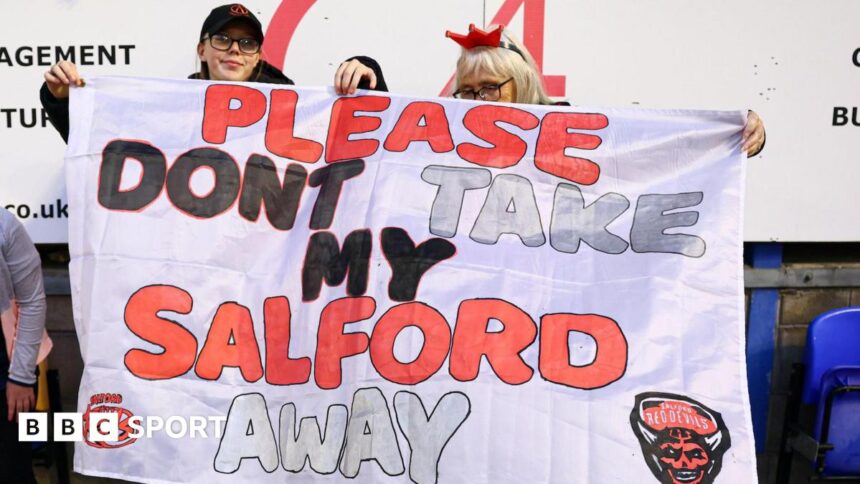
The final hooter of the 2025 Super League season echoed with a profound and unsettling silence in Salford. For the Red Devils, finishing bottom of the table was a sporting calamity. For a community woven into the very fabric of rugby league, it felt like a potential full stop. Yet, in the shadow of this despair, a more urgent question now electrifies the pubs, forums, and terraces of this proud city: Can a Salford phoenix club rise from the ashes to contest the 2026 season? The answer is not merely about logistics; it is a test of the sport’s soul in one of its historic heartlands.
A Legacy Forged in Grit and Glory
To understand the weight of the current crisis, one must first appreciate the monumental legacy at stake. Rugby league in Salford is not a passing fancy; it is a 150-year chronicle of grit, passion, and occasional brilliance. The story is etched in the soot of the Industrial Revolution and the resilience of a working-class community that embraced the breakaway code as its own. This is a city that doesn’t just follow rugby league; it lives and breathes it.
The trophy cabinet, though dusty in recent decades, speaks to a golden age:
- Six First Division titles, establishing Salford as a dominant force in the sport’s early and mid-20th century era.
- That iconic Challenge Cup victory in 1938, a triumph forever seared into local legend.
- Seven further appearances as Challenge Cup runners-up, a testament to consistent competitiveness on the biggest stages.
This is the proud story that faces an unthinkable rupture. The potential absence of a Salford team in the professional ranks is not just a loss for the city; it is an amputation of a vital limb from rugby league’s historical body.
The 2025 Collapse: Relegation and the Financial Abyss
The 2025 season was a perfect storm of sporting and financial failure. On the field, the Red Devils were outgunned, culminating in a bottom-place finish that carried the grim consequence of relegation. But the league position was a symptom, not the cause. The real threat has always lurked in the balance sheets.
Years of well-documented financial instability, ownership changes, and a struggle to compete with the commercial heft of rivals created a house of cards. Relegation likely triggered critical clauses—reduced central funding, sponsor exodus, player departures—that made the existing business model untenable. The question shifted from “Can they survive in Super League?” to “Can any professional entity survive at all?” The specter of administration or liquidation, forcing a restart from zero, became a terrifyingly real possibility, giving birth to the phoenix club concept.
The Phoenix Challenge: A Daunting Race Against Time
The formation of a phoenix club—a new entity built from the remnants and spirit of the old—is a monumental task. The ambition to be ready for the 2026 season adds a layer of immense pressure. The pathway is fraught with hurdles that must be cleared in rapid succession.
First, the foundation must be laid legally and financially. This means:
- Securing a sustainable, community-aligned ownership model, potentially fan-owned or with deeply rooted local investors.
- Negotiating with creditors and the RFL to secure the club’s intellectual property—the name, colours, and history that are non-negotiable for fans.
- Creating a viable business plan that convinces the sport’s governing body of its integrity and longevity.
Second, the sporting operation must be built from scratch. This involves:
- Appointing a football operations team and a coach willing to work under extreme constraints.
- Recruiting a squad, likely blending loyal professionals, promising youngsters, and semi-professionals, all while rival clubs are deep into their own planning.
- Securing a home ground, with the iconic but aging Salford Community Stadium posing its own financial challenges.
The Rugby Football League (RFL) would face its own dilemma. While they have a duty to protect the sport’s integrity and ensure new clubs are viable, can they truly afford to lose Salford? The storied history in rugby league of the area and the damage to the sport’s northern footprint might compel a pragmatic, though conditional, acceptance into the Championship or League 1 for 2026.
Prediction: A Phoenix Will Fly, But the Flight Will Be Turbulent
Based on the indomitable spirit of Salford’s rugby league community and the stark alternative—the death of a 150-year institution—my analysis leads to a cautious prediction. A Salford phoenix club will contest the 2026 season, but not in the form or at the level fans might hope.
The sheer force of supporter will, the symbolic importance of the club to the sport, and the likely intervention of local stakeholders will, I believe, forge a new entity. However, the race against time is simply too great for a seamless transition. The most probable scenario is a start from the bottom—in League 1—with a part-time or hybrid model. It will be a season of profound struggle on the field, defined by grit over glamour, and survival over success.
The true victory in 2026 will not be measured in league points. It will be measured in the survival of the continuum. It will be seen in a crowd of 2,000 passionate fans at a modest ground, singing the old songs for a new team, keeping the flame alive. The objective for Year One will be consolidation, building a sustainable core, and proving the club’s right to exist. The long-term vision of returning to Super League must be shelved, for now, in favour of the hard graft of resurrection.
Conclusion: More Than a Club, A Testament to Resilience
The potential rise of a Salford phoenix club is about far more than rugby league fixtures. It is a statement of identity. The area’s long and proud story in the sport is a narrative of resilience, mirroring the city’s own ability to endure and adapt through economic shifts and social change. To let that story end with the financial failure of one corporate entity would be a betrayal of that legacy.
The 2026 season, therefore, represents the most important chapter in Salford’s rugby league history since 1938. It won’t be about winning a cup. It will be about winning the right to have a future. The journey will start not at Wembley, but at perhaps a humbler venue, with a team of hopefuls wearing a shirt heavy with history. The fans who supported their side to the bitter end in 2025 will be there, not as spectators of a Super League spectacle, but as active participants in a rebirth. They will be the fuel for the phoenix. And in Salford, that is a fuel that has burned for 150 years. It is not about to go out now.
Source: Based on news from BBC Sport.
Image: Source – Original Article