The Carabao Cup Conundrum: Will Liverpool’s Final Distort the Premier League Title Race?
The Premier League title race is a marathon of meticulous planning, where every fixture is a potential pitfall. But what happens when a sprint is inserted into the middle of it? As Arsenal and Manchester City engage in a tense, two-horse battle for supremacy, a fascinating subplot emerges from Merseyside. Liverpool’s upcoming Carabao Cup final against Chelsea on February 25th isn’t just about silverware; it has become a pivotal, and often overlooked, variable in the championship equation. The question isn’t whether the final affects Liverpool—they are not in the title race—but how the ripple effects from Wembley could inadvertently shape the fortunes of those who are.
The Unseen Weight of a Domestic Double
While the Carabao Cup is often dubbed the least prestigious of England’s major trophies, its scheduling presents a unique logistical challenge. For Liverpool, the final represents a major occasion requiring peak physical and mental focus, sandwiched between crucial Premier League matches. The immediate fallout is a fixture congestion headache for Jurgen Klopp. Their league game against Luton Town, originally scheduled for the weekend of the final, will be postponed, creating a future backlog in an already packed season.
This has a knock-on effect for their title-chasing rivals. Arsenal and Manchester City will play their scheduled matches that weekend, potentially gaining ground on a Liverpool side that, while not a direct competitor, holds significant influence. A Liverpool drop in points, fatigued from Wembley exploits or distracted by the occasion, could benefit Arsenal or City in subsequent head-to-heads or the overall table. The psychological and physical drain of a cup final, regardless of the outcome, is a real factor that extends beyond the celebrating (or commiserating) team.
Expert Insight: The Monday Night Club Verdict
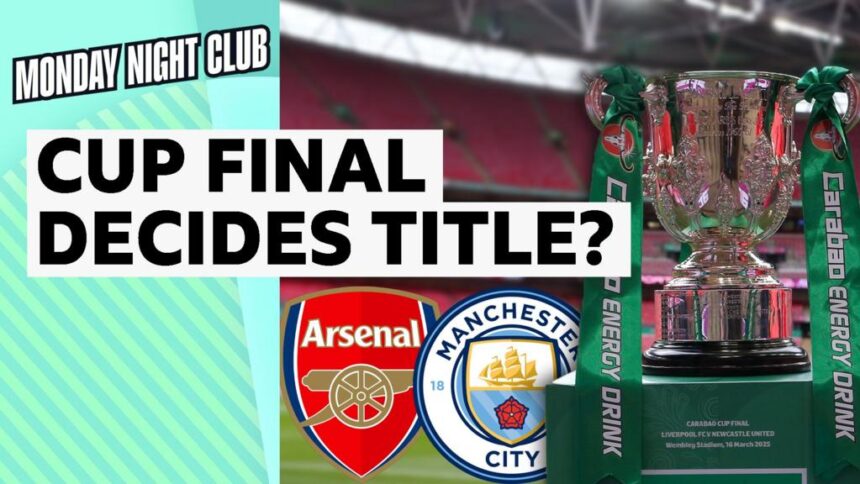
This nuanced impact was a key topic on BBC Radio 5 Live’s Monday Night Club, where Mark Chapman led a discussion with Theo Walcott, Chris Sutton, and Rory Smith. The panel dissected how a single event can warp the landscape for teams not even involved.
- Theo Walcott emphasized the momentum swing a cup win can generate, suggesting a Liverpool victory could galvanize their entire squad, making them a more formidable opponent for City and Arsenal in the league run-in. “You don’t want to face a team riding that wave,” he noted.
- Chris Sutton pointed to the tactical reveal. A final forces managers to show their hand. “Klopp might have to play a full-strength side, revealing plans and exhausting key players. Pep Guardiola and Mikel Arteta will be watching that final with more than passing interest.”
- Rory Smith, providing the broader narrative, argued that the real impact is in the schedule distortion. “It’s not the day at Wembley, it’s the postponed league game. It creates an imbalance, a fixture pile-up for Liverpool that changes the rhythm of the run-in for everyone they play.”
This expert analysis underscores that in a race often decided by fine margins, external events like another team’s cup final become strategically relevant.
The Ripple Effect: Fatigue, Focus, and Fixture Chaos
Let’s break down the concrete ways the Carabao Cup final indirectly pressures the title race:
1. The Direct Opponent Factor: Both Arsenal and Manchester City must still play Liverpool at Anfield—a venue that remains a fortress. The timing of those games, relative to Liverpool’s European and rescheduled domestic commitments, could be hugely advantageous. Facing a fatigued Liverpool side 72 hours after a grueling final is a very different prospect from facing one with a week’s rest.
2. The Psychological Battle: If Liverpool triumph at Wembley, it strengthens the aura of a winning mentality at Anfield. For Arsenal, a young team, or Manchester City, pursuing a historic quadruple, the message is clear: the standard for success remains brutally high. Conversely, a loss for Liverpool could introduce a note of vulnerability or distraction that title challengers might exploit.
3. The Resource Drain: Key players common to both Arsenal and Liverpool (like the injured Mohamed Salah, if fit) or City and Liverpool will be pushed to their limits. Any injury sustained at Wembley to a star like Virgil van Dijk or Darwin Nunez alters the competitive integrity of the league matches that follow, unfairly impacting their opponents’ title chances.
Predictions: How the Cup Could Crown a Champion
Forecasting the exact impact is perilous, but we can map potential scenarios:
Scenario A: Liverpool Wins, Momentum Surges. Klopp’s men return to league action buoyant but physically spent. They may drop unexpected points in the immediate aftermath but become a terrifyingly confident outfit for the visit of City in March, potentially doing Arsenal a massive favor by taking points off the champions.
Scenario B: Liverpool Loses, Focus Shifts. Eliminated from one competition, Liverpool could channel all frustration into an unbeaten league run to salvage the season, becoming an even more dangerous obstacle for Arsenal and City. The “nothing to lose” mentality is potent.
Scenario C: A Costly Victory. Liverpool wins the cup but loses a key player to a long-term injury. This diminishes their threat in the league, making fixtures against them theoretically easier for the title contenders, arguably benefiting the team with the deeper squad—likely Manchester City.
The most probable outcome is a mix of physical toll and psychological shift. The fixture postponement is the one guaranteed consequence, creating a minefield of games in hand that Liverpool must navigate, directly affecting the points distribution around them.
Conclusion: The Intricate Web of a Title Race
The Premier League is not won in isolation. The 2024 title race, potentially one of the closest in years, is a stark reminder that the destiny of the trophy is not solely in the hands of Arsenal and Manchester City. The Carabao Cup final, a showpiece event between Liverpool and Chelsea, will send shockwaves through the league schedule, influencing fatigue, momentum, and opportunity. As the Monday Night Club panel astutely highlighted, elite management is about controlling the controllables. For Arteta and Guardiola, a significant variable in their title calculus will be played out at Wembley by two teams not even in the race. In the modern game, there are no isolated events; every match is a thread in an intricate web, and the pull of one final could be enough to entangle the dreams of a champion.
For more in-depth discussion on this topic, you can listen to the best bits of the Monday Night Club in the latest Football Daily podcast, where the panel delves deeper into the tactical and psychological battles defining the season.
Source: Based on news from BBC Sport.