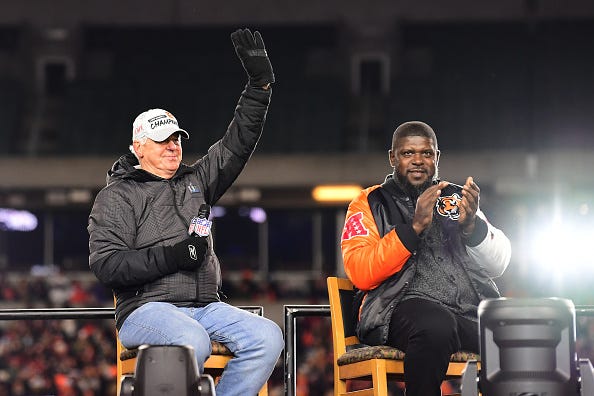
Will Ken Anderson Finally Get His Hall of Fame Call? The Tense Wait Before NFL Honors
The road to Canton is paved with legends, but also with agonizing waits and unresolved debates. As the football world gathers in San Francisco for the NFL Honors ceremony, one of the most compelling stories belongs to a quarterback whose career has been dissected for decades. Ken Anderson, the former Cincinnati Bengals signal-caller, finds himself on the precipice of football immortality. After years of advocacy and a complex selection process, his Hall of Fame fate will be decided Thursday night. But in a surprising twist, the path may have just cleared—or become more complicated—in the final days.
The Senior Committee’s Nod: A Long-Awaited Breakthrough
For Ken Anderson, the journey to this moment began in earnest on December 3rd. He was named one of five finalists in the Hall of Fame’s “contributors, coaches, and senior” category, a designation for players whose careers ended at least 25 years ago. This was the critical first step. Anderson’s case has long been championed by historians and analytics-minded fans who argue his modern-style efficiency was decades ahead of its time.
His resume is compelling: the 1981 NFL MVP, a four-time Pro Bowler, the 1981 NFL Comeback Player of the Year, and the man who led the Bengals to their first Super Bowl appearance. Most notably, he won the passing title four times, a feat matched only by legends like Steve Young and Sammy Baugh. In the era of the Steel Curtain and the Orange Crush, Anderson operated with a precision that foreshadowed the West Coast offense, posting completion percentages that were revolutionary for the 1970s and early ’80s.
Being named a senior finalist is often seen as the hardest hurdle to clear. The committee sifts through decades of overlooked careers. For Anderson, this recognition validated the argument that his contributions had been undervalued by the broader voting body for too long.
A Stunning Shake-Up: The Kraft and Belichick Factor
The selection process for this category is unique and creates intense, unpredictable drama. Fifty selectors each vote for three of the five finalists. To be elected, a candidate must receive at least 80% of the vote (40 votes). If no one reaches that threshold, only the top vote-getter is enshrined. This year’s ballot was historically stacked, featuring Anderson alongside two New England Patriots titans: owner Robert Kraft and coach Bill Belichick, as well as dynamic 49ers running back Roger Craig and Steelers defensive end L.C. Greenwood.
Conventional wisdom suggested the star power of Kraft and Belichick, both first-time eligible in this cycle, could overshadow the players. However, in a stunning pre-Honors revelation, ESPN’s Adam Schefter reported that Robert Kraft was not selected for the Class of 2026. Earlier reports indicated Bill Belichick also fell short of first-ballot election. This news fundamentally alters the landscape for Thursday’s announcement.
With the two presumed front-runners reportedly out of the running, the race narrows dramatically to the three senior players: Ken Anderson, Roger Craig, and L.C. Greenwood. The rules of the process now become paramount. The door is open for up to three inductees if they each secure 40 votes, but if the vote is split, only the top vote-getter is guaranteed a spot.
Analyzing the Competition
- Roger Craig: The revolutionary running back who defined the dual-threat role in San Francisco’s dynasty. A three-time Super Bowl champion and the first player to ever have 1,000 yards rushing and receiving in a single season. His case is built on impact and innovation.
- L.C. Greenwood: A key member of Pittsburgh’s famed “Steel Curtain” defense, a six-time Pro Bowler and four-time Super Bowl champion. His flashy style and iconic stats (73.5 career sacks in an era where it wasn’t officially recorded) make him a sentimental favorite for many.
- Ken Anderson: His case is one of sustained excellence and statistical supremacy in his era, coupled with the “what if” factor of playing for a small-market team without multiple championships.
Expert Analysis: The Case For and Against Anderson’s Enshrinement
As a veteran observer of Hall of Fame debates, the case for Ken Anderson rests on two pillars: era-adjusted dominance and influence on the game. Advanced metrics, which were not available during his playing days, paint a picture of a quarterback who was consistently among the very best. His 1981 and 1982 seasons, in particular, are statistical marvels that compare favorably to any quarterback of that period, including Hall of Famers.
His proponents point to his mastery of Bill Walsh’s offense (before Walsh took it to San Francisco) and his uncanny accuracy. In an age of run-first football and brutal defensive hits, Anderson was a beacon of efficiency. The argument against him has traditionally been a lack of championship rings (only one Super Bowl appearance, a loss) and fewer “iconic moments” burned into the national consciousness compared to his contemporaries like Terry Bradshaw.
The reported exit of Kraft and Belichick is a double-edged sword. It removes colossal competition, but it also may concentrate votes on the remaining candidates in unpredictable ways. Will Craig’s championship rings and fame from a major market sway voters? Will Greenwood’s connection to the legendary Steelers dynasty create a groundswell? Anderson’s hope lies in a consensus that his individual excellence, now properly contextualized by the Senior Committee, is simply too compelling to pass over once more.
Predictions and What to Listen for at NFL Honors
Predicting the Hall of Fame vote is a fool’s errand, but the shifting dynamics offer a clearer path for Ken Anderson than he has ever had. The key factor now is whether the selectors can rally around one or two of the senior candidates with enough consensus to reach the 40-vote threshold.
Here is what to watch for during the broadcast:
- The Order of Announcement: The Hall often announces multiple inductees from this category. If multiple names are read, Anderson’s chances soar.
- The “Logjam” Theory: If voters split evenly between Craig, Greenwood, and Anderson, it could prevent any from reaching 80%. In that scenario, only the top vote-getter gets in. This is the biggest risk to Anderson’s candidacy.
- The Narrative: Listen to the language used by the presenters. Phrases about “revolutionizing the quarterback position” or “correcting a historical oversight” will signal an Anderson selection.
My informed prediction, based on the seismic shift in the candidate field and the decades-long building momentum for his case, is that Ken Anderson will be elected to the Pro Football Hall of Fame Class of 2026. The Senior Committee’s nomination was the crucial endorsement, and the removal of the Patriots’ power duo appears to have cleared the final obstacle.
Conclusion: A Legacy Awaiting Its Final Validation
For Cincinnati Bengals fans and football purists, the wait has been interminable. Ken Anderson’s career has been a litmus test for how we evaluate greatness—weighing championships against individual mastery, and style against substance. His potential enshrinement would be more than a personal honor; it would be a correction in the historical record, affirming that excellence in any era, under any spotlight, deserves recognition.
As the lights dim in San Francisco for the NFL Honors, the name “Ken Anderson” carries the weight of history. Will the voters finally decide that his precise, pioneering brand of quarterback play has waited long enough? The answer, after nearly 40 years, is finally at hand.
Source: Based on news from Yahoo Sports.