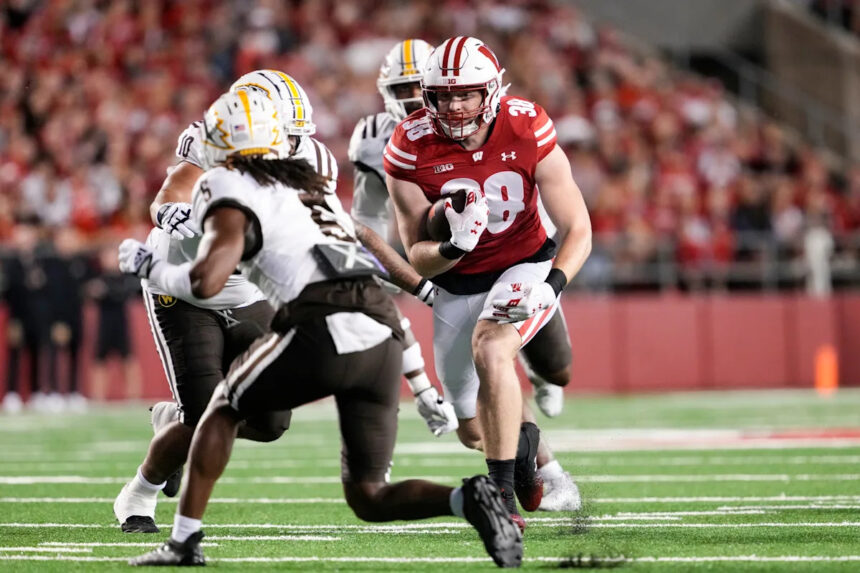
Wisconsin Tight End Tucker Ashcraft to Enter Transfer Portal, Signaling Shifting Tides in Madison
The winds of change are blowing through the Wisconsin Badgers football program, and they are carrying another key player out of Madison. Junior tight end Tucker Ashcraft, a former starter and once a symbol of the new Luke Fickell era, plans to enter the NCAA transfer portal when it opens on January 2, according to a report from On3’s Hayes Fawcett. Ashcraft’s decision, coming on the heels of a significant drop in playing time, underscores the volatile nature of modern roster construction and adds his name to a lengthy and notable list of Badgers seeking opportunities elsewhere.
From Promising Starter to Portal Prospect: The Tucker Ashcraft Timeline
Tucker Ashcraft’s journey at Wisconsin is a classic tale of early promise meeting the harsh realities of college football’s competitive landscape. A three-star recruit from Seattle, Washington, Ashcraft was part of a wave of talent that committed to the Badgers following Luke Fickell’s arrival in late 2022. His potential was realized quickly.
As a true freshman in 2023, Ashcraft carved out a meaningful role, showcasing reliable hands and a nose for the end zone. He followed that up with a solid sophomore campaign in 2024. However, the 2025 season became a perfect storm of setbacks. A training camp injury slowed his momentum, and the program’s acquisition of veteran transfer Lance Mason from the portal created a formidable roadblock to playing time. Limited to just four appearances and two catches this past season, Ashcraft’s path to reclaiming his starting job became unclear, leading to his decision to explore a transfer with two years of eligibility remaining.
Analyzing the Ripple Effect: Why Ashcraft’s Departure Matters
On the surface, losing a player who caught only two passes last season may not seem catastrophic. But a deeper look reveals why Ashcraft’s move is significant for the Wisconsin program.
First, it represents a miss in developmental continuity. Ashcraft was a high school prospect specifically brought in by Fickell’s staff, a player they identified and nurtured. His inability to secure a long-term role despite early production points to either a recruiting miscalculation or the immense pressure to immediately upgrade via the portal—a pressure exemplified by bringing in Lance Mason.
Second, his departure further thins a position room that must now rely heavily on Mason and younger, less-experienced players. It also serves as a case study in the current player mindset: if a clear path to playing time is obstructed, the portal offers a viable and immediate alternative. For programs like Wisconsin, developing depth becomes increasingly challenging when experienced players in the second and third spots on the depth chart seek starting roles elsewhere.
The Growing Wisconsin Exodus: A Program in Transition
Tucker Ashcraft is far from an isolated case. He joins a staggering exodus of talent from Madison, a list that includes key contributors and highly-touted young players. This growing list of notable Badgers planning to transfer, as of late December, includes:
- Dilin Jones (Running Back)
- Eugene Hilton Jr. (Wide Receiver)
- Trech Kekahuna (Wide Receiver)
- Tackett Curtis (Linebacker)
- Jake Renfro (Center)
- And several other two-deep members
This volume of transfers signals a program undergoing a substantial roster overhaul. Some departures stem from natural attrition and playing time disputes, while others may reflect broader philosophical adjustments under Fickell. The collective effect is a complete reshaping of the team’s identity and experience level heading into the 2025 season.
Predictions and Potential Landing Spots for Ashcraft
Where might Tucker Ashcraft land? His profile is attractive for many programs seeking a seasoned, physically-ready tight end. His immediate impact as a true freshman proves he can contribute at the Power Four level, and his blocking background from a pro-style Wisconsin system is a major asset.
Look for Group of Five programs with immediate needs to be strong suitors, offering him a clear shot at a starting role. However, a return to the West Coast could also be in play. A school like Washington State or Oregon State, which utilizes tight ends and values his type of versatility, could be a natural fit. Even some Power Four programs in need of a “move” tight end or a reliable red-zone target might take a flyer, given his proven touchdown-catching ability and remaining eligibility.
His ultimate success will hinge on finding a scheme that values his hybrid skills as both a blocker and a receiving threat, and a coaching staff that can reignite the confidence he displayed during his first two seasons in Madison.
Conclusion: A New Era Demands New Strategies
The impending transfer of Tucker Ashcraft is more than a simple roster note. It is a microcosm of the modern college football experience—a story of early promise, intense competition, and the empowered player’s choice to seek a better fit. For the Wisconsin Badgers, his departure, combined with the extensive list of outgoing transfers, highlights the challenging balancing act facing Coach Luke Fickell: aggressively building a roster through the portal while simultaneously retaining and developing the talent you recruit.
As the January portal window prepares to open, Wisconsin’s focus will swiftly shift from who is leaving to who might be arriving. The legacy of the 2024-25 offseason will not be defined by the players who departed, but by how effectively the program reloads in their absence. For Tucker Ashcraft, a fresh start awaits, offering a chance to recapture the trajectory that once made him a promising building block for the future in Madison.
Source: Based on news from Yahoo Sports.