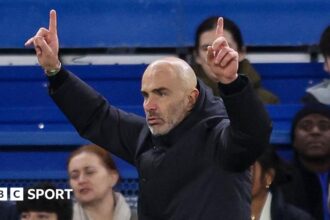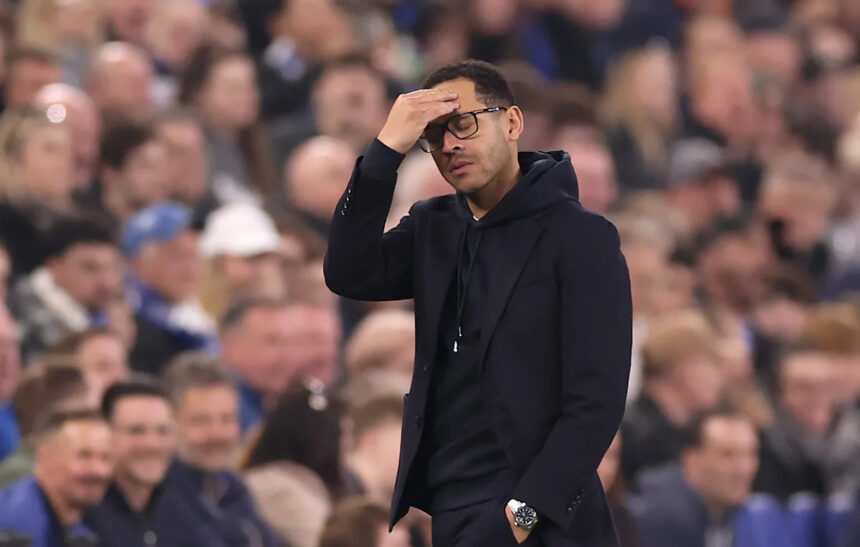
🚨 Chelsea Axe Liam Rosenior After Just 13 Games in Dramatic Managerial U-Turn
In a move that shocks few yet underscores the deepening crisis at Stamford Bridge, Chelsea Football Club has confirmed the sacking of head coach Liam Rosenior after a mere 13 matches in charge. The announcement, made late Wednesday, ends a brief and brutal tenure defined by tactical confusion, a historic goal drought, and a palpable loss of faith. Assistant Calum McFarlane steps into the breach on an interim basis, becoming the latest caretaker to navigate the turbulent waters of the Todd Boehly-Clearlake Capital era. This decision, ruthless in its timing, poses urgent questions not just about the dugout, but about the very sporting project at the heart of West London.
A Reign Built on Sand: The Rosenior Experiment Unravels
Liam Rosenior’s appointment was always framed as a bold, data-driven gamble. Plucked from the relative stability of Strasbourg, another club in the BlueCo multi-club portfolio, he was tasked with steadying a ship rocked by Enzo Maresca’s sudden resignation. The vision was of a progressive, possession-based coach who could develop the club’s vast collection of young talent. The reality was a disjointed and demoralized squad that never bought into his methods.
From the outset, Rosenior struggled to impose his tactical identity. Training ground reports suggested his ideas were overly complex, leaving a young team paralyzed by thought on the pitch. The fluid 4-3-3 system he favored looked good in theory but collapsed under the intensity of the Premier League, with players appearing unsure of their roles and responsibilities. This wasn’t a team fighting for their manager; it was a group of individuals waiting for the inevitable.
The statistics paint a damning picture of his 48% win rate. More telling than the percentage, however, was the nature of the failures:
- Five consecutive Premier League defeats, a run not seen at the club in decades.
- A staggering goal drought of over 450 minutes during that losing streak, highlighting a catastrophic offensive breakdown.
- Consistent vulnerability in transition, with teams easily slicing through a passive midfield and high defensive line.
Rosenior leaves with a record that sits just above Graham Potter’s infamous 38%, cementing his place in the unwanted annals of Chelsea’s recent history. His departure is less a surprise and more an admission of a failed experiment.
Anatomy of a Collapse: Where It Went Wrong for Rosenior
To pin this failure solely on Rosenior would be to ignore the systemic issues at Chelsea. However, his specific shortcomings accelerated the downward spiral. His authority was constantly undermined by the shadow of the club’s structure. With directors of football and technical advisors heavily involved in recruitment and long-term planning, Rosenior was perceived by many as a “head coach” in the most limited sense—a trainer of players he didn’t choose, implementing a style that didn’t suit them.
The dreadful run of five consecutive defeats without scoring was the ultimate death knell. It wasn’t just the results, but the manner of them. Chelsea looked anaemic, devoid of ideas, and shockingly easy to play against. The connection between dugout and pitch had severed entirely. Key, expensive signings went missing in games, and Rosenior’s in-game management—his substitutions and tactical shifts—often seemed to make matters worse.
Furthermore, his communication in press conferences, often leaning into abstract philosophical points about the project, began to ring hollow as the losses piled up. While he spoke of processes, the fanbase and likely the hierarchy, demanded results. In the cutthroat environment of modern football, Rosenior never managed to impose his style or authority. The players’ body language told the final story: a group waiting for a change.
Interim & Beyond: What’s Next for Chelsea?
The immediate future sees assistant coach Calum McFarlane take temporary charge. His primary objective will be simple: stop the bleeding. Restore some basic defensive solidity and competitive spirit. The appointment of an internal figure suggests the club is buying time, but the search for a permanent successor will be frantic and fraught.
This latest crisis forces a brutal reckoning for the ownership. Their project, centered on acquiring elite young talent, is now on its fourth permanent manager (including interims) in just over two years. The pattern is clear: a promising coach is hired, struggles with an unbalanced and inexperienced squad, and is swiftly dismissed. The question now is whether the next appointment will be another “project” coach or a proven firefighter.
Potential candidates will be looking at this role with extreme caution. The job now requires not just tactical acumen, but the political skill to navigate a powerful sporting department and the man-management to galvanize a disillusioned dressing room. Names like Mauricio Pochettino (in a sensational return), Thomas Frank, or a Roberto De Zerbi will be linked, but each will have serious reservations. Does the next boss demand more control over transfers? Will they be given the time they need?
A Club at a Crossroads: The Stakes for Chelsea’s Future
Chelsea’s decision to sack Liam Rosenior is more than just another managerial change. It is a pivotal moment that exposes the fragility of their long-term plan. The win rate of 48% is a symptom, not the disease. The disease is a lack of clear sporting vision, a mismatched squad, and a culture where patience is nonexistent.
The interim period under McFarlane is critical. Positive results could paper over the cracks, but they won’t solve the fundamental issues. The ownership must now decide: do they double down on their data-led, multi-club model and seek another coach who fits that mold, or do they pivot towards a proven, authoritative manager who can command instant respect and deliver short-term results, even if it means compromising on the “project”?
This sacking feels like a point of no return. Another failed appointment could see Chelsea drift into mid-table mediocrity, their talented young assets becoming disillusioned and seeking exits. The club’s identity, once synonymous with relentless winning and defensive steel, is now one of chaos and instability.
Liam Rosenior’s name will be a footnote in Chelsea history—a brief, failed chapter. But the consequences of his failure and the manner of his departure will resonate far longer. The spotlight now burns brighter than ever on Todd Boehly, Behdad Eghbali, and their sporting directors. They have wielded the axe once more, but they must now prove they have the wisdom to build something that lasts. The future of Chelsea Football Club depends on their next move.
Source: Based on news from Yahoo Sports.