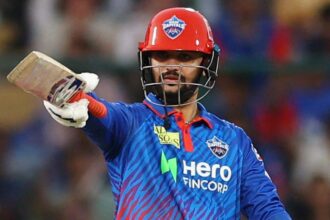
Delhi Capitals’ Nightmare: 13 for 6 – The Worst Powerplay in IPL History
In the high-octane world of the Indian Premier League, fortunes can change in the blink of an eye. Just two days after posting one of the highest totals in the tournament’s history, the Delhi Capitals suffered a catastrophic collapse that will be etched in the annals of IPL infamy. Facing the Royal Challengers Bengaluru (RCB) at the Arun Jaitley Stadium, Delhi recorded the worst-ever powerplay in IPL history, staggering to a dismal 13 for 6 in the first six overs.
This wasn’t just a bad start; it was a complete batting meltdown. The previous record for the lowest powerplay score belonged to SunRisers Hyderabad, who managed 14 for 3 against Rajasthan Royals in 2022. Delhi Capitals shattered that record in the most brutal fashion, losing six wickets for just 13 runs. The collapse was orchestrated by the veteran duo of Bhuvneshwar Kumar and Josh Hazlewood, who exploited the conditions with surgical precision. Let’s dissect this historic disaster, its implications, and what it means for the Capitals’ season.
The Perfect Storm: How Delhi Capitals Lost 6 for 13
The Capitals’ innings began with a sense of optimism. Coming off a record-breaking batting performance, the home crowd expected fireworks. Instead, they witnessed a procession back to the pavilion. The pitch at the Arun Jaitley Stadium offered early movement, but the batting display was nothing short of reckless. Bhuvneshwar Kumar, swinging the ball both ways, was unplayable in his first spell. He trapped the openers in front of the stumps with deliveries that nipped back sharply.
Meanwhile, Josh Hazlewood used his height and bounce to extract extra zip from the surface. The Australian pacer targeted the top of off stump, forcing batsmen to play at deliveries they should have left alone. The result was a cascade of edges, lbw appeals, and stunned silence from the stands. Here is the breakdown of the carnage:
- Over 1: Bhuvneshwar Kumar strikes, bowling the opener for a golden duck. Score: 0/1.
- Over 2: Hazlewood removes the No. 3 batsman with a sharp catch at slip. Score: 2/2.
- Over 3: A run-out adds to the chaos as confusion reigns between the wickets. Score: 3/3.
- Over 4: Bhuvneshwar picks up his second wicket, cleaning up the middle-order batter. Score: 6/4.
- Over 5: Hazlewood strikes again, with the captain edging to the keeper. Score: 8/5.
- Over 6: A wild swing results in a caught-behind off Bhuvneshwar. Score: 13/6.
This was not just a failure of technique but a complete mental collapse. The Delhi Capitals batsmen looked tentative, unsure whether to attack or defend. The pressure of chasing a modest total or setting a platform evaporated in the face of relentless line and length bowling. The record books now show a new low: 13 for 6 in the powerplay, surpassing the previous mark of 14/3 by SunRisers Hyderabad in 2022.
Comparing the Worst Powerplays in IPL History
To understand the magnitude of this collapse, let’s look at the lowest powerplay scores in IPL history. The list is a graveyard of batting nightmares, and Delhi Capitals now sit at the very bottom. Here are the top five worst powerplays ever recorded:
- 2026 – DC vs RCB: 13/6 – Delhi Capitals at Arun Jaitley Stadium. A complete shambles.
- 2022 – SRH vs RR: 14/3 – SunRisers Hyderabad in Pune. A slow, defensive start.
- 2009 – RR vs RCB: 14/2 – Rajasthan Royals in Cape Town. Early wickets in a low-scoring season.
- 2011 – CSK vs KKR: 15/2 – Chennai Super Kings in Kolkata. A rare off-day for the champions.
- 2015 – CSK vs DC: 16/1 – Chennai Super Kings in Raipur. One early wicket, but recovery followed.
What stands out is that most of these collapses involved just two or three wickets. Delhi Capitals lost six wickets in the same period, making their score of 13 the most catastrophic in terms of both runs and wickets lost. The previous record holder, SRH, at least had three wickets in hand to rebuild. Delhi had no such luxury. The innings was effectively over before the fielding restrictions ended.
Expert Analysis: What Went Wrong for Delhi Capitals?
As a sports journalist who has covered the IPL for over a decade, I can say this is one of the most shocking batting displays I have ever witnessed. The Delhi Capitals have a reputation for being an aggressive, modern T20 side. But aggression without a plan is suicidal. The key issues were technical and tactical.
First, the shot selection was appalling. The batsmen played away from their bodies, attempting to drive on a pitch that had variable bounce. Bhuvneshwar Kumar’s swing was neutralized by staying on the back foot, but instead, Delhi’s batters lunged forward, creating edges. Second, the lack of a partnership was fatal. In T20 cricket, even a 20-run stand can stabilize an innings. Delhi had no stand longer than 4 runs.
Third, the mental approach was wrong. After their record-breaking total two days prior, the team seemed overconfident. They tried to dominate from the first ball, ignoring the conditions. RCB’s bowling attack, led by the experienced Hazlewood and Bhuvneshwar, exploited this arrogance. The lesson here is clear: in the IPL, every pitch is a new challenge, and past success guarantees nothing.
From a tactical perspective, Delhi’s batting order was also questionable. Promoting a pinch-hitter over a reliable anchor backfired. The captain’s decision to bat first on a used wicket was also debatable. The dew factor later in the evening might have helped RCB’s chase, but the damage was already done. The worst powerplay in IPL history is a black mark that will haunt this franchise for the rest of the season.
Predictions: Can Delhi Capitals Recover from This?
Every team faces a nadir in a long tournament. The question is whether the Delhi Capitals have the mental resilience to bounce back. History suggests that such collapses can either galvanize a team or break it. Looking at past examples, the SunRisers Hyderabad team that recorded 14/3 in 2022 actually went on to win several matches later in the season. However, they had a strong bowling attack to defend low scores. Delhi’s bowling is also potent, but batting collapses of this magnitude erode confidence.
I predict that the Capitals will make immediate changes to their batting lineup. Expect to see a more conservative approach in the next match, with an emphasis on survival in the first six overs. The return of a senior player or a change in the opening combination is likely. The management will also work on the team’s mental conditioning, as the scars of a 13/6 powerplay can linger.
However, the path to the playoffs is now steep. With such a heavy defeat, the net run rate will take a massive hit. Delhi will need to win at least three of their next five matches to stay in contention. The key will be to forget this nightmare and focus on the basics. If they can do that, this record might become a footnote in a comeback story. If not, it will be the defining moment of a season gone wrong.
Conclusion: A Night to Forget for Delhi Capitals
The Delhi Capitals’ record of 13 for 6 against the Royal Challengers Bengaluru is not just a statistic; it is a cautionary tale about the fragility of T20 cricket. In a format where momentum can shift in a single over, this was a complete and utter breakdown. The fans at the Arun Jaitley Stadium were left in disbelief, watching their team crumble against the swing of Bhuvneshwar Kumar and the bounce of Josh Hazlewood.
While the IPL is a long tournament, this performance will be a defining moment for the Capitals’ season. It highlights the need for a more balanced batting approach, especially in the powerplay. The team cannot rely solely on explosive hitting; they must respect the conditions and the opposition. As a journalist, I have seen many collapses, but this one ranks among the worst in the history of the competition. The only way for Delhi is up, but the climb will be steep. The record of the worst-ever powerplay in IPL history is theirs, and only time will tell if they can turn this disaster into a turning point.
Source: Based on news from India Today Sport.
Image: CC licensed via www.rawpixel.com