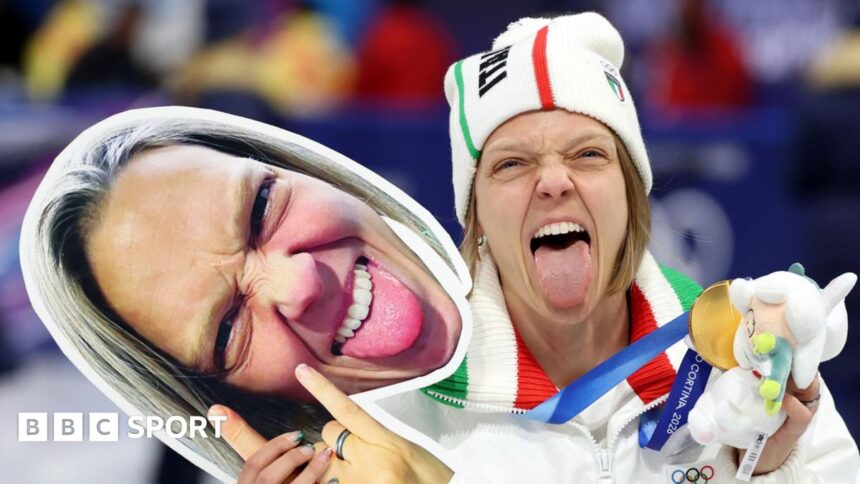
Arianna Fontana: Two Decades of Dominance Culminates in Historic 13th Olympic Medal
The ice is a chaotic, swirling canvas of painted helmets and blurring blades. In short track speed skating, fortunes are decided in a heartbeat, a misplaced edge or a rival’s surge. Yet, for twenty years, one constant has emerged from the whirlwind: Arianna Fontana on an Olympic podium. At the 2026 Milano-Cortina Games, the Italian legend, now 35, carved her name into the eternal marble of sporting history. By claiming silver in the women’s 500m, she secured her 13th career Olympic medal, drawing level with fencer Edoardo Mangiarotti as Italy’s most decorated Olympian of all time. It was a moment of profound resonance, a testament not to a single victory, but to an unparalleled two-decade symphony of consistency, resilience, and sheer class.
The Ageless Art of the Podium: Fontana’s Unmatched Consistency
A lot can change in sport over two decades. Technologies evolve, training methods revolutionize, and generations of athletes rise and fall. What has not changed since the 2006 Torino Games is Arianna Fontana’s inevitable presence among the Olympic elite. Her silver in the 500m at Cortina was a masterclass in sporting longevity. While she ceded the title she owned in 2018 and 2022 to a brilliant new force, Netherlands’ Xandra Velzeboer, the result underscored Fontana’s defining superpower: an almost supernatural ability to deliver when the Olympic flame burns brightest.
This was not a flash of past glory; it was the latest chapter in a ongoing epic. Fontana is the only woman in history to medal at six consecutive Winter Games, a streak of excellence that spans from her teenage bronze in Torino to her veteran silver on home ice. This journey mirrors that of legends like German speed skater Claudia Pechstein, but with the added, brutal pressure of short track’s unpredictable nature. Her medal haul is a portfolio of versatility and tactical genius:
- Torino 2006: A 15-year-old prodigy announces herself with 3000m relay bronze.
- Vancouver 2010: Emerges as a individual force with 500m bronze.
- Sochi 2014: Reaches the pinnacle with 1500m gold, plus two silvers and a bronze.
- PyeongChang 2018: Cements her legend with 500m gold and 3000m relay silver.
- Beijing 2022: Defends her 500m crown and adds a relay bronze.
- Milano-Cortina 2026: Secures the historic record with mixed relay gold and 500m silver.
Each medal represents a different era, a different challenge, and a different version of Fontana—all of them podium-ready.
Analysis: The Silver That Solidified a Legacy
Expert analysis of Fontana’s 500m final reveals the essence of her career. Facing Velzeboer, a dominant skater in peak form, Fontana did not have the explosive start that characterized her previous golds. Instead, she showcased her race intelligence and technical perfection. In a discipline where a single misstep can mean a crash or a disqualification, Fontana’s skating was clean, calculated, and powerful. She managed the chaos, positioned herself perfectly, and executed when it mattered.
This silver is arguably more telling than gold. It demonstrates that even when outright speed may be matched or surpassed by a new generation, Fontana’s Olympic mentality remains her ultimate weapon. The pressure of equaling a national record on home soil is immense, yet she skated with the poise of someone who has seen every possible Olympic scenario. Furthermore, her earlier gold in the mixed team relay showcased her role as a leader and anchor, elevating her teammates—a dimension that Mangiarotti, famed for his team spirit, would undoubtedly admire.
Her career is a case study in adaptation. She has evolved from a fearless teenager to a tactical sovereign of the ice. She has navigated internal federation conflicts, intense public scrutiny, and the physical demands of a punishing sport. Through it all, the Olympic stage has been her sanctuary, the one place where time seems to stand still for the woman in the blue helmet.
The Velzeboer Era and Fontana’s Enduring Influence
Xandra Velzeboer’s triple-gold performance in Cortina, besting Fontana in each individual race, signals a potential changing of the guard. The Dutch skater’s raw power and technical prowess define the new vanguard of the sport. However, to view this solely as a passing of the torch misses a crucial point. Fontana’s presence in every final, pushing Velzeboer to her limits, is what elevates the new champion’s achievements. She remains the benchmark, the final boss to be conquered.
Fontana’s influence on short track, particularly in Italy, is immeasurable. She has been the face of her sport for a generation, inspiring countless young athletes to strap on skates. Her longevity has provided a continuous narrative thread for Olympic viewers, making her a beloved global figure. Her legacy is one of sustained excellence, proving that in a sport of chaos, preparation, psychology, and experience are currencies that never depreciate.
What’s Next for the Queen of Short Track?
Predicting the future of a 35-year-old in a high-impact sport is fraught with uncertainty. The immediate question is whether Milano-Cortina was her final Olympic act. Fontana has spoken of the physical toll and the desire to start a family. If she retires, she does so not just as Italy’s most decorated Olympian, but as arguably the greatest short track speed skater of all time, with a medal collection that may never be matched for its sheer span and volume.
However, writing off Arianna Fontana has always been a mistake. If she chooses to continue, the 2030 Games cannot be dismissed. Her skill set is built on racing IQ and technique, assets that age better than pure speed. She could transition into a specialist relay skater or a strategic force in longer distances. More likely, she will listen to her body and her heart. Regardless, her competitive future is a footnote to a already-complete masterpiece.
Her post-skating career will undoubtedly keep her close to the ice. A role as a team leader, a technical consultant, or a broadcaster seems inevitable. Her depth of knowledge and iconic status make her an invaluable asset to the sport’s growth, especially in Italy where her legacy will fuel Olympic dreams for decades.
Conclusion: An Eternal Place in the Pantheon
Arianna Fontana’s 13th Olympic medal, the silver that tied history, is more than a number. It is the final, perfect brushstroke on a career that redefined what is possible in winter sports. She did not just collect hardware; she authored a two-decade chronicle of resilience, proving that longevity can be the most dazzling achievement of all. In the frenetic, unpredictable world of short track, she has been the human paradox: a constant force of change, forever adapting, forever winning, forever ascending the podium.
She now shares the Italian Olympus with Edoardo Mangiarotti, a fitting parity between a summer and winter icon. But Fontana’s journey is uniquely her own—a story that began with a teenage wonder and concludes with a legendary sovereign, her place in the pantheon forever secured by thirteen moments of Olympic brilliance, forged over twenty unforgettable years. The ice will eventually melt, records will one day fall, but the legacy of Arianna Fontana, the ageless queen of short track, is eternal.
Source: Based on news from BBC Sport.