NCAA’s Charlie Baker Draws Line in the Sand as Kalshi Eyes Player Transfer Betting Markets
The simmering tension between the rapidly expanding world of sports betting and the foundational principles of collegiate athletics has reached a new boiling point. This week, the NCAA and prediction market platform Kalshi are on a collision course over a provocative new frontier: allowing the public to wager on whether specific college athletes will enter the transfer portal. The clash has prompted a forceful public rebuke from the NCAA’s top official and ignited a complex debate about ethics, integrity, and the very nature of amateur sports in a gambling-saturated era.
The Spark: Kalshi’s Filing and Baker’s Vehement Opposition
According to a report from InGame HQ, the prediction market exchange Kalshi has taken concrete steps toward launching markets tied to college athlete transfers. The company reportedly filed necessary paperwork with the Commodity Futures Trading Commission (CFTC) to begin offering contracts where users could essentially bet on the likelihood of a player entering the NCAA’s transfer portal. These markets would be settled based on public announcements, as the portal itself is not publicly accessible.
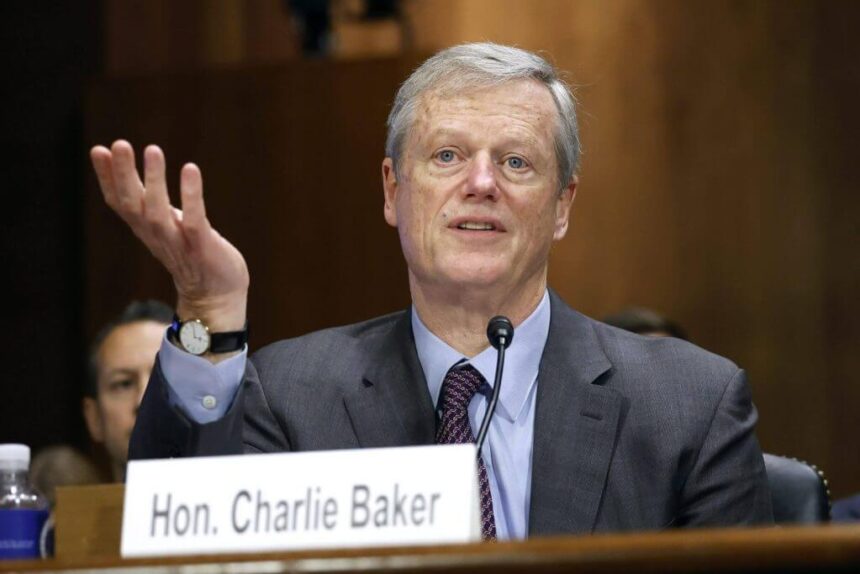
The response from the NCAA was swift and unequivocal. NCAA President Charlie Baker took to social media platform X to state the association’s position in the clearest possible terms. “The NCAA vehemently opposes college sports prediction markets,” Baker posted. This declaration is not merely a policy statement; it is a strategic line drawn in the sand, signaling a fierce institutional battle ahead. Baker’s use of “vehemently” underscores the depth of the NCAA’s concern, framing such markets as an existential threat rather than a simple regulatory nuisance.
As of now, no public markets have been launched by Kalshi, leaving the situation in a tense standoff. The move, however, represents a bold test of boundaries, probing how far prediction markets—which often focus on political or financial events—can extend into the personal and professional decisions of amateur athletes.
Expert Analysis: Why This Crosses a Red Line for the NCAA
To understand the NCAA’s ferocious opposition, one must look beyond the surface. This isn’t just about adding another sport to the betting slate. Industry experts point to several core, irreconcilable conflicts that make this proposal uniquely dangerous in the eyes of the association.
- Direct Targeting of Student-Athletes: Unlike betting on game outcomes, these markets would make the individual life decisions of 18-22 year-olds the direct subject of financial speculation. This creates an unprecedented level of personal scrutiny and potential harassment from gamblers with a financial stake in a player’s choice.
- Integrity and Insider Information: The transfer process is inherently private, involving conversations with family, coaches, and advisors. A prediction market creates a powerful incentive for insider information to be leaked or even sold. A roommate, a family friend, or a disgruntled staffer could profit from non-public knowledge, corrupting the process.
- Amateurism and Exploitation: The NCAA is navigating the fragile new world of Name, Image, and Likeness (NIL). Allowing betting markets on player movement is seen as a form of commodification that offers the athlete no benefit or control, potentially undermining the argument that NIL empowers rather than exploits students.
- Roster Instability and Coercion: Such markets could artificially influence the portal itself. Rumors fueled by betting activity could pressure a player to transfer or create untenable discord within a team. The mere existence of a high “yes” price on a transfer could become a self-fulfilling prophecy.
“This is a categorical overstep,” says Dr. Sarah Jenkins, a sports law professor. “The NCAA has reluctantly adapted to game outcome betting, but this is different. It monetizes the most vulnerable and personal part of a college athlete’s career—their choice of where to study and play—without any guardrails. Baker’s opposition isn’t just predictable; it’s necessary for the NCAA’s survival narrative.”
The Legal and Regulatory Battlefield Ahead
Kalshi’s pathway is through the CFTC, which regulates prediction markets as “event contracts,” not through state gaming commissions that oversee traditional sportsbooks. This presents a novel legal challenge for the NCAA. Their traditional playbook of lobbying state legislatures may be less effective against a federally regulated exchange.
The NCAA will likely argue that these contracts fall under the prohibitions of the 1992 Professional and Amateur Sports Protection Act (PASPA), which was overturned in 2018, but whose spirit still influences federal policy. They will also emphasize the unique vulnerability of student-athletes compared to professional athletes. Baker’s public statement is the opening salvo in what will be a multifaceted campaign involving:
- Lobbying the CFTC directly to reject or limit such contracts.
- Mobilizing congressional allies to propose new legislation explicitly banning betting on individual amateur athlete decisions.
- Legal challenges on the grounds that these markets threaten the integrity of an interstate educational system.
Kalshi will counter that they are offering a financial product based on publicly verifiable events (announcements), similar to political elections, and that a blanket prohibition is an overreach. The coming months will test the regulatory mettle of the CFTC and the political capital of the NCAA.
Predictions: The Ripple Effects and Potential Outcomes
The outcome of this conflict will set a critical precedent for the future of college sports and prediction markets. Several scenarios are plausible:
Scenario 1: NCAA Victory (Most Likely). The NCAA’s public pressure campaign, combined with legitimate ethical concerns, succeeds. The CFTC denies Kalshi’s request or imposes such restrictive conditions that the market becomes unviable. This reinforces a protective boundary around amateur athletes’ personal decisions.
Scenario 2: Limited Rollout and Backlash. Kalshi launches markets, but immediate controversy ensues. Reports of harassment, rumormongering, or insider trading scandals emerge, leading to public outcry and swift congressional hearings. This forces a reactive ban but only after damage is done.
Scenario 3: A New, Unstable Normal. The markets launch and operate with minimal initial interference. This opens the floodgates. Other exchanges follow suit. The transfer portal becomes shadowed by betting odds, changing how rumors are reported and how players experience their decision. The NCAA’s authority is significantly diminished, and athletes are forced to navigate a career where every personal choice has a public betting line.
This move by Kalshi also pressures the NCAA to accelerate its own modernization. Expect stronger, more explicit rules from the NCAA prohibiting athletes, staff, and associated individuals from participating in or providing information for such markets, with severe penalties for violations.
Conclusion: A Defining Moment for the Soul of College Sports
The battle over prediction markets for player transfers is more than a regulatory skirmish; it is a defining moment for the soul of college athletics. Charlie Baker’s “vehement opposition” is a defense of a rapidly eroding principle: that college sports, for all their flaws and commercialism, are ultimately about education and opportunity, not pure financial speculation.
Allowing the financial markets to bet on the life choices of students represents a profound philosophical shift. It moves the athlete from being a participant in the game to being the game itself. The NCAA, already fighting for relevance in the NIL and conference realignment era, has identified this as a hill worth dying on. Whether they can muster the legal, political, and public relations strength to win will tell us much about what remains of the “amateur” in amateur athletics. The final whistle on this issue is far from blowing, but the opening kickoff has made one thing clear: the stakes could not be higher.
Source: Based on news from Yahoo Sports.