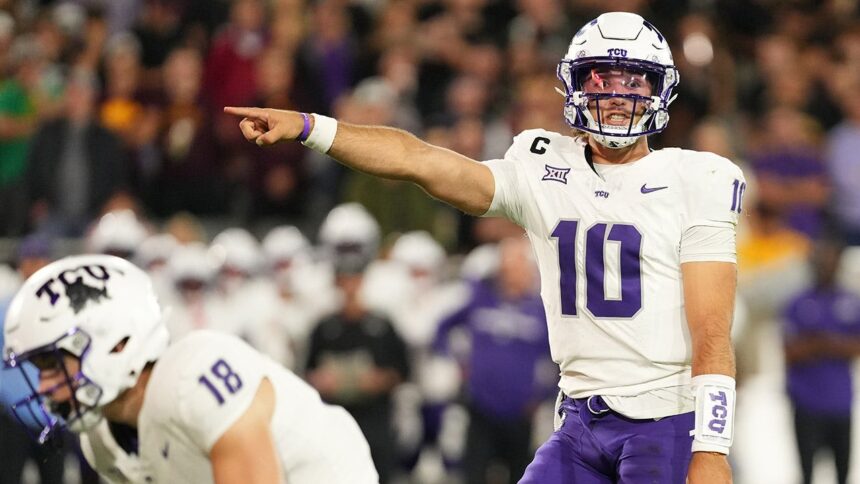
College Football’s New Reality: TCU’s Josh Hoover Enters Portal, Skips Alamo Bowl in Stark Trend
The seismic shift in college football’s landscape, powered by the transfer portal and the erosion of traditional team-first allegiances, has produced another defining moment. TCU Horned Frogs quarterback Josh Hoover announced Thursday via Instagram that he will enter the NCAA transfer portal and, in a move that has become commonplace yet remains controversial, will skip his team’s upcoming Alamo Bowl clash against the USC Trojans. This decision, arriving at the climax of the season, underscores a fundamental change in roster construction and player empowerment, a topic thrust into the national spotlight by a recent conversation between former NFL front office executive Scott Pioli and analyst Jason McIntyre.
The Hoover Decision: A Calculated Career Move in the Portal Era
Josh Hoover’s announcement was delivered with gratitude for TCU and its fans, but its timing and implications are purely pragmatic. After stepping into a starting role for the Horned Frogs, Hoover’s season was a mix of promising flashes and the expected growing pains of a young quarterback. His choice to forgo the bowl game is not an isolated incident; it is the latest data point in a trend that has reshaped how players, especially at skill positions, manage their careers.
For players like Hoover, the calculation is clear: the risk of injury in a non-playoff bowl game far outweighs the potential reward. A serious injury could not only scuttle transfer opportunities but could jeopardize future earning potential in an era where Name, Image, and Likeness (NIL) deals are often tied to on-field performance and visibility. The bowl game, once a sacred reward for a season’s work, is now viewed by many as an unnecessary exhibition.
- Portal Timing is Everything: Entering the portal now allows Hoover to be part of the first wave of transfers, connecting with programs during the critical early recruiting window.
- NIL Implications: A fresh start at a new program can come with a new NIL collective and potentially more lucrative opportunities.
- System Fit: Hoover can seek an offensive scheme that better highlights his skills, a luxury previous generations of college QBs rarely had.
This decision leaves TCU in a difficult position, forced to prepare for a high-profile bowl game against Lincoln Riley’s Trojans with a depleted quarterback room. It is the stark trade-off programs must accept in the modern era: the freedom of the portal giveth, and it taketh away, often at the most inopportune time.
Expert Lens: Pioli and McIntyre on the Ripple Effects
The broader context of Hoover’s move was recently analyzed in a compelling discussion between former NFL GM Scott Pioli and Jason McIntyre. While their conversation touched on Micah Parsons’ contract situation and the 49ers’ personnel, the transfer portal segment is particularly resonant. Pioli, with his deep experience in roster building, likely highlighted how the portal has effectively created free agency in college football.
From a front-office perspective, the portal demands constant evaluation and agility. For NFL executives like Pioli, evaluating a college prospect now includes assessing why they transferred, how quickly they adapted to a new system, and what their movement says about their resilience and decision-making. The “portal jump” is becoming a standard line on a prospect’s resume, for better or worse.
McIntyre’s media insight sheds light on the narrative. Stories are no longer solely about teams; they are about individual career trajectories. Hoover’s announcement is a sports news cycle driver, with fans and pundits immediately speculating on his next destination rather than analyzing TCU’s bowl game strategy. This individual-centric model mirrors professional sports, further blurring the lines between collegiate and professional athlete mindsets.
The Bowl Opt-Out Trend: From Anomaly to Expectation
Josh Hoover is not a trailblazer in skipping a bowl game; he is a follower of a well-established path. What began several years ago with top NFL Draft prospects like Christian McCaffrey and Leonard Fournette protecting their professional futures has now trickled down to players at all levels seeking to protect their *collegiate* futures.
The “non-CFP bowl opt-out” is now standard operating procedure for a significant segment of players. The reasons are multifaceted:
- Injury Avoidance: The primary and most justifiable reason. An ACL tear in the Alamo Bowl could cost a transfer player an entire season at their new school.
- Early Enrollment Advantage: Skipping the bowl allows a transferring player to immediately enroll at their new university for the spring semester, participating in offseason workouts and learning the playbook.
- Clean Break: For some, it’s a psychological step to fully commit to their next chapter, avoiding the awkwardness of playing one final game for a staff and team they’ve decided to leave.
This trend forces coaches to double as contingency planners, developing depth charts with the assumption that not all players will be available for postseason play. It also challenges the bowl system’s relevance, reducing the product on the field for fans who purchase tickets and tune in on television.
Predictions and the Road Ahead for Hoover and TCU
For Josh Hoover, the future is one of opportunity. His film from TCU will attract programs seeking a quarterback with Power Five experience. Look for him to target programs with offensive-minded coaches who have a history of quarterback development and a clear need at the position. His decision will ultimately be judged by his performance at his next stop; the portal offers a second chance, but it also raises the stakes.
For TCU and Head Coach Sonny Dykes, the immediate challenge is galvanizing a team for the Alamo Bowl. This situation can serve as a “next man up” rallying cry, providing a valuable audition for a younger quarterback on the roster. Long-term, Dykes must continue to navigate the portal aggressively himself, using it to replenish talent just as quickly as he can lose it. Program culture and deep NIL resources become even more critical in retaining key players.
The conversation started by voices like Scott Pioli and Jason McIntyre will only grow louder. As the transfer portal windows and early signing period continue to collide with the bowl season, the tension between individual ambition and team tradition will define college football’s offseason. We can expect more announcements mirroring Hoover’s, and the sport must adapt its calendar and its expectations accordingly.
Conclusion: A Paradigm Redefined
Josh Hoover’s announcement is not a betrayal; it is a reflection. It is a reflection of a system that now incentivizes player movement, personal branding, and risk management above all else. The days of unconditional loyalty to a school’s jersey are fading, replaced by a mutually beneficial partnership that can be dissolved at year’s end. While purists may lament the loss of tradition, this new model empowers athletes with a level of control they were long denied.
The TCU Horned Frogs will play the USC Trojans in the Alamo Bowl, but the story dominating the headlines will be about who is not on the field. In modern college football, the transaction wire is often as compelling as the game itself. As the sport continues its rapid evolution toward a hybrid of amateurism and professional free agency, decisions like Josh Hoover’s will cease to be news and will simply be accepted as the new norm—a calculated step in the career of a college football star.
Source: Based on news from Fox Sports.