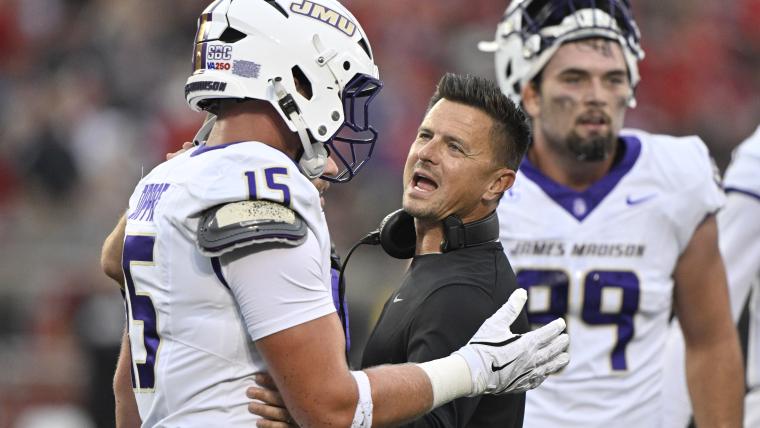
Inside James Madison’s Football Roster: How JMU Built the 2025 College Football Playoff Underdog
The 12-team College Football Playoff was designed for chaos, for Cinderella stories, for the teams long deemed “not worthy” of a seat at the table. In its inaugural year, the new format has delivered its quintessential underdog: the James Madison Dukes. In just their second season under head coach Bob Chesney, the Dukes have crashed the party, becoming one of only two non-power conference teams to earn a coveted berth. Their first-ever CFP appearance is a testament not to a fluke season, but to a meticulously constructed roster built on a foundation of development, strategic transfers, and an unshakable culture. This is the story of how JMU built a 12-1 Sun Belt champion and a legitimate threat to the established order.
The Chesney Culture: A Foundation of Grit and Belief
When Bob Chesney arrived in Harrisonburg after successful stops at Holy Cross and Assumption, he inherited a talented program still reeling from the transition to the FBS level and NCAA postseason restrictions. His immediate task wasn’t just to install new schemes; it was to forge an identity. Chesney’s program is built on a relentless, physical brand of football and a next-man-up mentality that has been tested and proven.
This culture shift is the invisible framework of the roster. Players speak of a competitive environment where every rep is contested. This mindset transformed a good Sun Belt team into a dominant one, capable of weathering injuries and adversity, as evidenced by their resilient response to their lone loss against Louisville. Chesney didn’t just recruit players; he recruited believers in a system that prioritizes toughness and detail over flash. This foundational belief is the single biggest reason JMU isn’t just happy to be in the playoff—they believe they belong.
Architecting the Roster: The Transfer Portal Masterclass
In the modern era, roster construction is an art form, and JMU’s staff has painted a masterpiece. The Dukes have expertly balanced high school development with pinpoint use of the transfer portal, avoiding a complete overhaul in favor of strategic, need-based acquisitions.
The offensive backfield is the crown jewel of this strategy. Quarterback Alonza Barnett III, a former Texas A&M transfer, emerged as the Sun Belt’s most dynamic dual-threat, offering a perfect blend of arm talent and game-breaking speed. Behind him, the running game is powered by Ayo Adeyi, a hard-nosed workhorse from the FCS level, and complemented by the explosive Elijah Sarratt, a receiver-turned-change-of-pace-back whose versatility is a nightmare for defenses. This trio, all from different transfer paths, embodies JMU’s portal philosophy: find experienced, productive players who fit a specific, demanding role.
- Defensive Anchor: The addition of linebacker Jalen McLeod (from Appalachian State) provided an instant-impact leader for a fierce front seven.
- Secondary Reinforcement: Cornerbacks plucked from Power Five depth charts have solidified a secondary that plays with a pronounced chip on its shoulder.
This approach has allowed JMU to accelerate its competitive timeline, adding mature, physically-ready talent to a core of developed high school recruits.
Homegrown Heart: The Core of Developed Talent
While transfers grab headlines, the soul of the JMU roster is its homegrown, developed talent. These are the players who bought into Chesney’s vision from day one and have grown within the system. The offensive line, the unsung hero of any underdog, is predominantly built from high school recruits who have been molded into a cohesive, powerful unit. Their chemistry is a product of years in the weight room and meeting rooms together.
On defense, players like defensive end Jalen Green, who has developed from a raw athlete into a Sun Belt Defensive Player of the Year candidate, showcase JMU’s player development prowess. The receiving corps, though boosted by transfers, is led by veterans who have steadily improved their route-running and understanding of defensive leverage. This core provides stability, institutional knowledge, and the passionate heart of the team. They are the proof that JMU isn’t a mere collection of mercenaries, but a program that builds from within and supplements brilliantly.
The Underdog Blueprint: How JMU Matches Up Against Oregon
Facing the No. 5 seed Oregon Ducks is a monumental task, but JMU’s roster is built to exploit the very pressures of playoff football. The Ducks will be expected to win big; the Dukes will be playing with house money and a ferocious, nothing-to-lose attitude. JMU’s path to an upset hinges on three roster-built strengths:
- Control the Clock: The three-headed monster of Barnett, Adeyi, and Sarratt must sustain long, physical drives. Keeping Oregon’s high-powered offense on the sideline is paramount.
- Generate Pressure with Four: JMU’s defensive front, led by its developed ends and transfer tackles, must disrupt Oregon’s rhythm without relying heavily on blitzes, which could expose the secondary.
- Win the Turnover Battle: The ball-hawking mentality of a defense that has played with a lead all season must continue. A +10 turnover margin doesn’t happen by accident.
Oregon will have more blue-chip recruits. Oregon will have more national media attention. But JMU has a roster constructed with a specific, unified purpose. They are older, battle-tested, and have played in de facto playoff games for over a month just to get here.
Prediction: More Than Just a Happy to Be Here Story
To dismiss James Madison as a mere CFP participant is to misunderstand what this roster represents. This is not a Cinderella who lucked into a glass slipper; this is a program that forged its own steel cleats. The combination of Chesney’s culture, savvy portal work, and strong player development has created a team with the physicality, experience, and quarterback play to compete with anyone on a given Saturday.
While Oregon remains the rightful favorite, expect the Dukes to deliver a punch that reverberates through the college football world. They will not be intimidated. They will play fast, physical, and with the collective belief that has defined their season. The prediction here is that JMU covers the spread comfortably and turns the game into a tense, fourth-quarter battle. In a one-game scenario, with the pressure squarely on the Ducks, the possibility of a season-altering upset is very real. Win or lose, James Madison’s 2025 roster has already redefined what is possible for the Group of Five, proving that with the right blueprint, the underdog can not only get an invitation but can also arrive ready to tear down the door.
James Madison’s journey to the College Football Playoff is a blueprint for the modern era. It is proof that identity, culture, and strategic roster construction can level a playing field long thought to be tilted beyond repair. When they take the field against Oregon, they won’t just be playing for an upset; they’ll be playing to validate a model, and to announce that in the new playoff landscape, the underdog is built, not born.
Inside James Madison’s football roster: How JMU built 2025 College Football Playoff underdog originally appeared on The Sporting News.
Source: Based on news from Yahoo Sports.