Could David Munyua’s ‘Massive’ World Darts Win Spark a Sporting Revolution in Kenya?
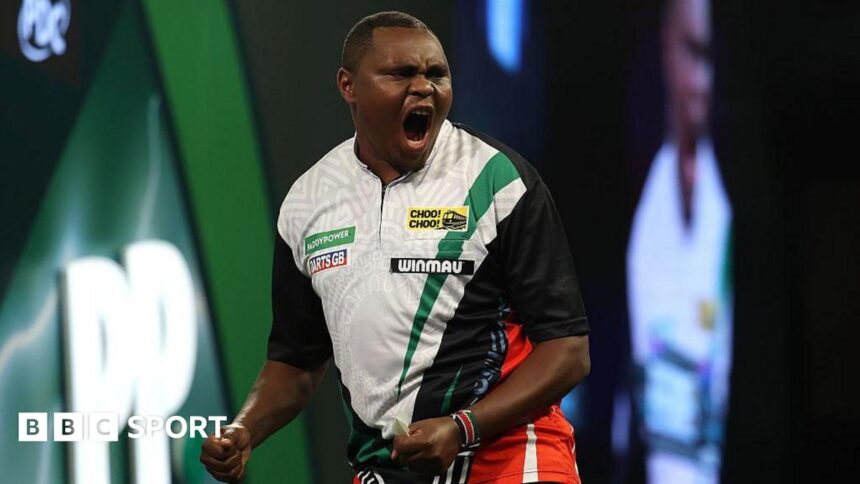
The roar that greeted the final double was not just from the raucous Alexandra Palace crowd in London. It echoed across the Indian Ocean, reverberating through the streets of Nairobi and into the living rooms of a nation that had just witnessed history. David Munyua, a 40-year-old mechanic from Kenya, had done the unthinkable: defeating world number 18 Mike de Decker in the first round of the PDC World Darts Championship. In that moment, Munyua didn’t just win a match; he threw open a door for an entire continent. And the most powerful endorsement of its significance came not from a sports pundit, but from State House. When a sitting President pauses to acknowledge a darting victory, you know the landscape has shifted.
A Presidential Seal of Approval: More Than Just Congratulations
You know you have done something special when you get a message from your country’s president. Kenya’s David Munyua was the recipient of exactly that from William Ruto following his historic win. “As you advance to the next stage, know that the nation stands behind you,” Ruto wrote. “Bring the trophy home.” This wasn’t a generic well-wish; it was a strategic recognition of cultural impact. For darts, a sport often battling perceptions as a pub pastime in its traditional strongholds, a presidential tweet is a potent form of legitimization.
This single act of recognition does several crucial things:
- Elevates darts to a matter of national pride, placing it alongside athletics and rugby in the public consciousness.
- Validates the pursuit of non-traditional sports for aspiring Kenyan athletes, showing a path exists beyond the track and field.
- Generates unprecedented media coverage within Kenya, introducing the terminology, drama, and potential of professional darts to a massive new audience.
The “Munyua Moment” is now a story of national achievement, not just sporting niche interest. This foundational shift is the first and most critical ingredient for any potential boom.
Anatomy of an Upset: How Munyua Rewrote the Script
To understand the scale of the opportunity, one must appreciate the magnitude of Munyua’s achievement. As a debutant who qualified via the African Championship, he was the ultimate underdog. Mike de Decker is a seasoned professional who competes weekly on the grueling PDC ProTour. The gulf in experience and resources was cavernous. Yet, Munyua displayed a temperament that belied his status, winning 3-1 in sets in a display of stunning composure.
Expert analysis of the match points to key factors that make Munyua such a compelling figurehead for growth:
Mental Fortress: Away from home, under the blinding TV lights, he never looked overawed. This resilience is a trait deeply admired in sports culture worldwide and makes him a relatable hero.
Technical Proficiency: His throwing action, while unique, is repeatable and effective under pressure. It proves that elite darts is not about a single, textbook style, but about finding a method that works and honing it to a razor’s edge.
The Power of Narrative: The story of the mechanic from Kenya taking on the world’s best is a universal sports fairy tale. It’s an accessible narrative that can inspire kids in Nairobi to pick up a set of darts as easily as it inspired those in Leicester to pick up a snooker cue after a certain Mr. Selby’s successes.
Seeding the Future: Pathways for a Kenyan Darts Boom
For a boom to be sustainable, Munyua’s spark must ignite a systemic fire. The infrastructure must be built to harness this surge of interest. The blueprint likely involves a multi-pronged approach:
- Grassroots Investment: Capitalizing on the publicity to introduce darts in schools, youth clubs, and community centers. Affordable dartboard initiatives could be transformative.
- Formation of a Governing Body: A structured, nationally recognized Kenyan Darts Federation could coordinate development, standardize competitions, and liaise with the PDC and World Darts Federation (WDF).
- Commercial Sponsorship: President Ruto’s endorsement makes darts an attractive proposition for Kenyan brands. Sponsorship can fund leagues, equipment, and player development tours.
- Media Commitment: Local sports channels picking up broadcast rights for major PDC events would be a game-changer, normalizing the sport and creating household names.
- The “Munyua Effect”: David himself can become a touring ambassador, hosting clinics and exhibitions. His journey from local leagues to Ally Pally provides a tangible roadmap.
The existing passion for sports competition in Kenya is the perfect fertile ground. Darts offers a low-barrier-to-entry sport where talent, not physical stature or expensive equipment, is the primary determinant of success.
Beyond the Hype: Realistic Predictions and Challenges
While the optimism is palpable, a measured view is essential. A “boom” suggests exponential, rapid growth. A more likely, yet still profoundly impactful, scenario is a steady and significant cultural integration of darts over the next 5-10 years.
Predictions:
In the short term, expect a surge in dartboard sales in Kenya and heightened interest in Munyua’s second-round match against Kevin Doets. A win there would be seismic. We will likely see the first wave of corporate-sponsored local tournaments within a year.
In the medium term (2-5 years), Kenya could become a dominant force in African darts, challenging South Africa and Nigeria. The emergence of a second Kenyan qualifier for the World Championship would signal deep talent pools.
The long-term dream is a Kenyan player on the PDC ProTour, living in the UK and competing weekly. This requires immense financial backing and support systems, but Munyua has made it dreamable.
Challenges remain: securing consistent funding, building permanent venues, and navigating the initial phase where interest must be converted into structured participation. The key will be avoiding a “one-hit wonder” narrative and institutionalizing the sport’s development.
Conclusion: A Bullseye for National Inspiration
David Munyua’s “massive” win is far more than a first-round victory at a darts tournament. It is a cultural event. The presidential congratulations were not just for Munyua the player, but for Munyua the symbol—proof that with dedication, Kenyan excellence can shine on any global stage, no matter how unconventional the arena.
Could this spark a darts boom in Kenya? The fuse has undoubtedly been lit. The combination of a charismatic trailblazer, supreme national endorsement, and the sport’s inherent accessibility creates a perfect storm of potential. The journey from a single historic win to a thriving sporting ecosystem is long and requires meticulous work. But for the first time, that journey has a visible destination. When David Munyua steps to the oche for his second-round match, he won’t just be throwing for a place in the third round. He’ll be throwing for the future of a sport in his homeland, with the hopes of a president—and a nation—firmly behind him. That is a weight no dartboard can measure, but it is the very pressure that can forge legacies and inspire generations.
Source: Based on news from BBC Sport.