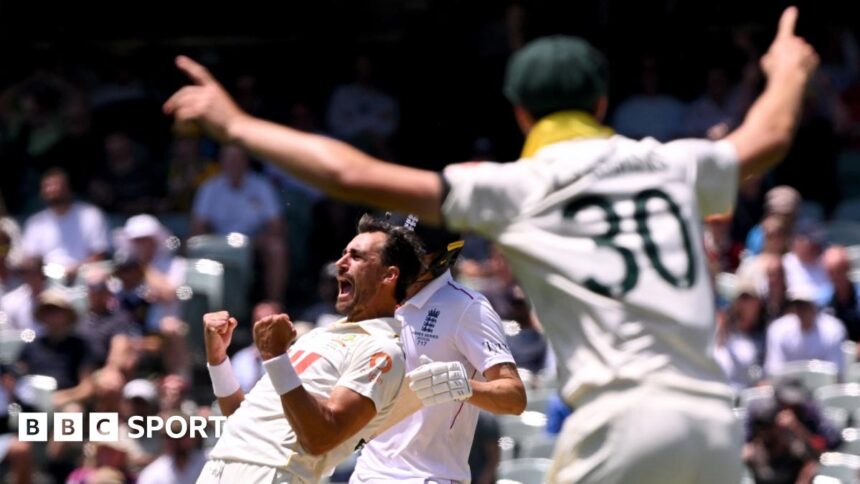
The Decisive Blows: 10 Moments That Sealed England’s Ashes Fate Down Under
Another Ashes tour of Australia, another tale of English hopes dashed with brutal efficiency. For the fourth consecutive series down under, Australia has surged to an unassailable 3-0 lead, this time dismantling England in a breathtakingly swift 11 days of cricket. The urn, once again, remains firmly in Australian hands. While the scoreline suggests a one-sided rout, the series was ultimately decided in a handful of critical passages of play where pressure was applied and England, fatally, buckled. Here are the 10 moments that decided the 2025-26 Ashes.
The Foundation of Dominance: A Relentless First Test
From the very first ball at the Gabba, Australia set a tone of aggressive, disciplined cricket that England never managed to counter. The series was not lost in a single session, but built upon a series of relentless Australian advances.
The Gabba’s First Morning Statement: Under leaden Brisbane skies, Pat Cummins won a crucial toss and sent England in. By the 10th over, both English openers were back in the pavilion, victims of a fiery opening spell from Mitchell Starc and Josh Hazlewood. This immediate incision shattered any notion of a confident English start and established Australian supremacy from the outset.
The Smith-Marsh Century Stand: In England’s first innings, they had clawed back to 5/220, sensing a fragile parity. Then, Steve Smith and Mitchell Marsh combined. Their 150-run partnership was a masterclass in tempo control, grinding England’s bowlers into the dust and pushing Australia to a commanding 450. The psychological blow of seeing a hard-won position evaporate was immense.
‘Where has this come from?’ – The Adelaide Collapse: Trailing in the second Test, England had fought to a seemingly secure 2/180 in their second innings, a lead of 150 brewing. Then, catastrophe. In six balls across two overs from Cameron Green and Nathan Lyon, England lost three wickets for no runs. The video clip titled “Where has this come from?” says it all—a period of calm shattered by panic, poor shots, and relentless pressure. The match, and effectively the series, slipped away in those 10 minutes.
England’s Unforced Errors and Missed Chances
While Australia excelled, England were complicit in their own downfall. Key moments of poor execution and decision-making at critical junctures turned difficult situations into impossible ones.
- The Dropped Catches Cascade: In the first innings at the MCG, with Australia reeling at 5/150, England put down three clear-cut chances in one session. Smith was spilled on 40; he went on to make 110. The lifelines were not just missed opportunities; they were morale-crushing events that demoralized the bowling attack and gifted Australia a total they should never have had.
- Bazball’s Bridge Too Far: Chasing 280 in the fourth innings at Perth, England were well-placed at 2/140. What followed was a reckless display of ultra-aggression against the old ball, resulting in a cluster of soft dismissals to part-time spinner Marnus Labuschagne. It was a tactical implosion, prioritizing ideology over the match situation and the series context.
- The Leadership Vacuum: Following a nasty blow to the helmet, England’s captain Ben Stokes was visibly impaired during a crucial Australian partnership. His reduced mobility in the field and delayed bowling changes during a key period signaled a team without a tactical rudder. Australia capitalized, adding 80 quick runs that took the game away.
The Australian X-Factors and Defining Innings
Great series are defined by great performances. Australia produced several individual efforts that broke England’s resolve at precisely the right moment.
Nathan Lyon’s 10-Wicket Haul at Adelaide: On a day-five pitch offering turn, England needed 330 to win. Nathan Lyon, with surgical precision, spun a web around the English middle order. His 10-wicket match haul was a testament to his enduring class and his ability to exploit English frailties against high-quality spin. He was the undisputed difference-maker.
Cameron Green’s All-Round Masterclass: The third Test was defined by one man: Cameron Green. His first-innings century, a powerful counter-attack from number seven, rescued Australia from 6/120. He then backed it up with a devastating spell of fast bowling to dismantle England’s top order. This two-phase dominance showcased the weapon England lack—a genuine, world-class all-rounder.
The Debutant’s Dream: With injuries striking Australia’s pace battery, unknown quick Jake Reed was handed a baggy green for Perth. His first spell in Ashes cricket read: 7 overs, 3 for 15. He removed England’s captain, premier batter, and most in-form player. The shock of an unknown quantity delivering such a knockout punch summed up England’s tour—every Australian gamble paid off.
The Cummins Captain’s Knock: In a low-scoring thriller at the MCG, with Australia stumbling at 7/90 in their second innings (lead of 180), Pat Cummins played a captain’s innings of pure grit. His unbeaten 45, farming the strike with the tail, pushed the lead to 250. It was a display of mental toughness that contrasted starkly with England’s later batting efforts.
Analysis and What Comes Next
The forensic examination of this Ashes defeat reveals a familiar pattern for England in Australia: fragile top-order batting, an inability to maintain pressure with the ball for sustained periods, and a tendency for collective collapse under the furnace-like intensity of Australian Test cricket. While “Bazball” has revitalized English cricket at home, its translation to Australian conditions has been a failure, appearing reckless rather than revolutionary.
For Australia, the victory is built on a formidable formula: a potent and varied attack, batting depth that consistently produces a hero, and a ruthless culture of exploiting opposition weaknesses. The emergence of Green as a superstar and the seamless integration of new players like Reed points to a healthy system.
Looking ahead, the road for England is long. A major rebuild of both the top order and the pace attack seems inevitable. Questions about the sustainability of their high-risk approach in all conditions must be addressed. Australia, meanwhile, will eye a 5-0 whitewash, a result that would cement this team’s legacy and heap further psychological scars on an English side that now must wait another two years for redemption on home soil. The 2025-26 Ashes were not just lost; they were decided in these 10 pivotal moments, a stark reminder that in the cauldron of Test cricket, moments of crisis define legacies.
Source: Based on news from BBC Sport.