Beyond the Punch: New Viral Video Complicates DK Metcalf’s Appeal and NFL’s Fan Conduct Dilemma
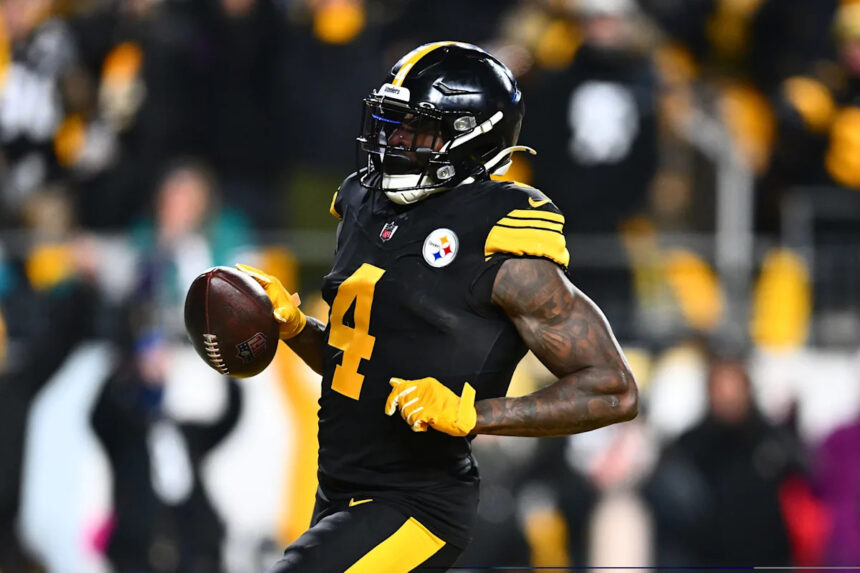
The NFL’s disciplinary process is often a slow-moving machine, grinding through evidence before delivering its verdict. But in the digital age, the court of public opinion operates at the speed of a viral upload. As Pittsburgh Steelers wide receiver DK Metcalf awaits the result of his appeal against a two-game suspension for an altercation with a Detroit Lions fan, a new piece of evidence has emerged, not of the initial incident, but of its chaotic aftermath. This latest video, capturing the moments just after Metcalf swiped a fan’s phone in Detroit, doesn’t provide clarity—it deepens the murky narrative and underscores the league’s escalating crisis with fan-athlete boundaries.
The Incident and the Immediate Fallout
To understand the weight of this new footage, we must revisit the original event. Following a hard-fought loss to the Lions at Ford Field, DK Metcalf was walking through the stadium tunnel toward the locker room. In a moment of clear frustration, he swiped at a phone being held by a Lions fan leaning over the railing, knocking the device to the ground. The NFL, citing a violation of the personal conduct policy, swiftly handed down a two-game suspension, a punishment that would cost Metcalf over $200,000 in lost salary and, more critically, sideline him for pivotal games against the Los Angeles Chargers and Las Vegas Raiders.
The league’s stance was unambiguous: players must not engage physically with fans, regardless of provocation. Metcalf’s appeal, argued by the NFL Players Association, likely centers on the concept of mitigating circumstances and excessive punishment. Their case hinges on the environment and any potential provocation that preceded the swipe. This is where the new video becomes a critical, if confusing, exhibit.
Decoding the Aftermath: A Fan’s Celebration or Provocation?
The newly surfaced clip shifts the camera away from Metcalf and onto the fan involved. The scene is one of bedlam. The fan, identifiable by his now-removed blue wig, is animatedly yelling and gesticulating to the crowd around him. He is visibly energized, not distressed. The core of the controversy lies in an alleged audio claim that has spread across social media: that the fan can be heard saying, “That was the goal, folks!”
Expert analysis of the audio is inconclusive; the stadium noise creates a cacophony that makes definitive transcription difficult. However, the visual evidence is telling. The fan’s demeanor is not one of someone who was assaulted or feels victimized. His actions suggest celebration, a performance for his fellow spectators. This raises immediate and difficult questions for the NFL’s appeal officers:
- Was this a calculated attempt to provoke a reaction? The removal of the wig could be seen as shedding a costume, marking the end of a successful “bit.”
- Does a fan’s post-incident conduct impact the player’s culpability? Legally, perhaps not, but in the realm of disciplinary fairness, it paints a picture of intent.
- How does the NFL define “provocation” in the modern era? Is it only verbal threats, or does the invasive, recording-centric nature of modern fandom constitute a constant, low-grade provocation?
This footage doesn’t excuse Metcalf’s action. A professional athlete must be the ultimate de-escalator. But it complicates the simplistic “player vs. innocent fan” narrative, suggesting the fan was an active participant seeking a specific, viral outcome.
The Broader Stage: NFL’s Unenviable Position on Fan Conduct
This incident is not an isolated one. It is a symptom of a league-wide epidemic where the line between passionate support and entitled harassment has blurred. Fans, armed with high-definition cameras and a direct line to social media fame, are increasingly incentivized to create confrontational moments. The “troll for content” model is real, and athletes are the targets.
The NFL has a dual responsibility it is struggling to balance. First, it must protect its players from genuine harm and unacceptable harassment within their workplaces—the stadiums. Second, it must protect the integrity of the game by holding players to a high standard of conduct. Currently, the policy framework is lopsided. Players face swift, severe financial penalties, while fan consequences are nebulous and inconsistently applied by teams and local authorities.
What the Metcalf aftermath video highlights is the need for a more robust and transparent fan code of conduct with real teeth. The league must ask:
- Should fans who are found to have intentionally provoked a player face lifetime bans?
- Can technology, like buffer zones in tunnel areas, be improved?
- Is the current security posture sufficient to protect players in high-emotion ingress and egress points?
Until the NFL addresses the root cause as aggressively as it punishes the symptom, these incidents will recur. Suspending Metcalf is the easy part; fixing the environment is the monumental challenge.
Predictions: The Appeal and Lasting Repercussions
Given the introduction of this new video evidence, the appeal process becomes far more intriguing. Here is our expert breakdown of likely outcomes:
Prediction for the Appeal: We anticipate a reduction, not a full overturning, of the suspension. The NFL is unlikely to completely backtrack, as doing so could be seen as condoning player-fan contact. However, the compelling visual evidence of the fan’s celebratory behavior provides the NFLPA with powerful ammunition to argue for mitigation. A one-game suspension becomes a plausible compromise, allowing the league to maintain its principle while acknowledging the nuanced context.
Long-Term Repercussions: The lasting impact of this saga will be felt more in policy than in Metcalf’s season. This incident, paired with the viral aftermath video, is a catalyst. We predict the NFL will, by the 2024 offseason, announce a revised and more stringent Fan Code of Conduct, with specific clauses addressing provocation for content and enhanced penalties. Furthermore, teams will likely be mandated to reassess tunnel security, potentially using opaque barriers or increased personnel to create a more definitive separation.
For DK Metcalf, this is a costly lesson in emotional control. For the fan in the blue wig, it’s a dubious claim to fame. But for the NFL, this is a glaring warning sign. The video from the aftermath isn’t just about what one fan said; it’s a mirror reflecting a broken dynamic. The league can continue to punish the reactions, or it can finally get serious about eliminating the provocations. The choice it makes will define the stadium experience for a generation.
Source: Based on news from Yahoo Sports.