49ers DL Keion White Shot in Ankle at Post-Super Bowl Event: A City and a Team Grapple with Fallout
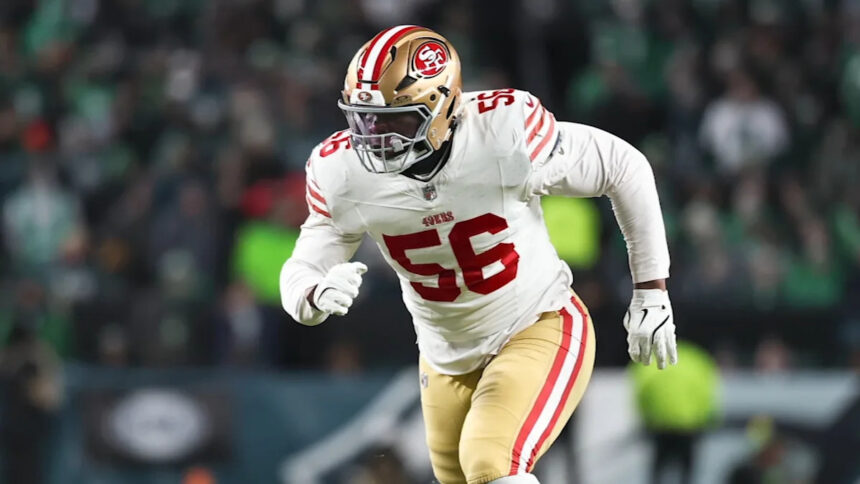
The afterglow of Super Bowl LVIII has been violently extinguished for the San Francisco 49ers organization. In a shocking incident that marries sports headlines with urban violence, defensive lineman Keion White underwent surgery after being shot in the ankle at a post-Super Bowl event in San Francisco’s South of Market district early Monday morning. The event, intended as a celebration, has instead sparked urgent conversations about player safety, off-season risks, and the persistent challenges facing the city itself.
A Night of Celebration Turns to Chaos: The Incident Unfolds
According to San Francisco police, officers responded to calls for a shooting on the 1700 block of Mission Street around 4 a.m. Monday. The specific location, detailed in dispatch audio obtained by ABC7 Eyewitness News, pinpoints 290 14th Street crossing Minna and Mission for the shooting. This intersection sits in the heart of a neighborhood known for its nightlife, just blocks from where the 49ers’ championship parade would have been held had they won.
Our partners at the San Francisco Standard report that Keion White was hosting a party at Dahlia’s – a bar and nightclub. The details of what precipitated the gunfire remain under active investigation by the SFPD. The dispatch audio paints a picture of rapid response to a victim identified as a professional athlete, with first responders scrambling to secure the scene and provide medical aid. White was transported to a local hospital where he successfully underwent surgery for the ankle wound. The team has stated he is in stable condition and expected to make a full recovery, a small mercy in a deeply troubling situation.
Beyond the Headlines: Expert Analysis on Risk and Recovery
From a pure football perspective, the immediate analysis focuses on White’s recovery timeline and the impact on the 49ers’ defensive line rotation. An ankle injury, particularly one involving gunshot trauma and surgery, can be complex. Recovery is not just about bone healing but also potential nerve, tendon, and soft tissue damage. While the team projects optimism, his availability for Organized Team Activities (OTAs) and possibly even the start of training camp is now in serious doubt.
However, this incident transcends the typical sports injury report. It forces a stark examination of the environment in which players operate during the off-season. “Teams invest millions in protecting their assets on the field with state-of-the-art training facilities and medical staff,” notes a veteran NFL personnel executive speaking on background. “But the moment they walk out the door, especially in a major metropolitan area with complex social issues, that control vanishes. Incidents like this are a front office’s worst nightmare—unpredictable, violent, and entirely unrelated to football.”
The 49ers, like all NFL teams, conduct off-season briefings on personal conduct and safety, but this event highlights a gap no seminar can fully bridge. The analysis must also consider the psychological impact on White and his teammates, who just days earlier were on sports’ biggest stage and are now confronting a traumatic act of violence against one of their own.
The San Francisco Context: A City Under the Microscope
This shooting inevitably amplifies the ongoing national discourse about crime and safety in San Francisco. The incident occurred in the South of Market (SoMa) district, a bustling area known for tech offices, apartments, and nightclubs, but also one that has struggled with property crime and sporadic violence. For critics, it serves as a potent symbol of the city’s challenges. For residents and officials, it’s another tragic data point in an ongoing struggle.
The location and timing are particularly poignant:
- Proximity to Potential Celebration: The shooting happened near the route of a potential victory parade, underscoring how quickly civic celebration can be overshadowed.
- Early Morning Hours: The 4 a.m. timeframe aligns with the volatile closing time for many nightlife establishments.
- Impact on Perception: A high-profile victim like an NFL player guarantees national headlines, putting San Francisco’s urban policy issues back in the spotlight in a way local crime statistics often do not.
While the SFPD investigation will determine the specific motives and suspects, the incident unavoidably fuels debates about policing, community resources, and gun violence that extend far beyond the football field.
Predictions and Ramifications for White and the 49ers
Looking ahead, the ramifications of this event will unfold in several key areas:
Keion White’s Football Future: His immediate 2024 season is now clouded. Even a “full recovery” from a gunshot wound is a lengthy process. His off-season training regimen is completely derailed. The 49ers will likely place him on the Non-Football Injury (NFI) list to start training camp, protecting their roster flexibility. His development, crucial for a player on a rookie contract, hits a significant pause.
Team Dynamics and Front Office Action: The 49ers’ leadership, from General Manager John Lynch to Head Coach Kyle Shanahan, must now support a wounded player while also reinforcing safety protocols for the entire roster. There may be a internal push to recommend players avoid certain areas or types of large, late-night gatherings, especially in the volatile period following a major event like the Super Bowl.
The Broader NFL Conversation: This incident may prompt the league office to re-evaluate the support and guidance given to players during the off-season, particularly in the weeks immediately following the Super Bowl when emotions are high and players are dispersing for vacation. While the NFL cannot legislate personal decisions, providing enhanced security resources or planning guidance for player-hosted events could become a topic of discussion.
A Sobering Conclusion: More Than a Sports Story
The shooting of Keion White is a multilayered tragedy. It is, first and foremost, a personal trauma for a young man whose life was endangered in a moment of senseless violence. For the 49ers, it is a brutal and untimely football setback that injects uncertainty into their defensive planning. For the city of San Francisco, it is a high-profile reminder of the very real public safety issues it works daily to address.
This story sits at the uncomfortable intersection of sports, celebrity, and civic reality. As Keion White begins his physical rehabilitation, the 49ers organization will grapple with supporting him while hardening their off-season risk mitigation. And the city will continue its own struggle, now under the harsh, national spotlight cast by a single gunshot at 4 a.m. on Mission Street. The hope is that from this alarming incident comes a renewed focus—on player well-being, on community safety, and on the fragile nature of the normalcy we too often take for granted.
Source: Based on news from Yahoo Sports.