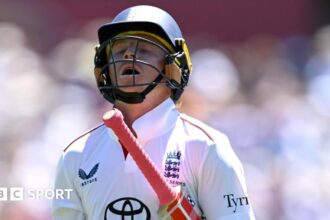
MCG Carnage: 20 Wickets Tumble in a Day as England Collapse After Tongue’s Fiery Five-For
The hallowed Melbourne Cricket Ground, a theatre so often defined by epic endurance and batting milestones, was transformed into a gladiatorial arena of pure, unadulterated pace bowling chaos on Boxing Day. In a breathless, jaw-dropping spectacle, a staggering 20 wickets fell across three sessions, leaving the Ashes series teetering on a knife-edge after just one day of the Third Test. The narrative swung violently: from Josh Tongue’s maiden five-wicket haul dragging England back into contention, to a catastrophic English batting collapse that handed the initiative right back to a rampant Australian attack.
A Tongue Lashing: England’s New Weapon Strikes Early
Under leaden Melbourne skies and with a verdant, juice-laden pitch offering ample encouragement, Pat Cummins had no hesitation in batting first. The decision immediately appeared fraught as England’s seamers, led by the impressive Josh Tongue, found relentless movement and disconcerting bounce. Tongue, the Worcestershire quick playing only his second Test, was the undisputed star of the morning. His extra pace and ability to jag the ball both ways proved unplayable.
He dismantled Australia’s top order with a spell of precision fast bowling:
- David Warner fell for a brisk but uneasy 38, edging behind.
- Steve Smith, pinned on the crease, was dismissed cheaply by a superb, seaming delivery.
- Travis Head was undone by extra bounce, fending to gully.
Supported by Ollie Robinson and Chris Woakes, Tongue returned to clean up the tail, finishing with 5 for 42—a career-defining performance that rolled Australia for a meagre 152. The Barmy Army was in raptures; England, against all odds, held a golden opportunity to build a decisive first-innings lead.
From Hope to Humiliation: England’s Batting Implodes
The euphoria was tragically short-lived. If England’s bowlers had mastered the conditions, Australia’s attack, led by the relentless Pat Cummins and the metronomic Scott Boland, authored a masterclass in home-condition exploitation. The England collapse was swift, total, and psychologically devastating. There was no resolute defence, no counter-punching partnership—just a procession of edges, beaten bats, and stunned dismissals.
Boland, the MCG’s favourite son, once again became England’s nightmare, extracting vicious seam movement. Cummins provided the thunder at the other end. The much-vaunted English top order was eviscerated:
- Zak Crawley, Ben Duckett, and Ollie Pope were all back in the pavilion with the score barely into double figures.
- Joe Root offered a faint hope with a classy 27, but his dismissal, caught behind off Mitchell Starc, felt like the death knell.
- Ben Stokes fought characteristically, but his dismissal sparked a terminal tailspin.
From 61 for 4, the last six wickets tumbled for just 49 runs. England was bundled out for a paltry 110 in under 30 overs, conceding a 42-run lead. The MCG pitch, while lively, was not a 110-all-out wicket; this was a failure of technique and temperament under the fiercest of fires.
Expert Analysis: Pitch, Pressure, and Psychological Blows
This was not merely a day of poor shots; it was a day where bowlers dominated completely due to a confluence of factors. The pitch offered consistent seam movement and bounce, but the real differentiator was the relentless pressure applied by both attacks. The cloud cover persisted, the ball swung and seamed all day, and neither batting line-up showed the discipline or the tactical nous to adapt.
The psychological momentum swing is perhaps the most critical takeaway. England, having won a massive session by bowling out Australia cheaply, had their morale utterly shattered within the space of a session and a half. Conversely, Australia, potentially facing a significant deficit, now find themselves not just ahead, but with a chance to bat last on a pitch that may become more docile. The 42-run lead is worth double that in the context of this low-scoring dogfight.
Josh Tongue’s heroics have been overshadowed by the collective batting failure, raising familiar, grim questions about England’s top-order fragility against high-quality pace in conducive conditions.
The Road Ahead: Can England Salvage the Impossible?
As Australia reached 20 for 1 in their second innings at stumps, extending their lead to 62, they hold all the cards. The forecast suggests clearer skies, which should make batting less of a lottery. Australia’s goal will be simple: bat big, bat once, and leave England a target in excess of 300 on a fourth or fifth-day wicket.
For England, the task is Herculean. They must:
- Take early wickets on Day 2 to prevent Australia from building an insurmountable lead.
- Hope that the pitch flattens out significantly for their own second innings.
- Stage one of the greatest fourth-innings run chases in Ashes history at the MCG.
Realistically, their hopes of regaining the Ashes now hang by the thinnest of threads. To win in Melbourne, they will need to produce something truly miraculous, akin to Ben Stokes’ Headingley heist, but this time against an attack that is firing on all cylinders in home conditions.
Conclusion: A Boxing Day for the Bowlers
December 26, 2023, at the MCG will be remembered not for a giant batting hundred, but for the roar of the crowd as another wicket tumbled, for the sight of fielders crowded around the bat, and for the sheer, brutal dominance of the ball over the bat. Josh Tongue’s five-for announced a serious new talent for England, but it was rendered a footnote by a subsequent batting collapse of historic proportions. This 20-wicket day has set up a Test match that will be short, sharp, and likely decisive. Australia, with their lead and their confidence restored, are now poised to crush English dreams and retain the Ashes urn on their own soil. England’s Bazball philosophy faces its ultimate, and perhaps final, examination in this series.
Source: Based on news from Sky Sports.