Martinelli’s Moment of Madness: A Heat-of-the-Moment Apology That Exposes Football’s Raw Nerve
The Premier League is a pressure cooker, and in the final seconds of a tense, title-race stalemate, Arsenal’s Gabriel Martinelli let the lid blow off. In a bizarre and controversial sequence that overshadowed a tactical 0-0 draw between Arsenal and Liverpool, the Brazilian winger’s actions toward an injured Conor Bradley sparked immediate outrage and a necessary post-match reckoning. This incident, more than the scoreline, became the story—a raw glimpse into the psychological warfare of elite sport and the fine line between competitive fire and unacceptable conduct.
- The Incident: A Breakdown in Sportsmanship in Stoppage Time
- Beyond the Apology: Analyzing the “Heat of the Moment” Defense
- The Ripple Effect: Reputation, Retrospective Action, and Fan Reaction
- Looking Ahead: Predictions for Player Discipline and Title Race Psychology
- Conclusion: A Moment That Must Define a Maturation
The Incident: A Breakdown in Sportsmanship in Stoppage Time
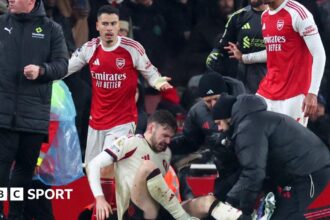
With the clock deep into stoppage time at the Emirates Stadium, Liverpool’s young right-back Conor Bradley attempted a clearance, landing awkwardly and clutching his left knee in clear distress. The ball trickled out of play near him. What followed was a moment of profound frustration made visible. Arsenal’s Gabriel Martinelli, whose pace had been largely neutralized by Bradley’s diligent defending all evening, approached the scene. In quick succession, he dropped the ball onto the prone defender, leaned his knee into Bradley’s side, and then forcefully pushed the injured player off the pitch to allow for a quick throw-in.
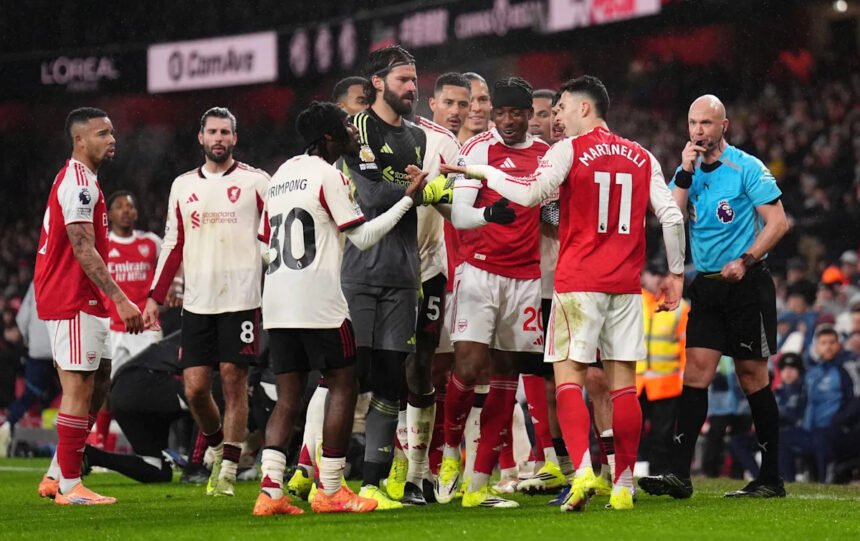
The reaction from Liverpool’s players was instantaneous and furious. Virgil van Dijk led the charge, with pushing and shoving erupting between the sets of players. The referee’s intervention yielded only a yellow card for Martinelli, a punishment many felt was lenient given the nature of the act. The final whistle blew shortly after, but the conversation had just begun.
Beyond the Apology: Analyzing the “Heat of the Moment” Defense
Martinelli’s swift apology on Instagram, confirmed by his direct messaging with Bradley, was a necessary first step in damage control. “I really didn’t understand he was seriously injured in the heat of the moment,” he wrote. This phrase—“heat of the moment”—is the most common defense in football’s emotional lexicon, but it warrants expert scrutiny.
From a psychological standpoint, elite athletes operate at a peak arousal state where the prefrontal cortex—responsible for rational decision-making and empathy—can be overridden by the amygdala, the brain’s emotional center. The stakes of the match, the frustration of a deadlocked game, and the desperate desire to restart play created a perfect storm. However, this is not an excuse, but an explanation. The very purpose of professional discipline is to install mental safeguards against these primal impulses.
Key factors that exacerbated the situation:
- Title Race Pressure: Both teams knew a single goal could define their season, creating immense tension.
- Personal Frustration: Martinelli, a key attacker, was effectively marked out of the game by the rookie Bradley.
- Game State: The final seconds represent a “win at all costs” mentality where norms can break down.
Ultimately, while the apology is accepted, the incident stains an otherwise clean reputation for Martinelli and serves as a stark teaching moment about maintaining composure.
The Ripple Effect: Reputation, Retrospective Action, and Fan Reaction
The fallout from such moments extends far beyond the yellow card. For Martinelli, it chips away at the perception of his character. He is widely regarded as a joyful, hard-working player, but this act introduces a narrative of petulance that opponents may look to exploit in future high-stakes clashes. For the officiating bodies, it raises the perennial question of retrospective disciplinary action. Could the Football Association review the incident as “violent conduct” or “unsporting behavior” worthy of a suspension, even though it was seen by the match official? Many pundits argue they should.
Fan and pundit reaction has been polarized. Some see it as a non-issue, part of the game’s dark arts and win-at-all-costs attitude. Others view it as a clear breach of the sport’s fundamental respect and safety principles. Liverpool fans, rightly, focused on the welfare of their promising young defender. Arsenal fans, while defending their player’s intent, largely conceded the action was wrong. This divide itself is telling of the modern game’s moral complexities.
Looking Ahead: Predictions for Player Discipline and Title Race Psychology
This incident will have tangible and intangible consequences as the Premier League season reaches its climax.
Immediate Predictions:
- Martinelli is unlikely to face a further ban, as the incident was adjudicated in real time, but the FA may issue a warning or a fine to emphasize standards.
- Conor Bradley’s injury, thankfully not as severe as first feared, will be the focus for Liverpool, but the squad will remember the perceived disrespect, adding extra spice to the next fixture.
- Mikel Arteta will address the moment internally, using it as a lesson in emotional control for his entire squad.
Title Race Psychology: More fascinating is the psychological impact. For Arsenal, it revealed a potentially self-destructive streak of frustration when their intricate play is stifled. For Liverpool, it could serve as a unifying “us against the world” catalyst, bonding a squad dealing with injuries and a departing manager. The incident injects a narrative of grievance and resilience into the run-in. Will Arsenal’s fire burn them or forge them? Will Liverpool use this as fuel? The mental fortitude of both squads has now been tested in an unexpected way.
Conclusion: A Moment That Must Define a Maturation
Gabriel Martinelli’s rash action in the dying embers of a title clash was a mistake born of passion, but it was a mistake nonetheless. His prompt apology to Conor Bradley is commendable, but true accountability lies in changed behavior. The greatest players in history are distinguished not just by their skill, but by their ability to master their emotions under extreme duress. This is Martinelli’s challenge now.
This episode is a microcosm of modern football: the blinding pressure, the microscopic scrutiny, and the constant battle between ruthless competition and essential sportsmanship. It reminds us that the Premier League’s relentless intensity can sometimes reveal the worst instincts before the best skills shine through. For the sake of his own growth and the spirit of the game, Martinelli must ensure this moment of madness becomes a footnote in his career, remembered only as the day he learned a hard lesson in the white-hot heat of a title race.
Source: Based on news from Yahoo Sports.