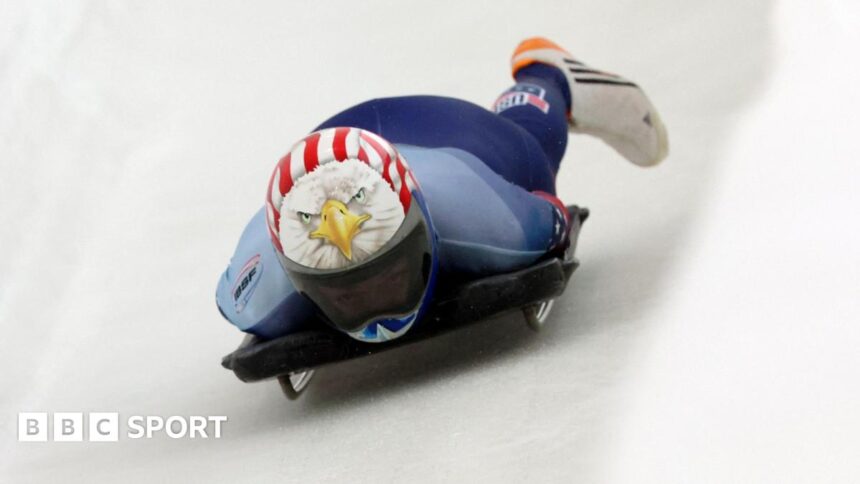
Canada’s Last-Minute Withdrawal Sparks Olympic Controversy and IBSF Investigation
The razor-thin margins of Olympic qualification are often measured in hundredths of a second. For American skeleton veteran Katie Uhlaender, her dream of a sixth Winter Games was allegedly shattered not on the icy chute, but in a contentious off-track decision that has erupted into an international sporting scandal. The International Bobsleigh and Skeleton Federation (IBSF) has launched a formal investigation after Canada’s sudden withdrawal of athletes from a critical North American Cup race in Lake Placid, a move Uhlaender claims was a deliberate act to end her Olympic career.
A Devastating Turn in Lake Placid
With the qualification window for the Milan-Cortina 2026 Olympics closing on January 18, every point was precious. Katie Uhlaender, the 41-year-old double world champion, entered the final development race in Lake Placid needing a strong finish to secure sufficient IBSF ranking points. Her performance was flawless: she won the race. Yet, her victory was rendered meaningless for qualification purposes.
The controversy stems from Canada’s decision to pull four of its athletes from the event just before it began. This withdrawal reduced the total number of competitors below the critical threshold of 21, which, under IBSF rules, drastically cuts the number of points awarded. For Uhlaender, winning a shrunken field meant she fell agonizingly short of the points needed to qualify for Team USA.
The emotional toll was immediate and profound. Uhlaender revealed she was informed of the potential plan days earlier by Canadian coach Joe Cecchini. “I cried when I found out he went through with this plan,” Uhlaender told DW. The incident transforms what should have been a triumphant final push into a bitter dispute over sportsmanship and the integrity of the qualification process.
Analyzing the Allegations and the IBSF Rulebook
At the heart of this controversy lies a clash between tactical gamesmanship and ethical competition. From a purely technical standpoint, national federations have the discretion to enter or withdraw athletes. However, the timing and impact of Canada’s move raise serious questions.
Expert analysis suggests several critical angles the IBSF investigation must consider:
- Intent and Premeditation: Uhlaender’s claim that Coach Cecchini forewarned her indicates the withdrawal was not a last-minute logistical issue, but a calculated strategy. The IBSF must determine if this was an attempt to manipulate the field to benefit Canadian athletes in the overall rankings by eliminating a strong competitor from Olympic contention.
- The “Field of Play” vs. “Off-Field” Ethics: While athletes battle on the track, coaches and federations often engage in strategic point calculations. This incident blurs the line, asking whether strategic withdrawals that directly target another athlete’s qualification constitute a violation of the sport’s spirit.
- Rulebook Ambiguity: The IBSF rulebook governs point allocation based on field size, but it may lack specific clauses preventing federations from exploiting this mechanism. The investigation’s outcome could prompt a swift rewrite of qualification protocols to close this loophole.
The core question is whether Canada’s action was a legitimate strategic withdrawal or an unethical manipulation of the system. In a sport where tenths of a second define legacies, off-ice maneuvers that decide Olympic fates are particularly incendiary.
Katie Uhlaender’s Legacy and the Stakes of a Sixth Games
To understand the gravity of this situation, one must appreciate Katie Uhlaender’s storied career. A fierce competitor since her Olympic debut in 2006, her fourth-place finish at the 2014 Sochi Games was one of the most heartbreaking near-misses in U.S. Winter Sports history, missing the podium by a mere 0.04 seconds. Her resilience in pursuing a sixth Olympics at age 41 is a testament to her dedication.
Qualifying for Milan-Cortina would have placed her in rarefied air, making her one of the most decorated and enduring Olympians in sliding sports history. The Lake Placid race was to be the culmination of a two-decade journey. Instead, it may end with a ruling from a federation boardroom. This context elevates the allegation from a simple dispute over points to a potential career-ending decision made by a rival federation.
Predictions and Ramifications for the Sport
The IBSF’s investigation will have immediate and long-term consequences for skeleton. Its findings will set a powerful precedent.
Potential outcomes include:
- Sanctions Against Canada: If the IBSF finds evidence of deliberate manipulation, it could impose penalties on the Canadian federation, ranging from fines to points deductions for its athletes in future competitions. A severe penalty would serve as a stark deterrent.
- Rule Changes for Qualification: Almost certainly, this incident will force the IBSF to amend its rulebook. Future solutions may include “locked” fields after a certain deadline, minimum field sizes for points allocation to be valid, or independent review of last-minute withdrawals.
- Impact on Athlete Trust: The controversy undermines the foundational trust between sliding nations. If strategic withdrawals become normalized, it could lead to a toxic environment of retaliation, damaging the sport’s camaraderie and reputation.
- Uhlaender’s Olympic Fate: While a reversal and direct qualification seem highly unlikely, a potential, though remote, outcome could be the IBSF awarding her compensatory points or creating an additional Olympic quota. This is the least probable scenario but remains a desperate hope for her supporters.
A Conclusion on Ice and Integrity
The investigation into the Lake Placid withdrawal is about more than ranking points; it is a defining moment for skeleton. It pits the cold, hard calculus of sports strategy against the warm, human narrative of an athlete’s lifelong pursuit. Katie Uhlaender’s story—of triumph, heartbreak, and relentless perseverance—deserved an ending written on the ice, not in a controversial decision that has cast a shadow over the sport’s integrity.
As the IBSF deliberates, its challenge is to uphold not just the letter of its rules, but their spirit. The eyes of the Olympic world are watching. The federation must ensure that the path to the Games is won through speed, skill, and courage, not through tactical withdrawals that sabotage competitors. The legacy of a great athlete, and the very soul of a sport built on a spine of steel, hang in the balance.
Source: Based on news from BBC Sport.