If Aaron Rodgers Was on the Fence About Retirement, Mike Tomlin May Have Just Pushed Him Over It
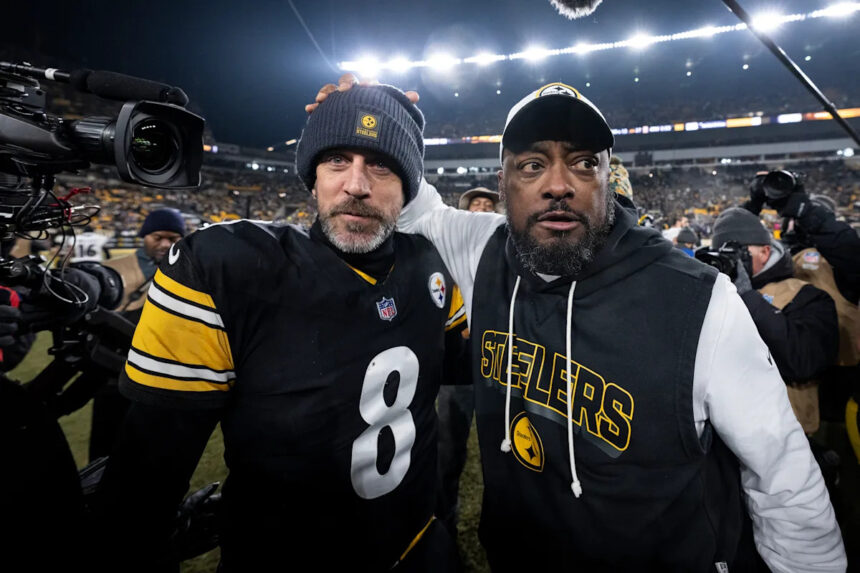
The final whistle of the Pittsburgh Steelers’ 30-6 playoff loss to the Houston Texans on Monday night didn’t just signal the end of another season. It may have signaled the end of an era. In the quiet, somber aftermath, veteran quarterback Aaron Rodgers, his own future the subject of intense speculation, delivered a passionate soliloquy. Its subject wasn’t his own arm, his health, or his legacy. It was his unwavering belief in one man: head coach Mike Tomlin. And in defending Tomlin with such fervor, Rodgers may have inadvertently revealed that his own storied career is reaching its final chapter.
- The Unwavering Faith: Rodgers’ Full-Throated Defense of Tomlin
- Reading Between the Lines: A Quarterback’s Final Priorities
- The Tomlin Conundrum and the Steelers’ Fork in the Road
- Predictions: The Likely Path Forward for Rodgers and Pittsburgh
- Conclusion: A Final Act of Loyalty, Not a Prelude to a Comeback
The Unwavering Faith: Rodgers’ Full-Throated Defense of Tomlin
In a post-game press conference where certainty was in short supply, Aaron Rodgers was unequivocal about one thing. When asked about the growing external noise suggesting Mike Tomlin’s seat might be warming after a ninth consecutive postseason without a victory, Rodgers didn’t just dismiss it. He eviscerated the notion.
“To me, an absolute joke,” Rodgers stated, his tone leaving no room for debate. He then laid out a case that was part statistical, part philosophical. “Mike T has had more success than damn near anybody in the league for the last 19-20 years. And more than that though, when you have the right guy and the culture is right, you don’t think about making a change.”
This wasn’t new, fleeting praise. Rodgers has been a Tomlin advocate since the moment he arrived in Pittsburgh, citing the coach’s leadership and the organization’s stability as primary reasons for his decision. But the timing and intensity of this defense, following a demoralizing playoff exit, were telling. It was the sound of a player who has seen the other side—organizational chaos, shifting philosophies—and found something he values more than fleeting playoff runs: a foundation of respect and consistency.
Reading Between the Lines: A Quarterback’s Final Priorities
For an athlete of Rodgers’ caliber, legacy is often measured in rings. Yet, at 40 years old and after a physically punishing season, his post-game comments suggest a shift in perspective. The analysis here is less about X’s and O’s and more about human psychology. Rodgers’ emphatic defense of Tomlin reveals what matters to him at this stage of his career.
- Stability Over Turmoil: After years of drama in Green Bay and a chaotic single season in New York, the Steelers’ culture, embodied by Tomlin, represents a sanctuary.
- Respect for the Grind: Rodgers recognizes the monumental achievement of Tomlin’s never-had-a-losing-season streak, a feat of sustained competitiveness he clearly admires.
- The Mentor Dynamic: For a quarterback who sees the game with a coach’s eye, working with a respected, veteran leader like Tomlin holds immense appeal—but perhaps more as a final chapter than a new volume.
His words weren’t those of a man plotting a multi-year comeback campaign. They were the reflections of a veteran who has found a professional home he respects, even as the ultimate team goal slipped away. This sounds like a player making peace, not gearing up for war.
The Tomlin Conundrum and the Steelers’ Fork in the Road
Rodgers’ comments throw a fascinating spotlight on the Steelers’ own offseason crossroads. Mike Tomlin’s future is the dominant question in Pittsburgh. The organization faces a critical choice: do they heed the call of a frustrated fanbase and media for seismic change, or do they trust the process of a future Hall of Fame coach and the star quarterback who vouches for him?
Rodgers’ very public endorsement is a powerful internal lobbying tool. It sends a message to owner Art Rooney II that the team’s most important veteran leader—a first-ballot Hall of Famer himself—believes in the culture Tomlin has built. However, it also creates a potential bind. If the Steelers were to surprisingly move on from Tomlin, it would dismantle the very foundation Rodgers cited for joining the team. Such a move could instantly make Pittsburgh a far less attractive destination for number 8.
This intertwining of fates is the crux of the drama. Rodgers came for Tomlin. His continued presence likely depends on Tomlin’s. But if both return, the mandate becomes unmistakably clear: this respected partnership must translate to postseason success, and quickly.
Predictions: The Likely Path Forward for Rodgers and Pittsburgh
Based on the tone and content of Rodgers’ remarks, the trajectory seems set. Here is what the expert analysis predicts for the coming months:
Aaron Rodgers will retire. His forceful, almost valedictory defense of Mike Tomlin reads as a final act of loyalty. He has accomplished his mission of bringing stability and belief to a quarterback room, mentoring players like Kenny Pickett and Mason Rudolph. Having found a culture he respects, he can walk away on his own terms, having reinforced the values he holds dear about the NFL. A grueling rehab last year and the physical toll of this season make the lure of retirement stronger than the lure of another rebuild.
Mike Tomlin will return as Steelers head coach. Despite the playoff drought, the organizational stability the Rooney family prizes, combined with a strong second-half rally to make the playoffs and a powerful endorsement from a legendary quarterback, will secure Tomlin’s position. However, his staff will likely see significant changes, particularly on the offensive side of the ball, to inject new ideas and address persistent shortcomings.
The Steelers will enter a true transition phase. With Rodgers likely retiring, the quarterback focus returns fully to Kenny Pickett or a new acquisition. The defense, while talented, is aging in key spots. The 2024 season will be about Tomlin proving he can evolve the Steelers into a modern contender without the safety net of a legendary quarterback—even one who only stayed for a season.
Conclusion: A Final Act of Loyalty, Not a Prelude to a Comeback
Monday night was not about a playoff loss. It was about a quarterback’s final testament. Aaron Rodgers’ passionate defense of Mike Tomlin was a revealing moment that transcended sports. It was a veteran defining what matters at the end of the journey: respect, culture, and the dignity of the grind. In steadfastly refusing to let his coach shoulder the blame alone, Rodgers exhibited the leadership he always promised.
In doing so, he likely closed the door on his own playing career. There’s no “one last ride” rallying cry here, only a profound appreciation for a like-minded football mind. If Rodgers was on the fence about retirement, his need to publicly align himself with Tomlin’s legacy, rather than build his own for another year, may have been the deciding push. The greatest tribute he could offer was his unwavering faith on a losing night. And sometimes, the most eloquent goodbye isn’t said with a farewell press conference, but with a fierce, loyal defense of the man standing next to you.
Source: Based on news from Yahoo Sports.