The Whisper in the Chaos: How Claude Le Roy’s Words Saved an AFCON Final and Forged a Champion
The image was surreal, a moment that threatened to unravel the very fabric of continental football’s grandest spectacle. In the cauldron of the 2025 Africa Cup of Nations final, with the score locked and tension at its peak, the Senegalese squad began a mass exodus from the pitch. Their protest, a visceral reaction to a controversial penalty awarded to Morocco via VAR, created a vacuum where only chaos seemed to reign. Yet, amidst the storm, two figures stood at the center—a furious captain and a sage-like observer. In an exclusive revelation, Sadio Mané has recounted the private exchange with legendary coach Claude Le Roy that not only averted disaster but ultimately steered Senegal to glory. This is the untold story of the dialogue that rescued a final.
A Final Unraveling: The Protest That Shocked a Continent
The stage was set for an epic conclusion. Morocco and Senegal, two titans of African football, were deadlocked in a brutal, tactical battle. The match had already been marred by controversy when a potential Senegal goal was ruled out without a VAR review, a decision that left the “Lions of Teranga” feeling aggrieved. Then, in the dying minutes of regulation, Congolese referee Jean-Jacques Ndala pointed to the spot for Morocco after a VAR monitor consultation for a challenge on Brahim Díaz.
For the Senegalese, it was the final straw. The perceived inconsistency—a review for one incident but not the other—sparked immediate and furious rebellion. Led by incensed coaching staff, players began streaming toward the tunnel, their jerseys pulled over their heads, the dream of a second AFCON title seemingly abandoned in a principled, if unprecedented, stand. The trophy, at that moment, felt like a secondary concern to justice.
Key Points of Controversy:
- VAR Inconsistency: The core of Senegalese fury was the selective use of video review by the officiating team.
- Mass Walk-Off: A rare pitch protest in a major final created an unprecedented administrative and sporting crisis.
- Leadership Vacuum: In the emotional torrent, the team risked forfeiture and lasting infamy.
The Captain and the Sage: The Pivotal Sideline Exchange
As the exodus unfolded, Sadio Mané, the team’s heartbeat and captain, stood torn between solidarity with his teammates and a deep-seated instinct to fight on the pitch. It was then that Claude Le Roy, the French coach with a legendary, decades-long history in African football, approached him. Le Roy, having managed six different nations at the AFCON, understood the emotions, the pressure, and the stakes like few others.
Mané reveals that Le Roy did not speak of the referee, the penalty, or the injustice. He did not try to lecture. Instead, he appealed to Mané’s legacy and the true meaning of the moment. “He came to me, put a hand on my shoulder, and spoke calmly,” Mané recounted. “He said, ‘Sadio, they will remember how you act now more than any goal. A champion fights until the end, on the pitch. Your people are watching. Do not let this moment steal your destiny. Win it properly, for them.’”
These words, a masterclass in emotional intelligence and leadership, cut through the rage. Le Roy reframed the crisis: it was no longer about protesting a decision, but about claiming a legacy. He reminded Mané that true leadership emerges in chaos, and that history would judge not the protest, but their response to it.
From Protest to Triumph: The Psychology of a Turnaround
The impact was immediate and profound. Mané, empowered and re-centered, became a one-man diplomatic corps. He sprinted toward the tunnel, urging, cajoling, and commanding his teammates to return. The sight of their captain, now a vessel of calm determination, reversed the momentum. One by one, the players trickled back, their anger channeled into a cold, focused resolve.
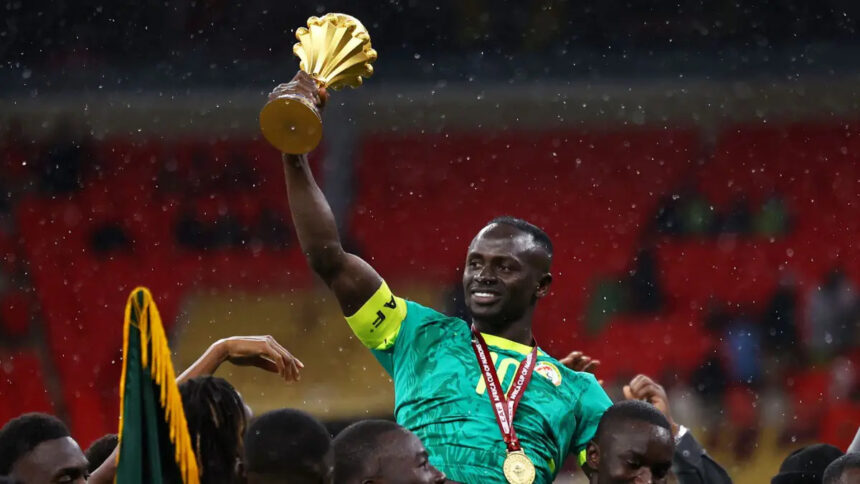
Psychologically, the episode created a powerful “us against the world” mentality. The perceived injustice bonded the squad even tighter. When the Moroccan penalty was subsequently saved by Édouard Mendy, it felt like fate had been challenged and won. The emotional whiplash—from despair to fury to relief—galvanized Senegal. They entered extra time not as victims, but as warriors with a renewed cause. The winning goal, scored late in extra time, was not just a sporting moment; it was a cathartic release, a validation of the choice to return and conquer.
Expert Analysis: Sports psychologists note that Le Roy’s intervention was a perfect de-escalation. He provided Mané with three critical tools:
- A Higher Purpose: Shifting focus from a past injustice to a future legacy.
- Ownership: Placing the power to define history squarely on Mané’s shoulders.
- Emotional Recalibration: Converting destructive anger into focused, competitive energy.
Legacy and Lessons: Beyond the Trophy
The 2025 AFCON final will be remembered for more than Senegal’s victory. It will be studied as a case study in crisis management, leadership, and the soul of sport. Claude Le Roy’s quiet wisdom averted what could have been the most scandalous conclusion in tournament history. In doing so, he underscored the irreplaceable value of experienced, culturally-attuned figures in football.
For Sadio Mané, this final cemented his status not just as a world-class player, but as a legendary captain. His ability to receive counsel, recalibrate, and then lead his men back from the brink speaks to a maturity that defines sporting greats. The trophy is a symbol of their quality, but the story of its winning is a testament to their character.
Predictions for the Future: This event will likely have lasting repercussions:
- Refereeing Scrutiny: CAF will face increased pressure to ensure consistent VAR protocols across all match situations.
- Player Protest Protocols: Governing bodies may formalize rules and consequences for in-match walk-offs.
- The Le Roy Effect: A renewed appreciation for veteran mentors and sporting diplomats within national team setups.
Conclusion: In the end, the 2025 AFCON final was decided not by a single moment of skill, but by a moment of profound choice. Amidst the blinding flash of protest, a calm conversation on the touchline illuminated the right path. Claude Le Roy’s words to Sadio Mané did more than save a football match; they preserved the competition’s integrity and offered a masterclass in leadership. The story reminds us that while football is played with the feet, its most enduring moments are often shaped by the wisdom of the mind and the courage of the heart. Senegal’s victory will forever be intertwined with the lesson that the greatest champions are those who choose to write their own ending, especially when the script appears torn.
Source: Based on news from Yahoo Sports.