Why Andoni Iraola’s Bournemouth Future Hangs in the Balance
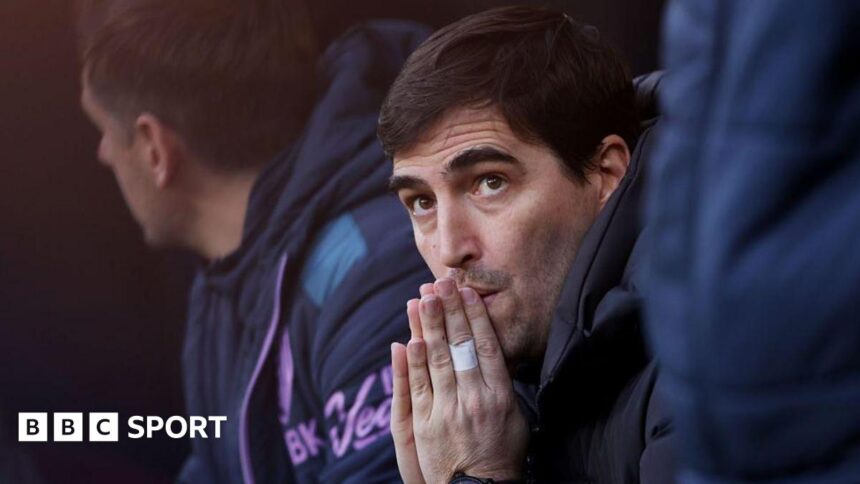
The air on the south coast should be one of unbridled optimism. AFC Bournemouth, under the shrewd guidance of Andoni Iraola, are fresh from recording their highest-ever Premier League points tally, playing a vibrant, pressing style that has earned plaudits far beyond the confines of the Vitality Stadium. Yet, beneath the surface of this undeniable success, a narrative of uncertainty is brewing. Having navigated the departure of key forward Antoine Semenyo to Manchester City, the focus is shifting sharply from the pitch to the dugout. Despite his achievements, Iraola’s own long-term future at the club is emerging as a dominant and pressing question.
A Triumph Tempered by Turmoil
To understand the present unease, one must first appreciate the scale of Iraola’s accomplishment. Arriving from Rayo Vallecano in the summer of 2023, the Basque coach brought a clear, demanding philosophy. His journey through AEK Larnaca, Mirandés, and Rayo had forged a manager adept at maximizing resources and implementing a cohesive, aggressive system. At Bournemouth, he succeeded spectacularly, transforming the Cherries from a team often tipped for relegation into a formidable, mid-table force.
However, this sporting triumph has been juxtaposed against a backdrop of significant behind-the-scenes change. The players’ revolving door at the Vitality Stadium has, according to sources close to the manager, spun a little too frequently for Iraola’s liking. While player trading is part of the modern game, the consistent churn—both in terms of high-profile sales and a high volume of incoming signings—can undermine a manager’s primary task: building a stable, drilled, and unified squad. Iraola is a coach who thrives on tactical repetition and player buy-in; constant flux is the antithesis of his process-oriented approach.
The sale of Antoine Semenyo, a player who blossomed under Iraola’s system, is a case in point. It demonstrates the club’s model but also poses a direct challenge to the manager’s project. Can sustained progress be built if every season’s standout performer is potentially sold?
The Structural Tension: Philosophy vs. Model
This friction points to a potential fundamental divergence between the manager’s vision and the club’s operational model. Bournemouth’s ownership, under Bill Foley, is ambitious and has invested significantly, but it also operates with a clear eye on value creation and sustainability. This often involves identifying, developing, and selling assets.
Iraola’s coaching pedigree, however, suggests he is at a stage in his career where he seeks a project built on progression and stability. His work at previous clubs wasn’t about quick fixes but about instilling a deep-rooted style and growing with a group. The current environment at Bournemouth, with its intense player turnover, may feel at odds with that developmental timeline. Key questions are now being asked:
- Alignment of Vision: Are the board and the manager aligned on the pace and method of building a top-half Premier League side?
- Transfer Policy Control: How much influence does Iraola have over incoming and outgoing transfers? Is he merely a head coach, or a manager with significant squad-building input?
- Patience vs. Profit: Can the club resist lucrative offers for its stars to allow Iraola’s project to reach its next phase?
The Looming Shadow of Elite Interest
Compounding Bournemouth’s challenge is Iraola’s dramatically enhanced reputation. His success has not gone unnoticed. The Basque coach is now firmly on the radar of bigger European clubs who are attracted to his modern tactical approach and proven ability to improve players. Should a club with greater financial muscle and a more stable squad structure come calling—particularly one in his native Spain—the allure would be powerful.
For Iraola, the calculation becomes complex: continue battling the inherent challenges of a “selling club” model in the world’s most competitive league, or seize an opportunity at an institution where the conditions for tactical implementation might be more controlled and the ceiling perceived as higher. Bournemouth’s task is no longer just to build a team; it is to convince a coveted manager that their project is the most compelling for his esteemed career.
Predictions: A Pivotal Final Act to the Season
As the Cherries head into the final months of the season, every result and every public statement will be scrutinized for clues. The resolution of this uncertainty will likely follow one of three paths:
1. The Reconciliation & Renewal: The board moves decisively to secure Iraola’s future with a new, improved contract and provides concrete assurances over a more balanced transfer strategy. A statement signing in the summer, perhaps even against the grain of their typical model, would signal a clear commitment to building around the manager’s vision.
2. The Pragmatic Parting: Both sides, recognizing a misalignment, agree that the project has run its natural course. Bournemouth cashes in on their highly-valued manager (compensation for his staff would be significant), while Iraola secures a move that aligns with his desire for a stable, long-term build. This would be a business-like, if disappointing, conclusion for fans.
3. The Tense Standoff: The situation drifts into the summer, with speculation intensifying. This is the worst-case scenario for squad planning and pre-season preparation. It would indicate unresolved tensions and could force a reactive, rather than proactive, decision later in the transfer window.
Conclusion: A Crossroads for the Cherries’ Project
Andoni Iraola’s situation at Bournemouth is a stark reminder that success on the pitch does not automatically equate to stability off it. The manager has delivered beyond expectations, crafting a compelling identity for the team. Yet, the very model that facilitated his arrival—a club savvy in the transfer market—now threatens his continuity. The loss of Antoine Semenyo is a symptom, not the cause; the core issue is the long-term strategic harmony between dugout and boardroom.
Bournemouth now face a defining choice. They can either double down on their manager, adjusting their model to foster the stability his football philosophy craves, or they may find themselves searching for a new coach to navigate the same systemic challenges. For Iraola, the coming months are about assessing whether the Vitality Stadium remains the ideal canvas for his ambitious work. The Premier League has witnessed Bournemouth’s impressive rise; it now watches intently to see if the architect of that rise will be there to lay the next foundation.
Source: Based on news from BBC Sport.