Good Signs or Just Buying Time? Inside the Divided Tottenham Hotspur Camp on Thomas Frank
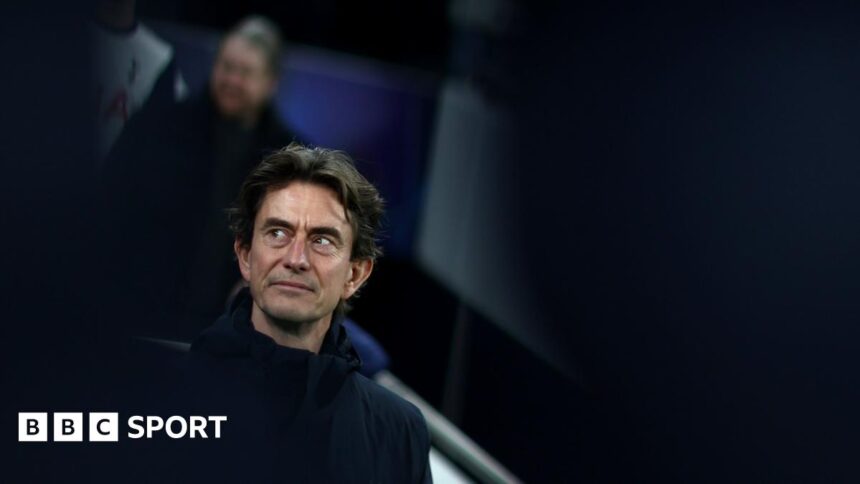
The air around Tottenham Hotspur Stadium has been thick with more than just North London mist. It has been laden with a potent cocktail of frustration, anxiety, and the deafening sound of dissent. As Thomas Frank’s Spurs stumbled to a third consecutive defeat last weekend—a gut-wrenching, last-minute loss to West Ham met with a crescendo of boos—the cliff edge came into sharp view. The journey of many fans to Tuesday’s crucial Champions League tie against Borussia Dortmund was less a march of hope and more a funeral procession of belief. Yet, 90 minutes later, a 2-0 victory and a spirited performance from a depleted squad have thrown a complex new question into the mix: was this a genuine turning point, or merely an expensive stay of execution?
A Stadium Divided: The Boos, The Belief, and The Breaking Point
To understand the current fracture at Tottenham, one must first feel the depth of the recent despair. The project under Thomas Frank, which began with such optimistic noise, had descended into a worrying cycle of fragile play and poor results. The defeat to West Ham was a microcosm: passive for large periods, seemingly devoid of a coherent plan, and punished cruelly at the death. The reaction from the stands was unequivocal and brutal.
Speaking to supporters outside the stadium before the Dortmund clash, the mood was bleak. The majority had reached a conclusion: Thomas Frank was not the right man for the job. The faith had evaporated, replaced by a weary acceptance that a heavy defeat to the German giants would likely spell the end. The toxicity was palpable, a tangible force that threatened to consume the club’s European campaign before it had truly begun.
This environment makes Tuesday’s response not just a victory, but a potentially pivotal moment in the narrative. The win did more than just secure three points; it temporarily silenced the internal storm.
Analyzing the Dortmund Response: Pragmatism or Philosophy?
So, what changed on the pitch against Dortmund? The performance offered a compelling, if not entirely conclusive, case for the defence. Depleted by injury and suspension, Frank was forced into a pragmatic, disciplined setup. The team displayed two traits conspicuously absent in recent weeks: collective resilience and tactical discipline.
First-half goals from Christian Romero and Dominic Solanke provided a platform, but the true victory was earned in a resolute second-half defensive display. The midfield worked as a cohesive unit, the defensive line held a higher degree of organization, and there was a visible commitment to the cause that had been questioned. Key factors included:
- Adapted Tactics: Frank shelved some of his more expansive ideals for a compact, counter-attacking approach that suited the available personnel and the high-stakes occasion.
- Leadership Emerged: In the absence of several starters, senior players like Romero and Pierre-Emile Højbjerg stepped up, providing the on-pitch direction that has often been lacking.
- Execution in Key Moments: Spurs were clinical with their limited first-half chances, a stark contrast to the wastefulness that has plagued them domestically.
This was not the free-flowing, dominant football promised at Frank’s arrival. It was, however, a demonstration of a team capable of fighting for a result—a basic foundation that had seemingly eroded.
The Crucial Crossroads: What Comes Next for Frank and Spurs?
The victory buys Thomas Frank time. There is no question about that. The looming crisis has been pushed back, and the immediate pressure from the boardroom has likely eased. But the fundamental divide among the fanbase and, reportedly, within the club’s hierarchy, remains. The Dortmund result poses a difficult analytical challenge: is it a blueprint or an anomaly?
The upcoming Premier League fixtures are now the ultimate litmus test. The goodwill generated in Europe will evaporate instantly with a return to insipid domestic form. Frank faces a dual task: he must prove that the fight shown against Dortmund is the new standard, not a one-off reaction to extreme pressure, while also reintegrating his returning stars without losing the defensive solidity just displayed.
The key questions that will define his future are now clear:
- Can he build on this performance and establish a consistent tactical identity?
- Will the players show the same level of commitment against mid-table Premier League opposition as they did on a Champions League night?
- Can he win back the disillusioned supporters, or is the disconnect too great?
The board’s perspective is equally critical. They must decide if this was evidence of Frank’s ability to adapt and rally his squad—a prized managerial skill—or simply a dead-cat bounce before an inevitable decline. Their investment in him and his vision is now under the microscope more than ever.
Prediction: A Temporary Truce with Permanent Pressure
Predicting the outcome at Tottenham Hotspur is a fool’s errand, but the trajectory is clearer. The victory over Borussia Dortmund has created a temporary truce. It has given Frank a precious commodity: a few weeks of slightly reduced external noise to work on the training ground. However, it has not erased the deep-seated concerns about his long-term suitability.
The prediction here is that Thomas Frank survives until at least the next significant downturn. The board will be reluctant to pull the trigger immediately after such an important European win. However, the margin for error is now infinitesimally small. Any sequence of poor results will see the toxicity return faster and more fiercely than before. The fan sentiment has hardened; patience is no longer a virtue afforded to him.
His future likely hinges on translating the Champions League resolve into Premier League points. If he can channel the spirit of Tuesday night into a sustained run of form, he may yet turn the tide of opinion. If not, the Dortmund win will be remembered not as a rebirth, but as a beautifully timed but ultimately meaningless reprieve.
Conclusion: More Than Just Three Points
In the end, Tottenham’s win over Borussia Dortmund was about far more than securing a foothold in their Champions League group. It was a night that laid bare the fragile, fractured state of the club while simultaneously offering a glimmer of an alternative path. For Thomas Frank, it was a necessary demonstration that his voice can still resonate in the dressing room and that his team can produce a performance of guts and guile.
However, to interpret this as the corner being turned would be premature. In the ruthless ecosystem of the Premier League, one night’s resilience does not solve systemic issues. The divide over Frank’s future remains, now suspended in an uneasy limbo. The “good signs” are undeniable, but they are currently outweighed by the heavy baggage of recent failures. The German phrase “aufgeschoben ist nicht aufgehoben” comes to mind—postponed is not canceled. Thomas Frank has bought himself time. The monumental task of buying back belief starts now.
Source: Based on news from BBC Sport.