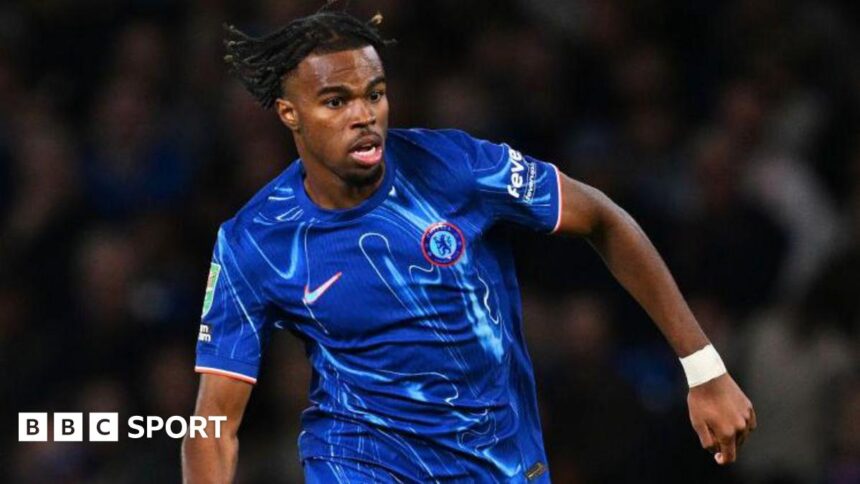
The Chukwuemeka Conundrum: Does the Chelsea Man Signal the End of the 90-Minute Player?
The name was trending, buzzing across timelines from Twitter to TikTok. Carney Chukwuemeka. In the hyper-reactive world of football social media, such a surge usually signals a moment of brilliance—a thunderous strike from distance, a mazy dribble past three defenders, or a contentious red card. For the Chelsea midfielder, the reality was more peculiar, a statistical anomaly that sparked a deeper tactical debate: the 20-year-old had just made his 97th senior appearance for club and country, yet he has never, not once, played a full 90 minutes.
A Modern Footballing Phenomenon: The Perpetual Substitute
Carney Chukwuemeka’s career path is a fascinating case study in contemporary player development. A highly coveted England youth international, he made his senior breakthrough at Aston Villa before a high-profile, £20 million move to Chelsea in 2022. His raw talent is undeniable—a blend of physical power, technical grace, and driving runs from midfield. Yet, his role has been meticulously, and perhaps mysteriously, defined by limitation.
In the 2023/24 season, this trend crystallized. Chukwuemeka made 32 appearances for Chelsea across all competitions, but did not complete a game. He was either an impact substitute, tasked with changing a game’s dynamic, or a starter who was systematically withdrawn, often around the 60-70 minute mark. This is not an accident; it is a deliberate pattern enacted by multiple managers at two different Premier League clubs. It begs the question: is Chukwuemeka a unique project, or is he the purest embodiment of a shifting football philosophy?
Tactical Specialization and the Death of the “Iron Man”
Gone are the days when a central midfielder was expected to be a ubiquitous, box-to-box engine for every minute of every game. The increase in match intensity, data analytics, and squad size has fostered an era of extreme specialization. Players are now deployed as specific tactical tools, their minutes managed with scientific precision.
Chukwuemeka’s profile fits this new model perfectly. His skill set is tailored for specific phases of the game:
- Impact Against Tired Legs: His direct carrying ability and physicality are maximized when opposing midfielders are fatigued, making him a potent substitute.
- High-Intensity Bursts: Coaches may believe his current physical output is unsustainable over a full match, opting for a shorter, explosive contribution.
- Tactical Flexibility: He can be used to switch systems—introduced to change a game’s tempo or to provide fresh legs in a pressing structure without the risk of him fading.
This hyper-managed approach contrasts sharply with the legacy of Premier League “iron men” like Frank Lampard or Steven Gerrard, for whom playing the full 90 was a minimum expectation. The modern game, particularly at elite clubs like Chelsea with vast squads, no longer demands that universal soldier. It demands a Swiss Army knife, used for the right tool at the right time.
Development Pathway or Limiting Ceiling?
There are two divergent schools of thought on what this means for Chukwuemeka’s future. Is this careful curation the ideal development path for a young talent, or is it placing a glass ceiling on his potential?
The Development Argument: Proponents suggest this method protects young players, eases them into the brutal demands of top-flight football, and allows them to learn the game in specific scenarios without the burden of full-match responsibility. It builds confidence through consistent, manageable contributions and preserves their physical longevity.
The Limitation Argument: Critics argue that to become a truly complete, world-class midfielder, a player must develop the game intelligence, pacing, and resilience that only comes from navigating the full emotional and physical arc of a match. Can a player learn to manage a game in its dying moments if he’s never on the pitch for them? The demise of a 90-minute player model, for some, risks producing athletes who are brilliant in fragments but lack the holistic mastery to be a team’s cornerstone.
For Chukwuemeka personally, the challenge is multifaceted. He must absorb tactical instruction rapidly, make an immediate impact, and consistently prove he deserves more—all while never being given the conventional runway to truly take off.
The Future: Niche Star or Evolved Mainstay?
Predicting Chukwuemeka’s trajectory is to predict the evolution of the midfield role itself. Several paths are possible:
The “Super-Sub” Archetype: He may become the elite version of this role—a player so devastating in 30-minute spells that his value is defined by game-changing contributions from the bench, much like Ole Gunnar Solskjær or Edin Džeko in certain phases of their careers.
The Evolved Mainstay: Alternatively, this period could be seen as an extended apprenticeship. As his physical conditioning and tactical understanding peak in his mid-20s, he could seamlessly transition into a 90-minute player, with his early career management preserving his body and sharpening his instincts.
The System-Specific Key: His future may lie at a club or under a manager whose system is built entirely around his unique attributes, designing a midfield structure that accommodates his high-octane style for the full duration.
The coming seasons are critical. Will the statistic of 97 senior appearances across all competitions – but somehow has never played a full 90 minutes become a curious footnote on his path to stardom, or will it define the very nature of his contribution?
Conclusion: More Than a Statistical Quirk
Carney Chukwuemeka’s trending social media moment was about more than a bizarre stat. It was a spotlight on a fundamental shift in football’s landscape. He is not necessarily a player in demise, but rather a prototype—a symbol of the modern game’s move towards maximum efficiency, tactical micro-management, and the death of the one-size-fits-all midfielder.
Whether this model represents progress or a loss of footballing essence is a matter for passionate debate. What is clear is that Chukwuemeka’s career will be a bellwether. His success or struggle to break free from this minute-managed mold will offer a definitive answer on the viability of the “90-minute player” in the sport’s elite echelons. For now, he remains football’s most intriguing unfinished symphony, a talent always playing the opening and middle movements, but never yet the final, defining notes.
Source: Based on news from BBC Sport.