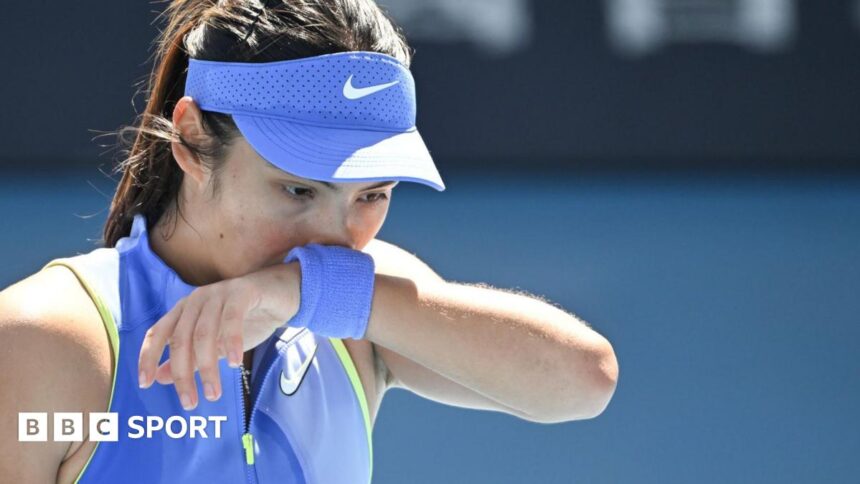
The Melbourne Mirage: What Really Went Wrong for Emma Raducanu at the Australian Open?
The narrative was seductive, almost irresistible. As the Australian Open draw unfolded, a tantalizing path emerged for Emma Raducanu. A potential third-round showdown with the reigning champion, Aryna Sabalenka—a blockbuster litmus test for the young Briton’s resurgence. The tennis world, fans and pundits alike, began to plot ahead, dreaming of that seismic clash. But in a stark, cold dose of reality, it turns out we looked one round too far. Raducanu’s Melbourne campaign ended not with a bang against a top seed, but with a whimper against the 55th-ranked Anastasia Potapova. The 7-6 (7-3), 6-2 defeat was more than a simple second-round exit; it was a poignant reminder of the complex, unyielding journey that has defined Raducanu’s career since her fairy-tale 2021 US Open triumph.
The Weight of the Narrative vs. The Reality of the Match
Since her historic Flushing Meadows victory, Emma Raducanu’s Grand Slam struggles have been a central storyline in tennis. The statistics are stark: she has now navigated past the third round of a major only once since that breakthrough. In Melbourne, the external narrative of a “Sabalenka test” created a subtle but dangerous trap. It shifted focus away from the immediate, gritty challenge at hand. Anastasia Potapova, a powerful and erratic ball-striker, was relegated to a mere stepping stone in the projected storyline. This is a classic pitfall in elite sport, and on Wednesday, Raducanu walked straight into it.
From the outset, Raducanu seemed out of sync. Her normally precise timing was absent. The Potapova power and aggression consistently pushed her back, negating her ability to control points from the baseline. The first set was a messy affair, riddled with unforced errors from both, but it was Potapova who managed the crucial moments with greater clarity. Winning the tie-break seemed to fracture Raducanu’s resolve, and the second set became a one-way procession of errors and frustration.
- Forehand Breakdown: Raducanu’s forehand, a key weapon, became a major liability, spraying errors long and wide under pressure.
- Return Game Neutralized: She struggled to attack Potapova’s second serve, allowing the Austrian to hold serve with relative comfort.
- Lack of Plan B: When her initial aggressive intent was met with greater force, a discernible tactical adjustment failed to materialize.
Beyond the Scoreline: The Lingering Questions of Consistency and Physicality
This loss cannot be viewed in isolation. It is the latest chapter in a post-US Open story defined by disruption. A revolving door of coaches, a troubling run of injuries and physical setbacks, and the immense, unrelenting pressure of expectation have all conspired to prevent Raducanu from building any sustained momentum. Her 2023 season was essentially lost to multiple surgeries. While her talent remains undeniable, the foundational base of match toughness and physical resilience is still under construction.
Potapova, while ranked lower, is a seasoned competitor who plays a high-risk, high-reward brand of tennis. On days when her game clicks, she can beat anyone—as she proved by dismantling a seeded player. The match highlighted a critical gap for Raducanu: the ability to weather an opponent’s hot streak and ugly her way to victory when her best tennis is not available. This grinding consistency is the hallmark of top-10 players, and it is forged through uninterrupted periods of competition, which Raducanu has sorely lacked.
Physical conditioning and match sharpness were also glaring factors. In the longer rallies and the tense moments of the first-set tiebreak, Potapova appeared the more robust athlete. For Raducanu, returning to the grueling best-of-three-set grind of tour life, let alone best-of-five, is a physical challenge she is still re-acclimating to.
Expert Analysis: The Peril of Projection and the Path Forward
The temptation to project a player’s draw is a guilty pleasure for every tennis fan, but Raducanu’s loss serves as a masterclass in its dangers. It underscored a fundamental truth: in modern tennis, there are no easy draws. Every player in the main draw of a Grand Slam is a world-class athlete capable of a devastating performance. By mentally fast-forwarding to a Sabalenka clash, the tennis world—and perhaps, subconsciously, Raducanu herself—did a disservice to the very real threat Potapova posed.
So, where does Raducanu go from here? The path is less about dramatic overhauls and more about patience and process.
- Embrace the Grind: The focus must shift from headline-grabbing results to accumulating matches, points, and confidence on the WTA Tour. Building a ranking the traditional way is her current task.
- Stability is Key: Maintaining a consistent coaching and support team will be crucial to developing a reliable game identity under pressure.
- Physical Foundation: Continuing to build her strength and durability to withstand the weekly rigors of the tour is non-negotiable.
Predictions: A Reset, Not a Regression
While the Melbourne exit is a setback, it should be framed as a necessary step in a longer comeback arc. The predictions for Raducanu’s 2024 season must be tempered with realism. Expecting an immediate return to the second week of majors is premature. The key metrics for success this year should be:
Sustained Tour-Level Health: Completing a season without significant injury interruption.
Deep Runs at WTA 250/500 Events: Winning multiple matches at regular tour stops to rebuild ranking and confidence.
Developing a Wimbledon Threat: Using the grass season, a surface that suits her game, to make a meaningful impact.
The Sabalenka showdown was a mirage. The real test for Emma Raducanu was always going to be the daily, unglamorous work of rebuilding. Melbourne proved that this work is still very much in progress.
Conclusion: The Long Game After the Short-Lived Dream
Emma Raducanu’s Australian Open defeat was a stark collision between a seductive narrative and a brutal sporting reality. The dream of a champion’s test against Sabalenka evaporated, replaced by the sobering lesson of present-moment focus. What went wrong in Melbourne was a combination of a tough opponent playing well, a lack of match-toughness, and the immense difficulty of reclaiming elite consistency after a long absence.
For Raducanu, the unique burden of having peaked so spectacularly so early continues to shape her journey. The victory in New York created a timeline and expectation that was always artificial. Her path now is not that of a defending champion, but of a prodigious talent learning her craft on the main tour, facing the same struggles and setbacks as her peers. The mirage in Melbourne has cleared. The road ahead is long, hard, and real—and it is the only one that leads back to where she wants to be.
Source: Based on news from BBC Sport.