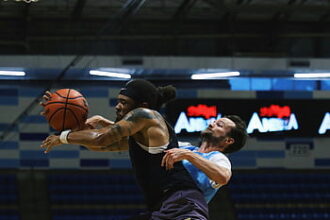
Charles Bediako Granted TRO: A Stunning Legal Twist in College Basketball’s New Era
In a ruling that sends shockwaves through the landscape of college athletics, a judge on Wednesday granted former Alabama Crimson Tide standout Charles Bediako a temporary restraining order (TRO), clearing a path for his immediate return to the team. This unprecedented legal maneuver, coming after Bediako entered the 2023 NBA Draft and went unselected, is more than a personnel note for Nate Oats’s program. It is a direct challenge to the NCAA’s foundational rules on eligibility and a dramatic case study in the shifting power dynamics of the NIL (Name, Image, and Likeness) and transfer portal era. Bediako’s fight to regain his amateur status is a landmark moment, blurring lines and setting a potential precedent that could reshape roster construction forever.
- The Unprecedented Path: From Draft Declaration to Courtroom Victory
- Legal Jargon Decoded: What a TRO Really Means for Alabama and the NCAA
- Ripple Effects: How the Bediako Case Could Reshape College Basketball
- Predictions and the Road Ahead for Bediako and the Tide
- Conclusion: A Watershed Moment in the Athlete Empowerment Era
The Unprecedented Path: From Draft Declaration to Courtroom Victory
Charles Bediako’s journey to this legal crossroads is a tale of modern college basketball calculus. After two formidable seasons in Tuscaloosa, where he anchored the defense for a No. 1 seeded Alabama team, the 7-foot center declared for the 2023 NBA Draft. He maintained his college eligibility through the process but ultimately went undrafted—a scenario that has become increasingly common. Traditionally, the path forward for a player in Bediako’s position was clear: pursue a professional career overseas or in the G League, or, if eligible, enter the transfer portal as a graduate student. Bediako initially chose the professional route, signing an Exhibit 10 contract with the San Antonio Spurs.
However, his professional journey was short-lived. After being waived by the Spurs in October 2023, Bediako’s situation grew complex. Having signed a professional contract, he was, under NCAA bylaws, permanently ineligible for collegiate competition. This is where the story pivots from athletic to legal. Bediako’s legal team argued that the NCAA’s rule—which strips eligibility from a student-athlete who signs with an agent and receives professional pay, even if they are later cut—is unreasonably restrictive and harmful. The granting of the TRO suggests the judge found merit in the argument that Bediako would suffer “irreparable harm” without the ability to play, opening the door for his return while the broader legal battle plays out.
Legal Jargon Decoded: What a TRO Really Means for Alabama and the NCAA
To understand the magnitude of this decision, one must cut through the legal terminology. A temporary restraining order (TRO) is not a final ruling on the case’s merits. It is an emergency injunction to maintain the status quo and prevent immediate harm until a full hearing can be held. In this context, the “harm” is to Bediako’s career and earning potential. The judge’s order effectively suspends the NCAA’s eligibility rule as it applies to Bediako, allowing him to suit up for the Crimson Tide immediately.
This legal action directly targets the NCAA’s core authority. The arguments likely centered on several key points:
- Antitrust Considerations: Does the NCAA’s eligibility rule represent an unlawful restraint on a player’s ability to pursue their profession?
- Irreparable Harm: Can a year of lost development and exposure at the collegiate level, along with lost NIL opportunities, be quantified and remedied by money later?
- The New Reality of NIL: In an era where college athletes can profit, does the distinction between “amateur” and “professional” hold the same weight?
For the University of Alabama and Coach Nate Oats, this is a sudden and massive roster boost. Bediako is a proven, elite defensive force whose shot-blocking and rim protection were missed last season. His return transforms Alabama’s frontcourt from a question mark to a strength overnight. However, it also places the university in a delicate position, navigating between supporting their player and adhering to the governance of the NCAA, which could potentially levy penalties if the ruling is later overturned.
Ripple Effects: How the Bediako Case Could Reshape College Basketball
The implications of this case extend far beyond Tuscaloosa. If Bediako’s legal team ultimately prevails, it could create a seismic shift in how players, coaches, and agents approach the draft process. We are looking at a potential future where the decision to declare for the draft carries less permanent risk.
Expert analysis suggests several potential outcomes and strategic shifts:
- The “Bediako Loophole”: Could this create a de facto “free look” at the NBA? A player could declare, sign an Exhibit 10 or similar low-risk professional deal, attend an NBA camp, and if it doesn’t work out, use legal precedent to return to school. This would fundamentally alter the risk-reward of draft declaration.
- Agent and NIL Strategy: Aggressive agents might use this as a selling point to recruits: “Declare, test the waters, and if you don’t get the guarantee, we’ll fight for your return.” Concurrently, a player’s NIL collective might be incentivized to support such legal battles to retain star talent.
- NCAA Rulebook Under Siege: This is another in a long line of legal challenges chipping away at the NCAA’s regulatory power. A loss here could force a wholesale rewrite of amateurism rules related to professional contracts, potentially aligning them more with the NCAA’s more lenient rules for baseball and hockey draftees.
The transfer portal dynamics also change. Currently, a graduate transfer has immediate eligibility. A successful undergraduate player like Bediako, armed with this legal precedent, could potentially enter the portal after a professional stint, creating a whole new class of highly sought-after “free agents.”
Predictions and the Road Ahead for Bediako and the Tide
In the immediate term, Charles Bediako will rejoin Alabama basketball for workouts and, barring a swift overturning of the TRO, will be on the court when the season begins. His integration should be seamless; he knows the system, the coach, and many of his teammates. His presence instantly elevates Alabama’s ceiling, making them a legitimate national championship contender by shoring up their most significant weakness from last year.
However, the legal battle is far from over. The NCAA will vigorously defend its bylaws. The next step is a preliminary injunction hearing, where Bediako’s team will have to prove a likelihood of success on the merits of their case and continue to argue the point of irreparable harm. This could drag on for months, casting a shadow of uncertainty over the entire season. Will Alabama’s wins be vacated if the ruling is reversed mid-season? It’s a nightmare scenario for the compliance office.
Prediction: The pressure for a settlement is high. The NCAA may seek to avoid a definitive, precedent-setting court loss. A possible outcome is the NCAA granting Bediako a one-time waiver for reinstatement, preserving their broader rule while resolving this specific incendiary case. Regardless, the genie is out of the bottle. The Bediako case has demonstrated that the courts are a viable avenue for players to challenge eligibility restrictions, a reality that will empower others in similar situations.
Conclusion: A Watershed Moment in the Athlete Empowerment Era
The granting of a TRO for Charles Bediako to return to Alabama is not merely a roster update. It is a watershed moment, a direct and successful challenge to the NCAA’s authority mounted by a player seeking to reclaim his collegiate career. This case sits at the intersection of the NBA draft, the transfer portal, and NIL, proving that the modern college athlete is increasingly willing to use all tools at their disposal—including the legal system—to shape their career trajectory.
Whether this becomes a widespread trend or a unique footnote depends on the final court rulings. But the message is clear: the old rules are crumbling. For coaches, adaptability is now as crucial as play-calling. For the NCAA, reactive governance is failing. And for players like Charles Bediako, the court of law has just become another arena in which to fight for their future. As he steps back onto the court in Crimson and White, he carries with him not just the hopes of a championship, but the weight of a precedent that could set a new standard for player mobility and empowerment in college sports.
Source: Based on news from ESPN.
Image: CC licensed via www.pickpik.com