The Short, Sharp Sting of No. 45: Gerald Wallace’s Pivotal Brooklyn Nets Chapter
In the sprawling, six-decade tapestry of the Brooklyn Nets franchise, some jersey numbers tell epic tales of Hall of Fame careers. Others whisper of fleeting moments and forgotten contributors. Then there is No. 45, a number that, for one turbulent season, was worn by a player whose very presence signaled the end of one era and the desperate, costly gamble for the next. That player was Gerald Wallace, and his tenure in the black-and-white, though brief, remains one of the most consequential and debated in the team’s modern history. As we continue our series examining the 52 jersey numbers and over 600 players in franchise lore, Wallace’s story stands out not for longevity, but for impact—a human accelerant thrown onto the smoldering hopes of a franchise in transition.
From “Crash” to Cornerstone: The Trade That Shook New Jersey
When the then-New Jersey Nets acquired Gerald Wallace from the Portland Trail Blazers at the 2012 trade deadline, it was a move met with a complex mix of excitement and apprehension. The Nets, languishing and destined for another lottery trip, sent a protected first-round pick and several players for the man known universally as “Crash.” Wallace was a former All-Star, a Defensive Player of the Year candidate, and the very embodiment of relentless, high-motor play. For a franchise preparing for a monumental move to Brooklyn that summer, he was envisioned as the perfect veteran bridge—a culture-setter whose hard-nosed style would define the new Brooklyn grit.
However, the cost was glaring. That protected pick, sent to Portland, would eventually become Damian Lillard. While no draft selection is a guaranteed superstar, the shadow of that transaction would loom over every decision that followed. The Nets, led by General Manager Billy King, were all-in on accelerating a rebuild to match their new Barclays Center address. Re-signing Wallace in the summer of 2012 to a four-year, $40 million contract was the first major domino to fall in that high-stakes strategy. He was the first piece, intended to attract others, and he would don the No. 45 for the inaugural Brooklyn season.
The Inaugural Brooklyn Engine: Wallace’s Role and Statistical Impact
Gerald Wallace’s single season in Brooklyn was a masterclass in doing the dirty work. On a roster featuring the scoring of Deron Williams and Joe Johnson, and the emerging rebounding of Brook Lopez, Wallace was the connective tissue. His official stat line for the 2012-13 season tells only part of the story:
- 7.7 points per game – A career-low, reflecting his shifted offensive role.
- 4.6 rebounds per game – Solid, but below his peak athletic years.
- 2.6 assists per game – Showcasing his underrated playmaking from the forward spot.
- 1.4 steals per game – Leading the team and reminding everyone of his defensive instincts.
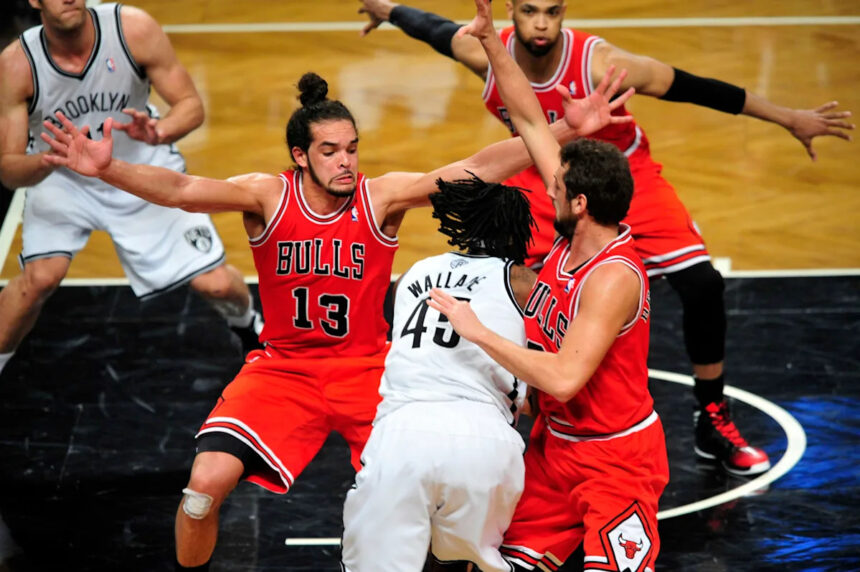
Yet, the numbers that didn’t appear in the box score were his true contribution. He guarded the opponent’s best perimeter player nightly, dove for every loose ball, and provided emotional fuel. His versatile defense was crucial in a playoff series against the Chicago Bulls, where he often battled with larger forwards. Wallace started 68 games for a Nets team that won 49 games and secured the 4th seed in the East, a massive 23-win improvement from the final New Jersey season. His No. 45 was a symbol of effort in the franchise’s foundational Brooklyn campaign.
The Ultimate Price: The Blockbuster That Defined a Decade
The true weight of Gerald Wallace’s Nets chapter cannot be measured by his 2012-13 stats, but by the seismic transaction it enabled. His perceived value as a tough, veteran leader was the key that unlocked the most ambitious—and ultimately disastrous—trade in NBA history. In July 2013, the Brooklyn Nets, seeking to vault into championship contention, packaged Wallace with a treasure trove of future draft picks to the Boston Celtics to acquire Kevin Garnett and Paul Pierce.
This is where the legacy of No. 45 crystallizes. Wallace was not merely an outgoing salary; he was the salary anchor Boston required to make the deal work. His contract, signed just a year prior, was now the ballast in the trade that mortgaged the Nets’ future. Those draft picks sent to Boston became Jayson Tatum and Jaylen Brown, building the foundation for a modern Eastern Conference powerhouse. Wallace’s tenure, therefore, is the essential link between two eras: his acquisition cost the Nets a potential franchise guard (Lillard), and his departure cost them their future draft equity. He was the pivotal, high-effort pawn in a grand, failed chess match.
Legacy of No. 45: A Complicated Brooklyn Founding Father
So, how do we judge the brief flight of “Crash” in Brooklyn? To view it solely through the lens of the catastrophic trades that bookended it is to do a disservice to the player. Gerald Wallace was the professional the Nets needed him to be. He played hurt, defended ferociously, and helped establish an identity for a brand-new team in a new city. He is, in a very real sense, a founding father of the Brooklyn Nets, one of the first players to take the court at Barclays Center and compete in a playoff series for the borough.
Yet, in the cold calculus of franchise building, his legacy is inextricably tied to consequence. The No. 45 jersey in Nets history represents the peril of short-term thinking. It is a reminder that the pressure to win “now” can lead to decisions that echo for a decade. Wallace was both a symptom and a cause of that pressure—a valuable player whose value was catastrophically overestimated by the front office’s desperate timeline.
For Nets fans, Gerald Wallace evokes a strange nostalgia. It’s for a time of hope and new beginnings, but also for the moment before the high-stakes gamble that set the franchise back years. His sweat and hustle were authentic, but they became entangled in a web of deals defined by hubris. In the grand narrative of the Nets’ 52 jersey numbers, No. 45 worn by Gerald Wallace is not a story of points or championships. It is a cautionary tale of transition, cost, and the relentless, often unforgiving, pursuit of relevance in the NBA’s bright lights.
Source: Based on news from Yahoo Sports.