Anfield’s Financial Triumph: Liverpool Crowned Premier League Revenue Kings in Deloitte Money League
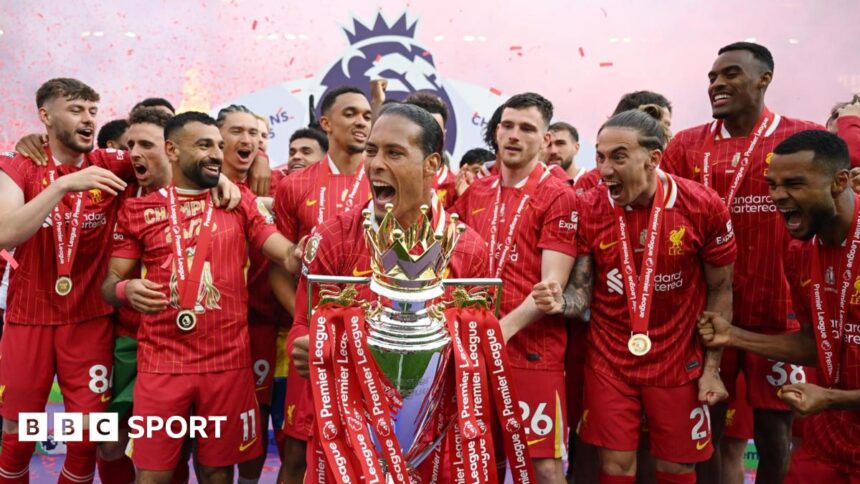
The roar at Anfield last season was not just for a historic 20th league title; it was the sound of a financial engine shifting into its highest gear. In a seismic shift that mirrors their on-pitch dominance, Liverpool FC have surged to the summit of English football’s financial landscape, according to the latest Deloitte Football Money League. For the first time in the report’s 29-year history, the Reds are the top-earning Premier League club, generating a colossal €836m (£702m) in revenue. This landmark achievement signals a new era of fiscal power in the English game, built on a potent cocktail of sporting success, commercial savvy, and global brand expansion, even as giants like the Manchester clubs falter.
The Red Machine: Deconstructing Liverpool’s Revenue Juggernaut
Liverpool’s ascent to the pinnacle of the Premier League’s financial table is no accident. It is the result of a meticulously executed strategy that has transformed the club into a global commercial powerhouse. Their €836m revenue figure represents more than just prize money; it’s a testament to a multi-faceted growth model.
Broadcasting revenue remains the bedrock, supercharged by their deep run in the UEFA Champions League and, of course, their triumphant Premier League campaign. However, the real story lies in their commercial explosion. Under the stewardship of Fenway Sports Group, Liverpool have masterfully leveraged their storied history and recent success.
- Record-breaking partnerships: The renewal and expansion of their kit deal with Nike, structured heavily on royalties, has unlocked unprecedented global merchandise sales.
- Global brand appeal: A carefully curated portfolio of international sponsors, from Standard Chartered to AXA, pays a premium to be associated with the club’s vibrant identity and global fanbase.
- Anfield’s evolution: The expansion of the Main Stand and the forthcoming Anfield Road End project have significantly boosted matchday income, creating one of the most consistent and atmospheric sell-out venues in world football.
This financial model proves that sustained sporting excellence, when paired with astute commercial management, creates a virtuous cycle of investment and success.
A Shifting Landscape: Manchester’s Decline and Madrid’s Unshakeable Reign
Liverpool’s rise is thrown into even sharper relief by the relative decline of their historic rivals. The Deloitte report reveals a startling narrative for the clubs that have long dominated the financial charts. Manchester United have fallen to their lowest-ever position in the Money League. Despite their own commercial might, a prolonged period without a Premier League title and absence from the Champions League has begun to bite, impacting broadcast revenue and, arguably, their leverage in commercial negotiations.
Similarly, both Manchester City and Paris Saint-Germain have dropped down the list. This movement, while not catastrophic, suggests a potential plateau or a market correction for clubs whose growth has been historically fueled by significant owner investment. It underscores a crucial Deloitte insight: consistent, top-level sporting performance is now non-negotiable for maintaining financial elite status.
Yet, above all, stands Real Madrid. The Spanish giants once again top the global Money League with a staggering €1.2bn in revenue, a figure that seems almost untouchable. This achievement is particularly notable as it came in a season where they did not win La Liga or the Champions League. Their financial power is built on a unique model: legendary global branding, a self-owned and hugely profitable stadium, and a membership structure that fosters immense loyalty and direct revenue streams. Madrid’s position is a reminder that while the Premier League’s collective wealth is unmatched, the very apex of football finance still resides in the Spanish capital.
Expert Analysis: What This Means for Football’s Future
This edition of the Deloitte Money League is more than a ranking; it’s a diagnostic report on the state of elite football. The convergence of Liverpool’s sporting and financial peak indicates a new blueprint for success. The era where commercial deals could float a club irrespective of results is fading. The modern elite club must excel on the pitch, in the boardroom, and in the digital marketplace simultaneously.
The sustainability question is now paramount. Liverpool’s model, which funds transfers and wages through generated revenue rather than owner debt or equity, is increasingly seen as the gold standard, especially in light of evolving financial regulations like the Premier League’s own Profit and Sustainability Rules (PSR) and UEFA’s new financial framework. Furthermore, the report highlights the growing importance of stadium development and matchday experience as a critical revenue stream, a factor that benefits clubs with large, modernizable grounds and loyal local fanbases.
The data also hints at a potential stratification within the elite. A clear gap is emerging between the super-clubs like Real Madrid, Barcelona, and the top Premier League sides, and the rest of the European pack. The financial muscle to secure the best players, the best managers, and the best facilities is becoming concentrated, making it increasingly difficult for others to break in.
Predictions and Conclusions: The New Financial Order
Looking ahead, the financial league table is set for further intrigue. Liverpool’s challenge will be to maintain this zenith, a task that depends on perpetual sporting competitiveness. Manchester United’s new minority ownership and impending sporting structure overhaul will be closely watched to see if they can reverse their financial slide. Meanwhile, the impending entry of Real Madrid and Barcelona into a revamped Club World Cup and their continued control over broadcast rights will likely solidify their financial dominance.
For the Premier League, having a new English revenue champion is a healthy sign of intense internal competition. It proves the league’s competitive balance can extend to the balance sheet. However, the shadow of state-backed ownership models at clubs like Manchester City and Newcastle United looms large, presenting a different kind of financial challenge to the organic growth model Liverpool has exemplified.
In conclusion, Liverpool’s coronation as England’s financial champion in the Deloitte Money League is a landmark moment. It is a victory for a model that intertwines electrifying football, shrewd commercial strategy, and deep community roots. It signals that in today’s football, the most resonant cheers are those echoed in the accounts. While Real Madrid continues to reign globally, the battle for financial supremacy in the world’s richest league has a new, familiar victor wearing red. The message to rivals is clear: to win the future, you must master the game both on the grass and on the spreadsheet.
Source: Based on news from BBC Sport.