Infantino’s ‘Cheap Joke’ on British Fans Sparks Fury: FSA Demands Focus on 2026 Accessibility
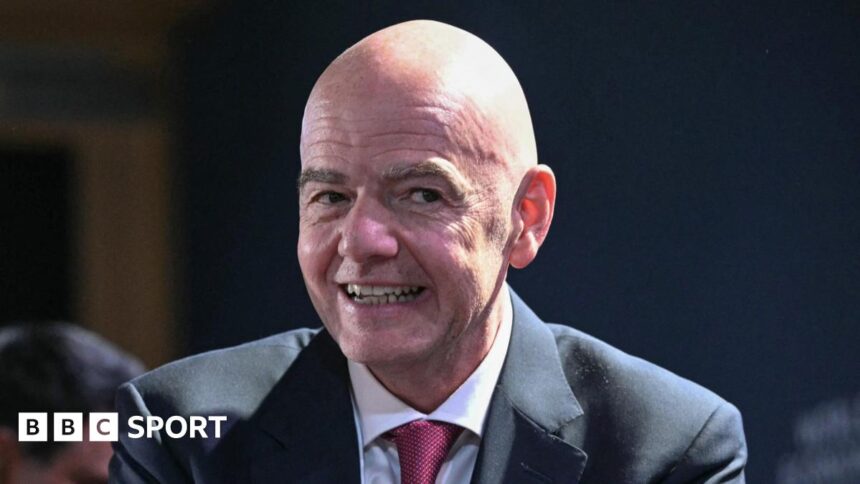
The gilded halls of the World Economic Forum in Davos are typically a stage for grand pronouncements on global finance and geopolitics. This week, however, they played host to a more parochial, yet deeply resonant, footballing controversy. FIFA President Gianni Infantino, addressing concerns about the upcoming 2026 World Cup, chose an unexpected foil: the behavior of British fans in Qatar. His remarks, swiftly branded as a “cheap joke” by the Football Supporters’ Association (FSA), have ignited a fresh debate about FIFA’s priorities, fan treatment, and the looming shadow of the most expensive World Cup in history.
From Qatar’s Shadow to a North American Storm
Gianni Infantino, who succeeded the disgraced Sepp Blatter in 2016, has often positioned himself as a reformer. Yet, his tenure has been inextricably linked to the contentious 2022 Qatar World Cup. At Davos, while attempting to pivot focus to the 2026 tournament across the United States, Canada, and Mexico, Infantino reached back to Qatar’s narrative. He listed the pre-tournament criticisms—human rights, LGBTQ+ laws, migrant worker conditions—before declaring that after kick-off, “virtually no incidents” occurred.
It was his next statement that landed with a thud. Infantino noted it was “really special” that no British nationals were arrested during the event. On the surface, a benign observation. But in the context of decades of often unfair stereotyping of English and British football supporters, coupled with the very real and current anxieties fans hold about 2026, the comment was perceived as a patronizing and simplistic dig.
The Football Supporters’ Association response was immediate and scalding. “If Gianni Infantino wants to talk about things that are ‘cheap’, he should focus on making cheap tickets for the 2026 World Cup rather than cheap jokes about fans,” an FSA spokesperson stated. This retort perfectly reframed the conversation from past behavior to future access, striking at the heart of growing fan disillusionment.
Deconstructing the “Cheap Joke”: A History of Stereotypes and a New Era of Fans
To understand the fury, one must appreciate the historical baggage. For decades, a minority of English football hooligans defined the global perception of British fans. While major tournaments in the 1980s and 1990s were marred by violence, a profound cultural shift has occurred. The modern traveling British supporter is more likely to be documented for elaborate fancy dress and good-natured pub singing than for causing trouble.
Infantino’s joke, however unwittingly, dredged up an outdated caricature. It ignored the peaceful conduct of the tens of thousands who traveled to Qatar, a tournament where the primary controversies were institutional, not fan-based. Expert analysis suggests this was a clumsy rhetorical device, an attempt to use British fans as a prop to bolster Qatar’s post-tournament public relations claim of “incident-free” success.
Furthermore, the joke rings hollow considering the unique nature of the Qatar World Cup:
- Extreme Cost: It was arguably the most expensive tournament ever to attend, naturally limiting the demographic of travelers.
- Controlled Environment: The compact nature and stringent laws created a highly managed fan experience, unlike any previous tournament.
- Cultural Context: The awareness of severe legal consequences undoubtedly influenced fan behavior.
To then present this as a “special” achievement by British fans, rather than a product of the environment, was seen as intellectually dishonest and, as the FSA put it, cheap.
The 2026 Reality Check: Visa Hurdles, Political Tensions, and Soaring Costs
The FSA’s sharp pivot to 2026 World Cup ticket prices was a masterstroke in agenda-setting. It exposed the vast gulf between Infantino’s podium banter and the pressing concerns on the ground. The North American World Cup presents a triad of major challenges for the ordinary fan:
1. Visa and Entry Hurdles: Unlike Qatar or much of Europe, entering the USA—the host of the majority of matches—is non-trivial for many global fans. Complex ESTA applications and visa processes, with potential for denial, loom large. Infantino acknowledged “visa issues” but offered no concrete solutions.
2. Domestic Political Tensions: The United States is a nation of profound political divisions. Infantino referenced this, but fans worry about navigating these tensions, especially in a tournament where security concerns will be paramount.
3. The Elephant in the Room: Cost. With 48 teams and 104 matches, the 2026 edition is a commercial behemoth. Host cities like New York, Los Angeles, and San Francisco are among the world’s most expensive. The fear is that ticket pricing will cater exclusively to corporate clients and the wealthy, pricing out the traditional supporter. The FSA’s demand for “cheap tickets” is a direct plea for football to remember its soul.
Predictions and the Path Forward for FIFA
This incident is more than a fleeting diplomatic spat; it is a symptom of a deeper malaise. We predict three key consequences:
1. Increased Scrutiny on 2026 Planning: The FSA has fired a warning shot. Every announcement on ticketing, visa facilitation, and accommodation will now be measured against Infantino’s “cheap jokes” remark. Fan groups will hold FIFA to a higher standard of transparency and affordability.
2. A Fractured Narrative: Infantino’s attempt to use Qatar as a seamless success story to promote 2026 has backfired. It has instead united fan groups in highlighting the unique and potentially more severe challenges of the North American tournament.
3. The Legacy Question: The 2026 World Cup risks being branded the “Corporate Cup” or the “Inaccessible Cup.” To avoid this, FIFA must move beyond rhetoric and implement tangible, fan-first policies. This includes:
- Subsidized ticket allocations for genuine supporters’ groups from all nations.
- Active collaboration with U.S. authorities to streamline fan visa processes.
- A transparent and equitable ticketing system that prevents price gouging.
The core issue is one of trust and priority. Does FIFA see fans as customers to be monetized, or as the essential, beating heart of the game? Infantino’s joke betrayed a dismissive attitude. The FSA’s response was a powerful reminder that the global supporter base is educated, organized, and unwilling to be the punchline.
Conclusion: A Call for Substance Over Soundbites
Gianni Infantino’s “cheap joke” in the rarefied air of Davos may have been intended as a throwaway line, but it has resonated powerfully in the pubs, terraces, and online forums where football’s true spirit resides. It highlighted a disconnect that threatens to define the run-up to 2026. The Football Supporters’ Association successfully turned the tables, shifting the discourse from a reductive stereotype to a critical demand for accessibility.
The message to FIFA is clear: the time for self-congratulation and tone-deaf humor is over. The challenges of 2026—visa logistics, political climate, and most critically, cost—are monumental and real. Fans, the lifeblood of the sport, are watching closely. They do not need placating jokes about the past; they need concrete, affordable plans for the future. The beautiful game’s greatest spectacle must not become a luxury item. FIFA’s legacy for 2026 will be judged not by the words of its president in Switzerland, but by the price of a ticket and the smile of a genuine fan in New York or Dallas. The ball is now firmly in Infantino’s court.
Source: Based on news from BBC Sport.