FIFA’s Bold Stance: Iran’s World Cup Fate Sealed Amidst Geopolitical Tensions
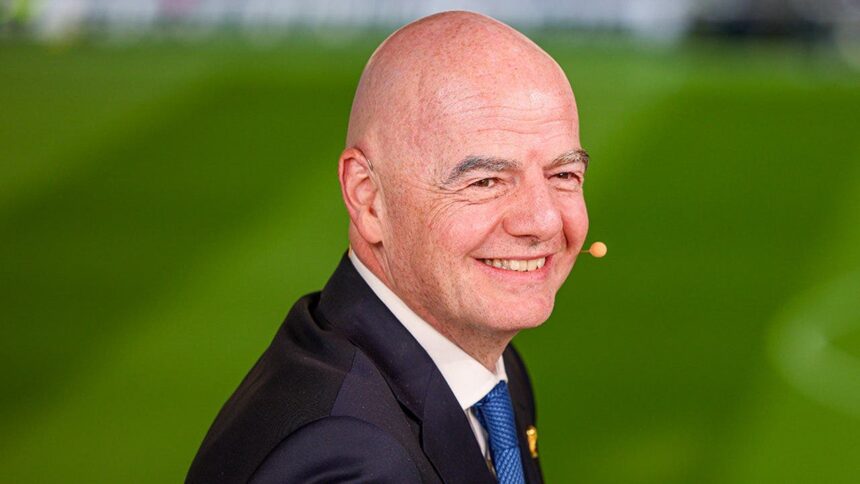
In the high-stakes world of international sports, the beautiful game often finds itself navigating complex political landscapes. The 2026 FIFA World Cup, set to be the largest in history across the United States, Mexico, and Canada, is already facing its first major geopolitical test. FIFA President Gianni Infantino has drawn a definitive line in the sand, declaring that Iran will “for sure” participate in the tournament despite the nation’s ongoing, indirect conflict involving the United States. This firm commitment throws the intricate relationship between global sport and international diplomacy into sharp relief, setting the stage for a World Cup like no other.
Infantino’s Decisive Declaration and the Logistics of Participation
Speaking with an air of unwavering certainty, Gianni Infantino’s statement this week was designed to quell any speculation. The question of Iran’s participation had become unavoidable. As a nation currently engaged in a shadow war with Israel and holding significant adversarial tensions with the United States—one of the three host nations—their qualification created an immediate logistical and security puzzle. The conflict in the Middle East, with the U.S. deeply involved, begged the question: could, or would, the Iranian national team and its supporters safely travel to American soil?
The logistical framework is already set, and FIFA appears unwilling to alter it. All three of Iran’s group stage games are currently scheduled on U.S. territory. This detail is crucial and follows a rejected request from Iranian officials. Prior to Infantino’s announcement, Iranian government officials had suggested to FIFA that their matches be relocated to Mexico, citing an inability to travel to the U.S. FIFA’s dismissal of this request and Infantino’s subsequent guarantee signal a powerful message: the World Cup draw and schedule are matters of sporting integrity, not political negotiation.
- FIFA’s Firm Stance: Infantino’s “for sure” leaves no room for ambiguity, prioritizing tournament consistency.
- Rejected Relocation: Iran’s request to move games to Mexico was denied, anchoring their participation to U.S. venues.
- Security Imperative: The declaration forces an unprecedented security planning collaboration between U.S. authorities and Iranian football officials.
The MetLife Stadium Microcosm: Scale, Scope, and Ticket Concerns
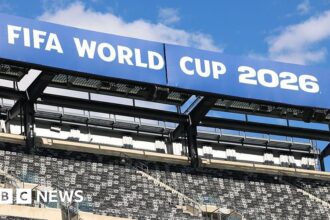
The reality of hosting a tournament of this magnitude was further underscored by Alex Lasry, CEO of the FIFA World Cup 26 NYNJ Host Committee. Speaking on ‘The Brian Kilmeade Show’, Lasry detailed the immense scale of operations for matches at New Jersey’s MetLife Stadium, a key venue that could very well host Iranian matches. His discussion highlighted two universal themes: breathtaking opportunity and significant fan concern.
Lasry emphasized the transformative economic and cultural impact the matches will have on the region, calling it a “generational” event. However, he also directly addressed the elephant in the room for everyday supporters: ticket prices. With the modern fan experience often burdened by soaring costs, Lasry’s acknowledgment of these concerns is a tacit admission that FIFA and host committees are walking a tightrope between commercial success and inclusive accessibility. The inclusion of a nation like Iran, with its unique security and diplomatic requirements, adds another layer of complexity and cost to these already massive operational plans.
Expert Analysis: The Precedent and the Powder Keg
From a historical perspective, FIFA has a mixed record of separating sport from politics. The exclusion of Russia and Belarus from international competitions following the invasion of Ukraine is a recent example of politics dictating sporting participation. Conversely, nations with strained bilateral relations have often competed on neutral grounds in global tournaments. Infantino’s stance on Iran, however, is distinct. It is not a punishment nor a relocation; it is an insistence on participation under the originally planned conditions, despite direct geopolitical conflict.
Sports geopolitical analysts see this as a high-risk, high-reward strategy. On one hand, it upholds the principle that qualification is earned on the pitch. It also presents a potential “soccer diplomacy” opportunity—a chance for a sliver of neutral, human interaction amidst a backdrop of hostility. The image of Iranian players competing in American stadiums could, in theory, serve as a bridge.
On the other hand, the risks are palpable. The security challenge is monumental, requiring flawless coordination between entities with no formal diplomatic ties. The potential for protests, both inside and outside stadiums, is high. Furthermore, the situation remains fluid; any escalation in the Middle East conflict between now and June 2026 could force FIFA into a corner, making its “for sure” guarantee difficult to uphold.
Predictions and the Path to 2026
As we look toward the summer of 2026, several predictions and key developments can be anticipated:
- Unprecedented Security Protocols: Matches involving Iran in the U.S. will feature the most stringent and visible security measures in World Cup history, likely involving designated, highly controlled fan zones for Iranian supporters.
- Diplomatic Channels for Football: Back-channel communications, likely facilitated through FIFA and Swiss intermediaries, will be established solely to manage team logistics, visas, and security details.
- Media Frenzy: Iran’s matches will transcend sports coverage, becoming major global news events analyzed through political, cultural, and security lenses.
- The Player Perspective: The focus will shift to the Iranian players themselves, who will carry an immense, unwelcome burden of representing their nation under an intensely politicized spotlight.
The ultimate prediction is that the tournament will proceed with Iran’s participation as Infantino promised. The financial and reputational cost to FIFA of a reversal is too great. However, the condition is that the geopolitical situation does not deteriorate to a point of active, direct military engagement between the U.S. and Iran—a scenario that would make the current tensions look simple by comparison.
Conclusion: A Tournament Defined Before a Ball is Kicked
Gianni Infantino’s definitive statement has ensured that the 2026 FIFA World Cup will be about more than goals and glory. It is now poised to become a live-case study in the limits of sport’s power to transcend conflict. By insisting Iran will “for sure” play in the U.S., FIFA has chosen to confront geopolitical reality head-on rather than avoid it. This decision brings with it a world of logistical nightmares and potential flashpoints, but also a sliver of hope for football’s unifying ideal.
The conversations with Alex Lasry about ticket prices and MetLife Stadium’s grandeur now sit alongside discussions of international sanctions and security states. The beautiful game, in its biggest ever edition, will be played on a field shaped as much by diplomats and intelligence agencies as by coaches and players. The world will be watching, not just to see who lifts the trophy, but to see if the world’s game can truly hold the world together, if only for 90 minutes at a time. The final whistle on this experiment is still years away, but the first, most decisive call has been made by the man in charge.
Source: Based on news from Fox Sports.