Alabama Judge Recuses Himself in High-Stakes Charles Bediako NCAA Eligibility Case
The legal battle over the collegiate eligibility of former Alabama Crimson Tide center Charles Bediako took a dramatic turn this week, intertwining the worlds of college sports governance, the justice system, and booster culture. At the center of the storm is Judge James H. Roberts Jr. of the Tuscaloosa County Circuit Court, who recused himself from the case on Wednesday after the NCAA raised concerns about his financial ties to the University of Alabama athletics program. This development throws a critical and already delayed lawsuit into further uncertainty, with Bediako’s immediate playing future hanging in the balance.
A Recusal Rooted in Crimson Tide Loyalty
The NCAA’s request for recusal, made on Monday, pointed to a direct and substantial conflict of interest. Judge Roberts and his wife are publicly listed as Alabama athletics boosters with a lifetime contribution to the Crimson Tide Foundation estimated between $100,000 and $249,000. In its filing, the NCAA argued this financial relationship “could call into question the Court’s impartiality” in a case pitting a former Alabama player against the association.
Legal experts note that while judges with local team affiliations often hear sports-related cases, the scale and formal recognition of Judge Roberts’ contributions created an untenable appearance of bias.
- Judge James H. Roberts Jr. voluntarily stepped aside after the NCAA’s motion.
- The lifetime contribution level places the judge in an elite donor category.
- The Crimson Tide Foundation is the official fundraising arm for Alabama Athletics.
“This is a textbook example of why recusal statutes exist,” said a veteran sports law attorney not involved in the case. “The judge’s prior ruling, however legally sound it may have been, becomes instantly vulnerable to appeal. By recusing, he protects the integrity of the process and avoids any potential for the decision to be overturned on these grounds.”
Bediako’s Unprecedented Return to the Court
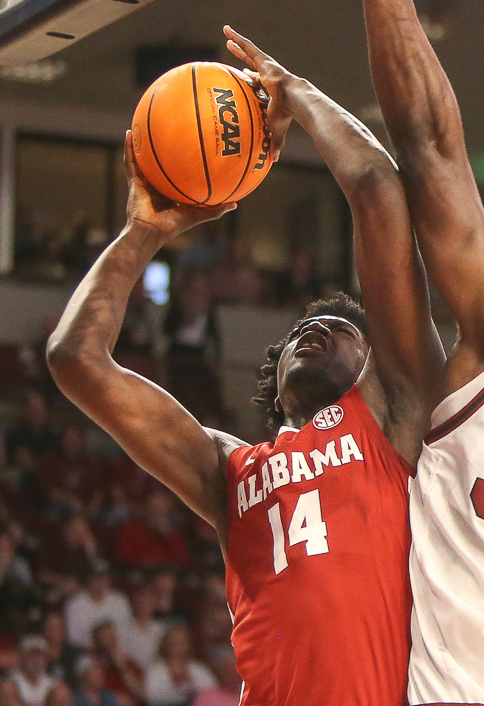
Charles Bediako’s journey to this point is a modern tale of collegiate athletics. After a solid two-year career at Alabama (2021-23), where he started 67 games and was a defensive anchor, the 7-foot center declared for the 2023 NBA Draft. He went unselected but secured a professional path, signing a two-way contract with the San Antonio Spurs. His professional experience, however, has been limited to the G League; he has never appeared in an NBA regular-season game, with his most recent G League appearance coming on January 17.
Seeking to return to college to further develop his game, Bediako sued the NCAA, which had denied his reinstatement request. The core of the lawsuit likely hinges on nuanced NCAA bylaws regarding amateurism and the specific nature of two-way contracts. On January 21, it was Judge Roberts who granted Bediako a temporary restraining order (TRO), allowing him to suit up for the Crimson Tide immediately.
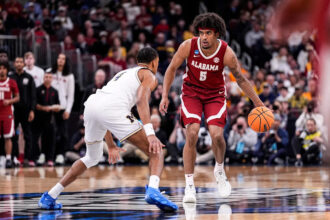
The impact has been immediate and significant. In two games since his return—against Tennessee and Missouri—Bediako has been a major contributor:
- Averaging 13.5 points and 4.5 rebounds in just 21.5 minutes per game.
- Providing a veteran, defensive-minded presence in the post.
- Adding depth and experience for a team with national championship aspirations.
His presence has transformed Alabama’s frontcourt, but it exists under the fragile protection of the now-vacated TRO.
Weather, Delays, and Mounting Uncertainty
The plot thickened this week beyond the judge’s recusal. A critical hearing on a preliminary injunction—which would extend Bediako’s eligibility until the full case is resolved—was originally scheduled for Tuesday. That hearing was abruptly postponed because severe weather prevented the NCAA’s legal team from traveling to Tuscaloosa.
This delay, compounded by the recusal, creates a logistical and competitive quagmire. The case must now be reassigned to a new judge in the circuit. That judge will need time to review the extensive filings before rescheduling the postponed injunction hearing. Every day of delay is a day of uncertainty for Alabama head coach Nate Oats as he plans rotations and for Bediako as he navigates a unique and very public limbo.
“The delay is a strategic nightmare for everyone except perhaps the NCAA,” commented a college basketball analyst. “Alabama gets a short-term boost with Bediako on the floor, but they are building game plans around a player whose status could change any day. The NCAA, meanwhile, may see the clock as an ally as the season progresses.”
Expert Analysis and Predictions for the Case
This case sits at the volatile intersection of evolving NCAA amateurism rules and athlete empowerment. Legal experts are closely watching several key factors:
The “Professional Experience” Argument: The NCAA’s denial likely centers on Bediako accepting payment and playing in the G League. His defense will argue the specific structure of his involvement did not violate the spirit of the reinstatement rules, especially given he never played in the NBA.
The Precedent Factor: Outcomes in cases like these are increasingly unpredictable. Courts have shown a growing willingness to side with athletes against the NCAA’s traditional authority, but each case is decided on minute details.
The New Judge’s Perspective: The entire dynamic shifts with a new jurist. They will review the TRO decision *de novo* (anew), without deference to Judge Roberts’ initial ruling. The NCAA’s successful push for recusal may energize their legal strategy.
Prediction: The most likely outcome is a negotiated settlement before a final court ruling. The NCAA may offer a reinstatement with a partial-season suspension or other conditions. For Alabama and Bediako, the priority is keeping him eligible for the crucial SEC and NCAA tournament stretch. A full court loss for the NCAA could open a new, narrow pathway for similar players, while a win would reinforce its current restrictive stance on professional experience.
Conclusion: A Season in the Balance
The recusal of Judge James H. Roberts Jr. is more than a procedural footnote; it is a stark reminder of the complex, high-stakes environment of big-time college sports, where courtrooms are becoming as consequential as arenas. Charles Bediako’s fight is a microcosm of a larger struggle: defining the blurred line between college amateur and professional athlete in an era where the two worlds constantly collide.
For now, Bediako continues to practice and play, a testament to the power of a temporary court order. But the looming injunction hearing before a new judge will decide if his storybook return continues or ends abruptly. The outcome will not only shape Alabama’s championship trajectory but will also add another critical data point in the ongoing redefinition of eligibility and athlete rights in American college sports. All eyes now turn to the Tuscalo County Circuit Court clerk, awaiting the assignment of the new judge who will hold the whistle in this unprecedented legal game.
Source: Based on news from Deadspin.
Image: CC licensed via fr.wikipedia.org