Raducanu Finds Her Serve and a Win in Romania, But the Coach Carousel Continues
The narrative surrounding Emma Raducanu has, for months, been one of fragility. The focus: a surgically repaired wrist, an ankle tweak, a revolving door of coaching consultants. The result: a frustrating search for rhythm and a deep run since her fairy-tale 2021 US Open triumph. But on the clay of Cluj-Napoca, a different story began to unfold—one of decisive power and a quiet, internal resolve. At the Winners Open in Romania, Raducanu secured her first victory since a sobering early exit from the Australian Open and her subsequent split from coach Francis Roig, a win that felt like a deliberate step out of the shadow of external noise and back into the light of competitive clarity.
A Commanding Statement on Clay
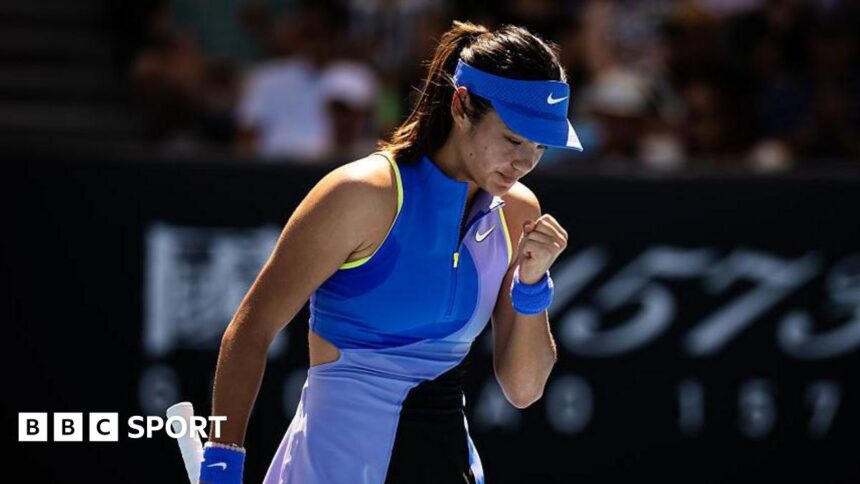
Facing Germany’s Greet Minnen, Raducanu didn’t just win; she announced her intent from the very first point. The 6-0, 6-4 scoreline in her favor was built on a foundation of aggressive precision that has sometimes been absent in her post-US Open journey. In a dominant 70-minute display, the British number one was in control, dictating play with a depth and authority that belied her recent struggles and her reputation as a player still finding her feet on the red dirt.
The statistics paint a picture of a player taking matters into her own hands:
- She sent down three aces, a sign of a serve working as a weapon, not just a starter.
- She forced four breaks of serve, showcasing relentless return pressure.
- She surrendered only four games, wrapping up the first set with a coveted “bagel.”
This was not a victory scraped through grit alone; it was a performance of technical assurance. For a player whose career has been punctuated by coaching changes, this win seemed to emanate from within, a testament to her own tennis intellect and hardened competitive spirit.
The Unsettled Tenth: Navigating the Coach Carousel
Yet, the backdrop to this Romanian resurgence remains one of the most discussed topics in tennis: Raducanu’s search for a permanent guiding hand. The split with Francis Roig, who worked with her on a trial basis after the Australian Open, means the 23-year-old is now ostensibly seeking the tenth coach of her professional career. This staggering number is often cited as evidence of instability, but a closer look reveals a more nuanced picture.
“The label of ‘ten coaches’ is somewhat misleading,” notes a veteran WTA analyst. “Many were short-term consultations or trial periods, like Roig. She’s been searching for the right fit, the perfect alchemy of technical, tactical, and personal synergy. After the whirlwind of her breakthrough, she’s been understandably meticulous—perhaps to a fault—in trying to find a partnership that builds a foundation for the next decade, not just the next tournament.”
The question now is what direction she will take. Does she seek a veteran heavyweight who can command authority and overhaul her training structure? Or does she opt for a younger, collaborative mind who can grow with her? This win in Cluj-Napoca, achieved with her existing team, proves she possesses a formidable base level. The right coach’s job will be to build consistency upon it and navigate the pressures of the tour’s relentless grind.
Expert Analysis: What This Win Really Means
Beyond the relief of a victory, Raducanu’s performance in Romania offered several key takeaways for observers. First, her physical condition appears robust. Her movement on clay, a surface that tests the body’s limits, was fluid and confident, a major positive after her injury-plagued 2023 season. Second, her tactical approach was refreshingly straightforward: she took control of points early, stepped into the court, and used her formidable backhand down the line to devastating effect.
Most importantly, the win demonstrated mental resilience. Playing her first match since a high-profile split, with the world watching for signs of turmoil, Raducanu displayed remarkable focus. She compartmentalized the off-court chatter and delivered a clean, professional performance. This ability to mute external noise and access her best tennis under scrutiny is perhaps the most critical skill she can cultivate as she aims to return to the sport’s upper echelons.
“This is a small but significant step,” the analyst continues. “It’s a WTA 250 event, but a win is a win. It rebuilds confidence in her own game, independent of any coach. It tells her, ‘I can still do this.’ That self-belief, generated from within, is more valuable than any tactical tip right now.”
Predictions and the Path Forward in Cluj
The immediate path is clear. Raducanu will face Slovenia’s Kaja Juvan in the second round, a tricky opponent known for her grit and consistency. This match will be a different test than her opener against Minnen; it will require patience and point construction. A deep run at the Winners Open, even a title challenge, is now a tangible expectation for the top seed.
Looking further ahead, this period represents a crucial pivot. The clay-court season is a marathon, leading into the grass of Wimbledon, where expectations will reach a fever pitch. The predictions for Raducanu’s immediate future hinge on two factors:
- Sustained Health: Can her body withstand the weekly demands of tournament play?
- Coaching Clarity: Will she name a permanent coach before the summer, or continue with a trial-and-error approach?
A strong showing in Romania, potentially culminating in a trophy, would provide massive momentum. It would also strengthen her hand in any coaching negotiation, proving her project remains one of the most enticing in women’s tennis. The goal is no longer just to win matches, but to build a sustainable framework for winning championships again.
Conclusion: A Victory of Self-Reliance
Emma Raducanu’s victory at the Winners Open was more than a simple progression to the second round. It was a statement of self-reliance. In the absence of a named coach, amidst the swirling headlines about her search for a tenth, she stepped onto the court and played tennis that was both forceful and intelligent. She reminded the world—and perhaps herself—of the champion’s instincts that reside within.
The coach carousel will continue to spin, and the search for the right long-term partnership is a legitimate chapter in her story. But for one evening in Romania, the narrative was refreshingly simple: Emma Raducanu, the player, won. And in doing so, she may have found the most important voice of all—her own. Her journey forward will be a fascinating blend of seeking external guidance and trusting the internal champion that roared back to life on the clay of Cluj.
Source: Based on news from BBC Sport.