The Great Silence: Dissecting the Premier League’s Quietest Ever Winter Deadline Day
The final hours of the January transfer window are traditionally a carnival of chaos. Sky Sports reporters in thick coats, yellow tickers moving at breakneck speed, and a flurry of last-gasp deals that redefine seasons. Yet, on Monday, something strange happened: silence. The Premier League experienced its quietest winter deadline day in history, with a mere seven signings confirmed, and not a single one announced before the official 19:00 GMT deadline had passed. This wasn’t a slow burn; it was a near-total freeze. The footballing world held its breath, and nobody exhaled. What caused this unprecedented market stagnation, and what does it signal for the future of the game?
A Deadline Day Like No Other: The Facts of the Freeze
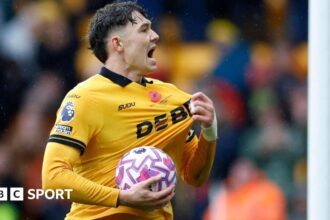
For the first time, the drama wasn’t in the deals, but in their eerie absence. The clock ticked past 19:00 GMT with zero announcements. The first ripple came at 19:04, when Crystal Palace confirmed the signing of striker Jorgen Strand Larsen from Wolves. This set the tone: every single transaction was confirmed *after* the window had technically closed, utilizing the league’s deal sheet mechanism. This rule, designed to allow extra time for paperwork finalization, became the day’s main character.
The full scope of business was startlingly small:
- Crystal Palace broke their transfer record for Jorgen Strand Larsen (£48m).
- Wolves acted swiftly to replace him with Southampton’s Adam Armstrong (£7m).
- Sunderland made a significant investment in Ecuadorian winger Nilson Angulo (£17.5m).
- Wolves also brought in midfielder Angel Gomes on loan from Marseille.
- A handful of other minor loans and free transfers completed the seven-deal picture.
Compare this to January 2023, which saw over 20 deadline day moves, and the scale of the slowdown becomes starkly apparent. This was not a case of deals being hidden; this was a genuine market seizure.
Unpacking the Silence: The Perfect Storm of Financial Pressure
This historic quiet did not emerge from a vacuum. It is the result of several powerful, converging forces that have fundamentally altered club behavior. Analysts point to a perfect storm of financial constraints.
First and foremost is the renewed strictness of the Premier League’s Profit and Sustainability Rules (PSR). The recent points deductions for Everton and charges against other clubs have sent a shockwave through boardrooms. Clubs are no longer willing to gamble with mid-season, premium-priced signings that could jeopardize their financial compliance. The fear of sanction has become a greater motivator than the fear of relegation or missing out on Europe for many.
Secondly, the sheer cost of survival in the Premier League has created a new tier of “have-nots.” Even vast television revenues are swallowed by wage bills and existing transfer amortizations. Many clubs, particularly those outside the traditional “Big Six,” simply had no liquidity or PSR headroom to maneuver. The market was paralyzed by a lack of viable buyers, not a lack of available players.
Finally, the summer 2023 transfer window was one of the most extravagant in history, with British transfer records shattered. That spending hangover is now being felt. Squads were already large and expensively assembled, reducing the perceived need for January reinforcements. Clubs opted for internal solutions or the loan market over permanent, costly commitments.
The New Deadline Day Playbook: Strategy Over Splurge
Gone are the days of the panic buy. The 2024 January window, culminating in the silent deadline, reveals a new, more calculated approach. The deal sheet deadline scramble was the only remnant of old habits, a bureaucratic footnote rather than a thrilling spectacle.
Clubs demonstrated a clear preference for loan-to-buy options and short-term fixes that offer flexibility without long-term financial risk. The focus has shifted from transformative signings to surgical, pragmatic adjustments. Wolves’ quick one-in, one-out operation—selling Strand Larsen and buying Armstrong—exemplifies this new model of balanced bookkeeping.
Furthermore, the Championship has emerged as a more active market, as seen with Sunderland’s significant investment in Angulo. This suggests clubs are looking down the pyramid for better value and longer-term projects, rather than engaging in an inflated Premier League premium market. The strategic long-term plan is now trumping the reactive short-term fix.
Predictions: A Lasting Chill or a Temporary Thaw?
Is this the new normal? The evidence suggests a fundamental market correction is underway. The era of the hyper-inflated January splurge may be over, or at least severely curtailed. We predict several lasting effects:
- Summer Supremacy: The primary transfer window will become even more critical, with January relegated to a true “adjustment” period for emergencies only.
- Loan Market Growth: The loan system and free agent market will see increased importance as clubs seek flexible, PSR-friendly solutions.
- Youth Promotion: Academies and internal development will be prioritized. Failing to buy a striker may mean a club finally gives its promising teenager a sustained chance.
- Stricter PSR Enforcement: The quiet window is a direct response to the league’s actions. Expect this cautious approach to continue as long as the regulations are enforced with tangible sporting penalties.
However, the inherent pressure of the Premier League means the demand for talent will never disappear. A future window with several clubs in desperate relegation battles or with new, wealthy ownership could see a return of spending—but likely within a more structured, financially-aware framework.
Conclusion: The Day the Music Stopped
The Premier League’s quietest deadline day was a landmark moment, a clear signal that the financial realities of modern football have finally caught up with its speculative fervor. It was not boring, but profoundly telling. The silence spoke volumes about financial fear, regulatory impact, and a seismic shift in club strategy. The yellow ticker didn’t break; the market did. While the summer will undoubtedly bring its own torrent of deals and dollars, January 2024 will be remembered as the month the music stopped, and the entire sport was forced to listen to the sobering sound of its own balance sheets. The carnival of chaos has been replaced by the calculus of compliance, and the beautiful game’s economic winter may have just begun.
Source: Based on news from BBC Sport.