From Iron Chins to Flying Rugs: How a Flying Toupee Exposed Boxing’s Bald Truth
The heavyweight championship of the world was once a title that carried the weight of a nation. It was a crown worn by men who seemed carved from granite, whose names—Louis, Ali, Tyson—echoed through the culture as symbols of power, principle, and terrifying prowess. Today, the most viral moment in recent boxing memory involves not a knockout punch, but a knockout piece. It came when a right hook from Kingsley Ibeh didn’t just stagger Jarrell “Big Baby” Miller; it launched his hairpiece into a brief, tragic orbit at Madison Square Garden. In that surreal instant, as Miller scrambled to reattach his dignity along with his rug, the modern state of boxing was laid bare. We’ve traded the roar of lions for the snicker of a clip going viral, and the sport’s soul is looking decidedly threadbare.
The Garden Fiasco: When the Toupee Flew Higher Than Ambition
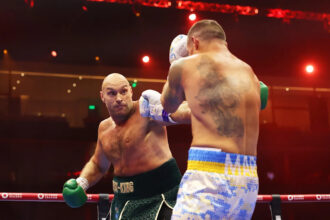
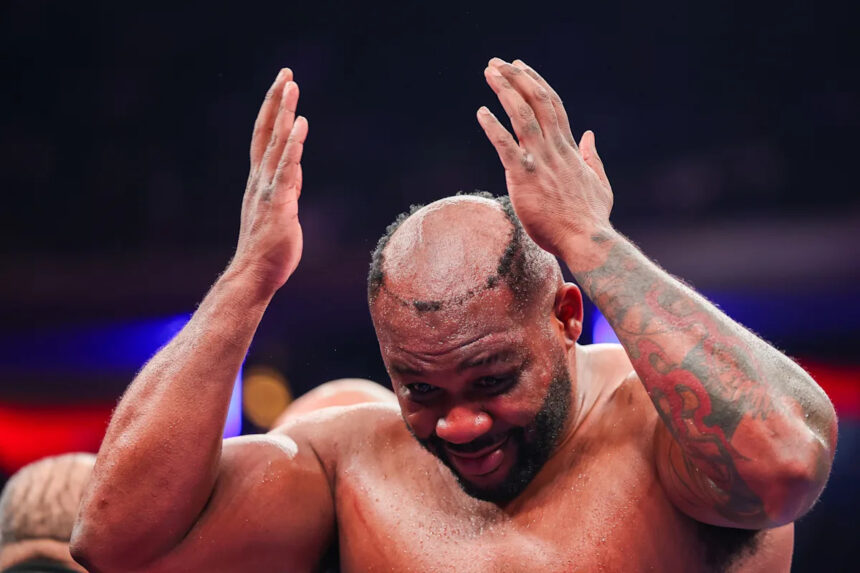
The scene was almost Shakespearean in its absurdity. Two behemoths, weighing a combined 604 pounds, labored through a plodding affair. Then, midway through the second round, a shot to Miller’s head did what Ibeh’s power could not: it unsettled the very fabric of his appearance. His hairpiece lifted, a startled bird attempting flight. Miller, in a panic, used his gloved fists—tools meant for combat—to pat it down, a vain attempt to stuff the genie back in the bottle. Seconds later, a short right hook completed the exposure, revealing the bald truth for the world to see. The spectacle wasn’t of athletic excellence, but of personal farce. The viral boxing clip wasn’t a highlight-reel knockout; it was a punchline. This, in the hallowed halls of Madison Square Garden, a theater that once hosted the most serious dramas in sports history.
The Heavyweight Pantheon vs. The Era of Anonymity
Contrast this with the lineage Miller’s generation has failed to uphold. America’s heavyweight production line was once the envy of the sporting world.
- Joe Louis, the “Brown Bomber,” was a symbol of American resilience during WWII.
- Muhammad Ali floated, stung, and stood as a global icon of conscience, skill, and charisma.
- Mike Tyson, in his ferocious prime, was the youngest ever champion and the most feared athlete on the planet.
These were men whose fights were national events, whose titles meant something beyond a sanctioning body’s belt. Today, ask a casual fan to name the current heavyweight champion. You’ll likely get a hesitant guess, or a reference to an aging star like Tyson Fury or Oleksandr Usyk, neither of whom capture the mainstream American imagination like their predecessors. The crown is fractured among multiple organizations, and the American heavyweight boxing decline is stark. We’ve gone from producing Cadillacs to manufacturing spare parts that rarely fit together for a meaningful, must-see showdown.
Style Over Substance: The Viral Clip Economy
Miller’s follicular fiasco is a perfect metaphor for a sport increasingly preoccupied with facade. Boxing’s relevance now often hinges on the spectacle outside the ring: social media feuds, celebrity entourages, and yes, absurd viral moments. The economics of attention have shifted. A fighter can now gain more notoriety from a single embarrassing clip than from a decade of disciplined ring work. The focus is on personality, controversy, and clickable content, often at the expense of the pure, grueling craft of boxing itself. Promoters feed this beast, prioritizing marketable narratives over legitimate sporting merit. When a flying toupee can overshadow the athletic endeavor of two men risking their health, it signals a profound disconnect. The sport is becoming a reality show with padded gloves, where the narrative is often more compelling than the competition.
Can Boxing Reclaim Its Crown? A Path Forward
All is not lost, but the road back to cultural credibility is steep. The solution isn’t to shun modernity, but to forcefully re-center the sport on what made it great. This requires a conscious effort from every stakeholder.
Unification and Clarity: The jungle of sanctioning bodies (WBA, WBC, IBF, WBO) must be navigated toward true, undisputed champions. Fans need a single champion to rally behind or challenge.
Promotional Cooperation: The cold war between promotional giants like Top Rank and PBC must thaw. The best must fight the best, consistently, not after years of marination and hype-building.
Star Building with Substance: The next American hope needs to be built on a foundation of elite competition, not just clever marketing. He must fight often, fight challengers, and carry himself with the gravity the title deserves.
Embrace Legacy, Reject Farce: Honor the sport’s storied history by demanding excellence. Celebrate the technicians, the warriors, and the athletes—not just the clowns and the controversialists.
Conclusion: The Final Bell on an Era of Illusion
The image of Jarrell Miller, a hulking man-child desperately swatting at his dislodged hair, is more than a funny meme. It is a stark, hilarious, and maddening portrait of boxing’s diminished state. It symbolizes a sport that has, in too many ways, prioritized illusion over essence, vanity over valor. We once had champions who stood for something, whose very presence commanded a nation’s attention. Today, we have a highlight defined by something hiding, rather than something revealed. The toupee, in its brief flight, revealed a bald spot in the heart of boxing itself. The cure isn’t glue or better hairpieces. It’s a return to the iron will, the undeniable skill, and the raw, uncompromising authenticity that once made the heavyweight champion the baddest man on the planet—a title earned with fists, not facades. Until that happens, the sport will keep getting its wig—and its legacy—knocked back.
Source: Based on news from Yahoo Sports.