NFL’s Super Bowl Legends: The Unbreakable Defenses That Forged Dynasties
In the high-octane spectacle of the modern NFL, where passing records shatter weekly, a timeless truth endures: defense wins championships. The Super Bowl stage, for all its offensive fireworks, has been eternally defined by a different kind of fire—the cold, controlled burn of a historically dominant defense. These are the units that didn’t just play the game; they rewrote its rules, shattered an opponent’s will, and hoisted the Lombardi Trophy on the strength of sheer, unrelenting force. From the snarling intensity of the 1985 Bears to the brutal efficiency of the 2000 Ravens, these legendary defenses didn’t just win games; they crafted legacies that echo through history, setting a standard of excellence that remains the ultimate benchmark for any championship team.
- The Blueprint for Domination: What Makes a Super Bowl Defense Legendary?
- Icons of Intimidation: Profiling the Defensive Pantheon
- The 1985 Chicago Bears: The Gold Standard
- The 2000 Baltimore Ravens: A Symphony of Brutality
- The 1972 Miami Dolphins: The Silent Enforcers of Perfection
- The 1971 Dallas Cowboys: “Doomsday” Arrives
- The Modern Era: Can Any Defense Join This Elite Club?
- Conclusion: The Immovable Foundation of Glory
The Blueprint for Domination: What Makes a Super Bowl Defense Legendary?
Not every good defense earns a place in the pantheon of Super Bowl greats. The truly historic units share a common DNA: an identity so potent it becomes their team’s signature. They excel in creating catastrophic turnovers, turning defense into instant offense. They possess a generational pass rush that renders elite quarterbacks ordinary. They exhibit tackling discipline and physicality that makes every yard a brutal struggle. Most importantly, they peak at the perfect moment, carrying their regular-season prowess deep into the playoffs and onto the Super Bowl stage, where they impose their style of play without compromise. These defenses become the storyline, the engine, and the very soul of a championship run.
Icons of Intimidation: Profiling the Defensive Pantheon
While several defenses have shone on the Super Bowl stage, a select few have transcended the sport to become cultural touchstones. Their names are invoked not just for their statistics, but for the fear they instilled and the eras they defined.
The 1985 Chicago Bears: The Gold Standard
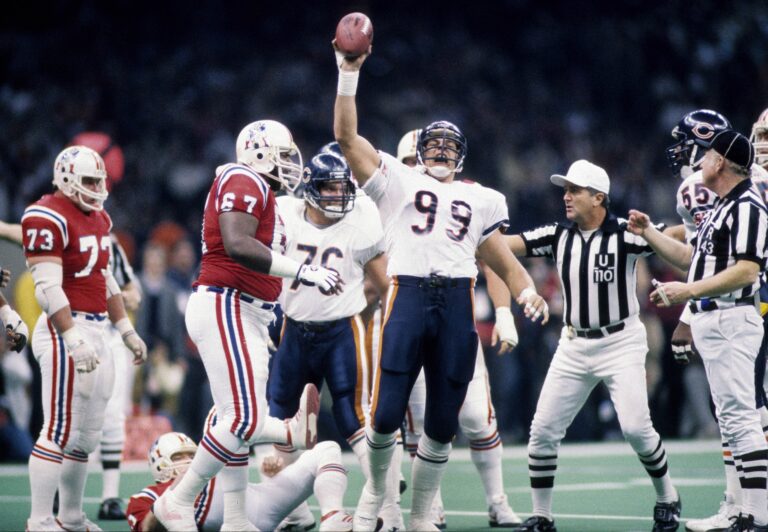
To discuss defensive greatness is to begin and often end with the ’85 Bears. Coordinator Buddy Ryan’s revolutionary “46 Defense” was a masterpiece of controlled chaos, designed to overwhelm protections and punish quarterbacks. This unit was a constellation of Hall of Fame talent—from Mike Singletary’s piercing gaze at linebacker to the relentless rush of Richard Dent and Dan Hampton on the line. Their personality was as loud as their hits. In the playoffs, they authored the most dominant defensive stretch in history, shutting out the Giants and Rams before dismantling the New England Patriots 46-10 in Super Bowl XX. They allowed a mere 10 points in three postseason games. Decades later, their combination of schematic innovation, superstar talent, and sheer intimidation remains the unmatched measuring stick for defensive dominance.
The 2000 Baltimore Ravens: A Symphony of Brutality
If the Bears were a complex symphony, the 2000 Ravens were a hammer. They built a championship not with a high-powered offense, but with a defense so suffocating it felt illegal. Led by Ray Lewis at the peak of his powers, this unit was the definition of relentless physicality. They allowed a then-record 165 points in the regular season (a 16-game record that stood for years) and somehow got *stingier* in the playoffs. In their four postseason games, they surrendered just one offensive touchdown. Their Super Bowl XXXV victory over the New York Giants was a clinic: four forced turnovers, a defensive touchdown, and a 34-7 final score that was never in doubt. This defense proved, beyond any argument, that a team could win a championship with defense as its sole, overwhelming identity.
The 1972 Miami Dolphins: The Silent Enforcers of Perfection
Lost in the lore of the undefeated season is the fact that the ’72 Dolphins’ defense was arguably the best in football. While the offense controlled the clock, the “No-Name Defense” led by Nick Buoniconti and Bill Stanfill consistently strangled opponents. They were the epitome of fundamentally sound, fast, and smart football. In Super Bowl VII, facing a potent Washington offense, they forced five turnovers and secured a 14-7 victory to seal perfection. Their legacy is one of consistent, understated excellence—the immovable backbone that ensured the historic season never slipped into jeopardy.
The 1971 Dallas Cowboys: “Doomsday” Arrives
Before the Steelers of the ’70s, the Cowboys’ “Doomsday Defense” was the standard-bearer for NFC defensive might. A blend of speed, intelligence, and toughness, this unit was engineered to control the line of scrimmage and dictate tempo. In Super Bowl VI, they delivered a performance for the ages, holding the Miami Dolphins to just a single field goal in a 24-3 victory—the first time a team was held without a touchdown in the Super Bowl. Led by Bob Lilly, the defense completely smothered Miami’s attack, allowing only 185 total yards. This victory, built squarely on defensive supremacy, announced Dallas as a true dynasty and cemented their defensive legacy.
The Modern Era: Can Any Defense Join This Elite Club?
In today’s pass-happy, rule-protected offensive environment, the path to all-time defensive greatness is steeper than ever. Yet, the blueprint remains. Teams like the 2013 Seattle Seahawks’ “Legion of Boom” and the 2015 Denver Broncos have come closest, winning titles with defensive ferocity. For a modern unit to crack this historic list, they would need to:
- Lead the league in multiple key categories (points allowed, turnovers, sacks) by a wide margin.
- Feature at least two generational, Hall of Fame-level talents in their prime.
- Deliver a historically dominant playoff run, stifling top-tier quarterbacks.
- Win a Super Bowl where their performance is the unequivocal story of the game.
The challenge is monumental, but as long as the Lombardi Trophy is awarded, defensive masterminds will chase the ghost of the ’85 Bears and the standard set by the Ravens. The next great defense will likely need a hybrid approach—elite coverage to combat spread offenses paired with an interior pass rush that can collapse the pocket in seconds.
Conclusion: The Immovable Foundation of Glory
The greatest defenses in Super Bowl history do more than fill trophy cases; they define the character of their teams and their eras. The Bears’ intimidating swagger, the Ravens’ brutal efficiency, the Dolphins’ flawless execution, and the Cowboys’ disciplined dominance—these are the templates for championship football. In an age where offense dominates the headlines, these legendary squads serve as a powerful reminder that the path to football immortality is often paved by the men who stand firm, hit hard, and refuse to yield. They are the unbreakable foundation upon which dynasties are built, and their legacy is the ultimate goal for any defensive unit daring enough to chase history.
Source: Based on news from Yahoo Sports.