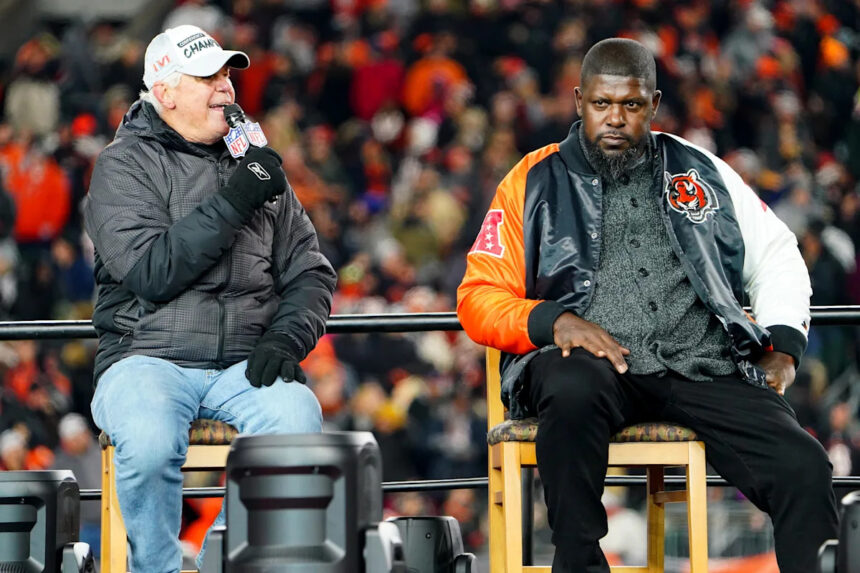
Ken Anderson’s Hall of Fame Wait Continues as Bengals Legends Fall Short in 2026 Vote
The path to Canton is paved with legacy, statistics, and rings. For two Cincinnati Bengals legends, that path remains frustratingly blocked. In a decision revealed during the NFL Honors show in San Francisco, neither former quarterback Ken Anderson nor former offensive tackle Willie Anderson received the necessary votes for enshrinement into the Pro Football Hall of Fame class of 2026. The news, while perhaps anticipated by some, underscores the complex and often contentious debate surrounding football immortality, leaving a fanbase and a franchise to once again ponder what more their heroes could have done.
A Day of Mixed Emotions and Preemptive Realism
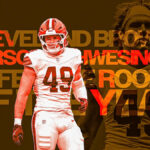
The writing may have been on the wall before the official announcement. Earlier on the day of the NFL Honors, Willie Anderson took to social media with a sobering message for the Who Dey nation. His tweet served as a preemptive dose of realism, advising fans not to hold onto hope for good news from the Hall. This public acknowledgment from a player known for his quiet dominance highlighted the emotional toll the annual wait can exact. Meanwhile, the spotlight shone brightly on others, including former Carolina Panthers linebacker and Cincinnati St. Xavier High School standout Luke Kuechly, whose first-ballot election provided a local storyline of celebration amidst the Bengals’ disappointment.
The contrast was stark. Kuechly’s modern-era brilliance, encapsulated in a relatively shorter but spectacular career, was immediately rewarded. For Ken and Willie Anderson, whose careers peaked in different eras, the senior committee process represents a different kind of gauntlet—one where historical context must be vigorously argued and championed against the tide of time and evolving narratives.
Ken Anderson: The Statistical Pioneer Lost in Time
Ken Anderson’s case is one of the most compelling and chronically overlooked in NFL history. As a senior finalist, his candidacy was pitted against titans like Robert Kraft and Bill Belichick in a contributor/coach/senior category that often feels like a political minefield. The quarterback’s resume is not merely good; it is historically prophetic.
- 1981 NFL MVP and 1981 NFL Offensive Player of the Year.
- Led the Cincinnati Bengals to their first Super Bowl appearance (Super Bowl XVI).
- Four-time Pro Bowl selection and first-team All-Pro in 1981.
- Won four NFL passing titles—a feat matched only by legends like Steve Young and Sammy Baugh at the time.
- His 1982 season completion percentage (70.6%) was a record that stood for over two decades.
Anderson was executing a version of the West Coast offense under Bill Walsh before it had its famous moniker. He was a model of efficiency and accuracy in an era defined by brute force and deep throws. Yet, his case is often diminished by a lack of championship hardware and the smaller-market shadow under which he played. The critique, as bluntly stated by ESPN’s Damien Woody in January—“There is no world where Ken Anderson should get a vote over Bill Belichick”—reveals a core tension. It pits individual legacy against dynastic team success, forcing voters into an apples-to-oranges comparison that often leaves the senior candidate as the odd man out.
Willie Anderson: The Prototype Right Tackle
While Ken’s wait has been decades-long, Willie Anderson’s continued exclusion perplexes those who value sustained elite play at a premium position. “The Window” was a three-time first-team All-Pro (2004-2006) and a four-time Pro Bowl selection. For nearly a decade, he was universally regarded as the gold standard at right tackle, a punishing run blocker and a flawless pass protector who shut down the league’s best edge rushers weekly.
His challenge is twofold. First, the offensive line is the sport’s most under-appreciated unit, with accolades often slow to accumulate for non-left tackles. Second, like his quarterback namesake, his prime years were spent on Bengals teams that, while often competitive, lacked the deep postseason runs that cement legacies. His greatness was consistent, technical, and celebrated by peers and film gurus—but perhaps too quiet for a process that can be swayed by louder narratives and playoff highlights.
Expert Analysis: The Uphill Battle for Historical Recognition
The Hall of Fame process, particularly for senior candidates, is not merely a review of stats. It is an exercise in historical reevaluation and narrative shifting. For Ken Anderson, the argument must transcend numbers. Advocates must convincingly paint him as an offensive revolutionary, a player whose style directly influenced the next generation of quarterbacks and offensive schemes. The obstacle is the fading memory of his play and the dominance of contemporaries like Terry Bradshaw, who boasted four Super Bowl rings.
For Willie Anderson, the modern-era logjam at all positions is a formidable foe. Each year, new eligible players with flashier statistics and championship pedigrees enter the queue. The case for Willie must emphasize his peak as arguably the best at his position for a significant stretch, a claim few can make. It requires voters to prioritize sustained dominance over positional value and team success, a tall order in a room filled with competing agendas.
The inclusion of figures like Bill Belichick and Robert Kraft in the same candidate pool as Anderson creates an almost impossible dynamic. These are figures with defining, era-shaping achievements that are immediately recognizable to even casual fans. Against that backdrop, making the nuanced case for a 1980s quarterback from Cincinnati becomes a monumental task.
Predictions and the Road Ahead for the Bengals Legends
So, where do the Andersons go from here? The future is uncertain, but not without hope.
- Ken Anderson: His best chance remains the senior committee. Being named a finalist is a significant step, proving his case has traction. The committee often revisits candidates, and a weaker field in a future year or a continued push from historians and media could finally tip the scales. The prediction here is that his enshrinement will happen, but it may require more years of advocacy.
- Willie Anderson: He remains in the modern-era pool, where the competition is fierce. His best hope is that as years pass, his standing among his peers—often cited by Hall of Fame voters—gains more weight against players with shorter peaks. A “backlog” year, where no clear first-ballot superstars become eligible, could provide his opening. It’s likely his wait will be lengthy, but his resume is too strong to be permanently ignored.
The Bengals organization and its passionate fanbase must continue to be vocal champions. In the era of digital media and persistent campaigning, keeping these legacies alive and in the conversation is more crucial than ever.
Conclusion: A Legacy Beyond a Bust in Canton
The Pro Football Hall of Fame is the ultimate individual honor, but it does not define a career. For Cincinnati Bengals fans, Ken Anderson is and always will be the graceful MVP who took them to the precipice of glory. Willie Anderson is the immovable rock who defined an era of Bengals toughness. Their jerseys hang in ring of honor, their highlights live on, and their impact on those who watched them play is indelible.
While the vote in San Francisco was another setback, it does not erase their excellence. It simply postpones a formal recognition that, in the hearts of the Who Dey nation, has long been secured. The fight for their Hall of Fame plaques will continue, a testament not just to their talent, but to the enduring belief that greatness, in all its forms, deserves its day in the Canton sun. The wait persists, but so does the legacy.
Source: Based on news from Yahoo Sports.