Beyond the Broadcast: The Unseen Spectacle and Raw Energy of the 2026 Milan-Cortina Opening Ceremony
The world watched a seamless, breathtaking spectacle. A digital Mona Lisa blinked to life, Mariah Carey’s timeless vocals defied the winter chill, and a parade of nations marched through a futuristic Milan. The 2026 Winter Olympics opening ceremony, beamed into living rooms globally, was a triumph of cinematic storytelling and technological audacity. But for the 80,000 souls packed into the iconic, frigid bowl of the San Siro stadium, the experience was something else entirely: a raw, pulsating, and unexpectedly human event where the magic happened in the margins, far from the main camera angles.
- The San Siro’s Soccer Soul: A Pregame Vibe Unlike Any Other
- The Gaps in the Pageantry: What the Cameras Framed Out
- The Unfiltered Audience Reaction: Boos, Cheers, and Collective Confusion
- Expert Analysis: The Ceremony’s Legacy and Predictions for Cortina 2026
- The Verdict: The Dual Reality of the Modern Games
As a sports journalist who has witnessed the choreographed grandeur of multiple Games, I can confirm that the live opening ceremony is a different beast. It’s the difference between watching a concert film and feeling the bass thump in your chest from the front row. The broadcast is the director’s cut. Being there is the unfiltered, immersive director’s commentary—complete with crowd reactions, logistical quirks, and moments of pure, unscripted joy that never make the final feed.
The San Siro’s Soccer Soul: A Pregame Vibe Unlike Any Other
Long before the official ceremony began at 2 p.m. ET, the stadium’s true character emerged. The televised broadcast likely opened with a polished introductory segment, but the live audience was treated to a 30-minute pre-show that set a tone the cameras could only hint at.
A DJ spun upbeat tracks, and enthusiastic hosts attempted to teach the massive crowd coordinated dances. The crowd, however, had its own ideas. What unfolded was less an Olympic tutorial and more a classic European football atmosphere. Chants rolled through the sections organically. Groups of friends created their own waves. The iconic, steep terraces of the San Siro, accustomed to the roars for AC Milan and Inter, vibrated with a festive, anticipatory energy. This wasn’t a passive audience waiting for a show; it was a community already building its own.
This organic, soccer-style atmosphere became a recurring theme, a grounding counterpoint to the ceremony’s high-tech sheen. It was a reminder that we were in a temple of sport with its own deep, noisy history.
The Gaps in the Pageantry: What the Cameras Framed Out
On television, the stands appeared as a monolithic sea of cheering humanity, a testament to sold-out success. The in-person reality was more nuanced, and telling. From my vantage point, clear blocks of empty seats were visible in the upper northeast and eastern sections of the stadium.
This wasn’t a failure of interest, but rather a combination of factors:
- The Biting Cold: The broadcast showcased brave, smiling faces. It didn’t fully convey the penetrating, damp cold of a Milanese February evening. Many ticket-holders, particularly in the exposed upper decks, likely retreated to the concourse heaters for periods of time.
- Logistical Hurdles: The sheer scale of entering the San Siro for an event of this security magnitude created long delays. Some attendees simply missed the opening segments.
- The VIP No-Show: A perennial open secret at live Olympic events is the corporate and diplomatic seating, which often remains conspicuously underutilized after the initial protocol arrivals.
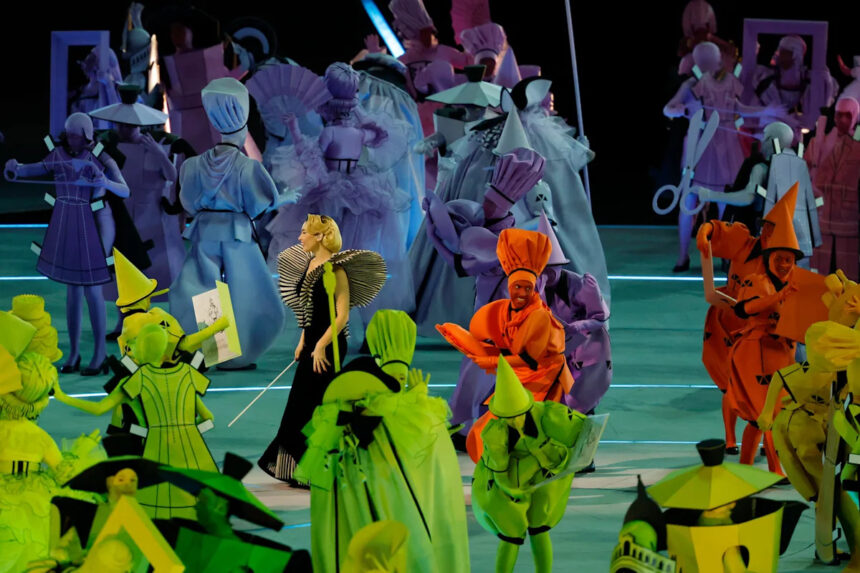
Furthermore, the live view revealed the intricate stagecraft and choreography in a different light. We could see the army of volunteers in dark clothing scurrying to reset segments, the careful guidance of athletes across hidden ramps, and the breathtaking scale of the props—like the towering, human-powered coffee makers representing Italian culture—as they were maneuvered into place with a mixture of precision and controlled chaos.
The Unfiltered Audience Reaction: Boos, Cheers, and Collective Confusion
This is where the live experience diverges most dramatically from the broadcast. Television producers expertly mix crowd noise, often smoothing out the rough edges of genuine reaction. In the stadium, every sentiment was amplified and unfiltered.
The parade of nations was a rollercoaster. The cheers for traditional powerhouses like Canada and Norway were deafening. The host Italian team’s entrance was, predictably, a roof-raising moment of pure pandemonium. However, the political undercurrents of the modern world were laid bare through the crowd’s voice. Certain nations’ teams were met with a jarring, unmistakable wave of heavy boos and whistling, a stark and uncomfortable audio that was heavily diluted in the world feed. It was a powerful reminder that the Olympic ideal of unity exists in constant tension with global realities.
Conversely, the joyous cheers for refugee teams and smaller nations making their Winter Games debut were more heartfelt and sustained live than any broadcast could capture. The crowd’s collective “aww” at a stumbling mascot or their confused murmur during some of the more abstract artistic segments created a shared, living narrative that those watching at home did not experience.
Expert Analysis: The Ceremony’s Legacy and Predictions for Cortina 2026
From a professional standpoint, the Milan ceremony was a bold, postmodern masterpiece for the cameras. Its use of augmented reality, blending Italy’s unparalleled artistic heritage with its futuristic ambitions, was executed flawlessly for the broadcast viewer. The thematic throughline from da Vinci to digital was clear and compelling.
However, the live experience highlighted a growing challenge for Olympic ceremonies: the balance between cinematic intimacy and stadium-scale spectacle. Some of the most powerful broadcast moments, like the digital projections on the stadium floor, were virtually invisible to large swaths of the live audience. The ceremony sometimes felt like two parallel events—one for the lens, one for the stands.
This leads to my prediction for the second half of the 2026 Games. The closing ceremony in Cortina d’Ampezzo, set in the stunning Dolomites, will be a deliberate contrast. Expect a more organic, nature-focused, and emotionally resonant production. The intimate, mountainous setting will force a return to human-scale storytelling. We will likely see:
- A stronger emphasis on live musical and acrobatic performance over digital projection.
- Ceremonial elements that directly engage the smaller, seated audience.
- A thematic shift from Milan’s “human genius” to Cortina’s “natural majesty,” potentially creating a more cohesive live experience.
The challenge for organizers will be ensuring this alpine celebration retains the global wow factor for television.
The Verdict: The Dual Reality of the Modern Games
So, what really happened at the Winter Olympics opening ceremony? Two things, simultaneously. A visually stunning, tightly controlled narrative was delivered to billions. And within the stadium, a grittier, more emotionally volatile, and authentically human event took place. You felt the cold, heard the dissent alongside the adoration, and witnessed the monumental effort behind the magic.
The true spectacle of the opening ceremony in 2026 wasn’t just the dancing coffee makers or the holographic Renaissance art. It was the very duality of the event itself. It was a testament to how the Olympics, at their best, are not just a polished product but a living, breathing, and sometimes messy gathering of humanity. The broadcast gave us a flawless dream. Being there gave us the compelling, imperfect, and unforgettable reality.
Source: Based on news from Yahoo Sports.