Brooklyn Nets Jersey History: The Brief, Unforgettable No. 42 of Anthony Mason
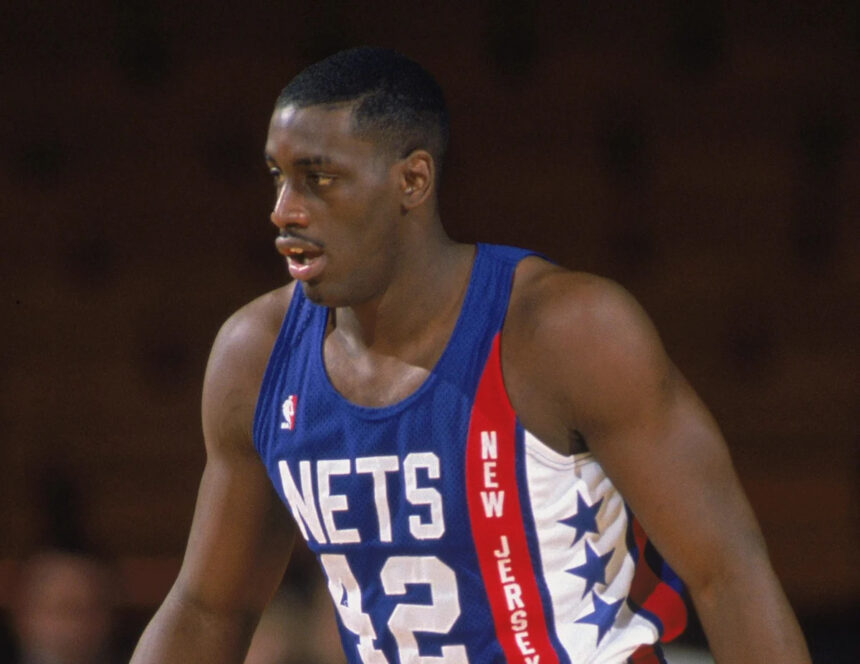
Across the sprawling tapestry of the Brooklyn Nets franchise—a journey that spans from the ABA’s New Jersey Americans to the modern era—certain jersey numbers tell epic stories of longevity and stardom. Others, like No. 42, serve as fascinating footnotes, brief stops for players whose legacies were forged elsewhere. Yet, within that number’s history lies a single season that stands out not for its statistics, but for the raw, unpolished glimpse it provides of a future NBA force. The seventh of fourteen players to wear No. 42 for the franchise was a tough, undersized big man just trying to stick: Anthony Mason. His single season with the then-New Jersey Nets was a prologue to a cult-hero career, a forgotten chapter that perfectly encapsulates the grind and uncertainty of professional basketball’s fringes.
From Third-Round Pick to Nets Reclamation Project
The Anthony Mason who would later become an All-Star and the heart of Pat Riley’s brutal New York Knicks was not a predestined NBA success. After a dominant career at Tennessee State, Mason was selected 53rd overall in the 1988 NBA Draft by the Portland Trail Blazers. His path to the league immediately hit a roadblock; he was cut by Portland before the season began. This setback led him to the Turkish Basketball League and the USBL, proving his mettle and hunger far from the NBA spotlight.
It was this perseverance that caught the attention of the New Jersey Nets in 1989. The Nets, under head coach Bill Fitch, were a team in transition, offering opportunities for hungry players. They signed Mason for the 1989-90 NBA season, giving the 6’7″, 250-pound forward his first real shot. He wasn’t joining a powerhouse; the Nets would finish a dismal 17-65. But for Mason, it was a lifeline—a chance to prove his unique, physical brand of basketball could work at the highest level.
The Mason Prototype: A Single Season in New Jersey
Wearing No. 42, Mason’s role was limited but telling. He appeared in 21 games, averaging just over 10 minutes per contest. His raw numbers—3.3 points and 3.0 rebounds—were modest, but they couldn’t capture the essence of his game. Even in limited action, the hallmarks of the future NBA Sixth Man of the Year were visible:
- Versatile Defense: Even as a rookie, Mason displayed an uncanny ability to guard multiple positions, using his strength and low center of gravity to bother both forwards and centers.
- Playmaking from the Post: His signature skill—exceptional passing for a big man—began to flash. He was not just a scorer; he was a connective tissue player, a trait rarely valued in big men of that era.
- Relentless Rebounding: His per-36-minute rebounding numbers were impressive, showcasing the tenacity that would become his trademark.
- Unorthodox Offense: His offensive game was a work in progress, relying on brute force and a developing left-handed hook shot, a preview of the unique offensive package he would later refine.
Despite showing these flashes, Mason was cut by the Nets before the 1990-91 season. In the win-now environment of the NBA, his project status and the team’s shifting direction left him without a roster spot. It was another crushing setback, but it set the stage for his remarkable resurgence.
The Path Forged After New Jersey: From Castoff to Cult Hero
Getting cut by a 17-win team could have been a career death knell. For Anthony Mason, it was merely fuel. He returned to the CBA (Continental Basketball Association), dominating with the Tulsa Fast Breakers and earning MVP honors. This forced the NBA to look again. He signed with the Denver Nuggets in 1991, but his career truly ignited when he was traded to the New York Knicks in 1991.
Under Pat Riley, Mason found his perfect ecosystem. His toughness, versatility, and passing genius were not just appreciated; they were essential to the Knicks’ identity. He became the league’s premier utility man, playing center on defense and initiating offense as a point-forward. In 1995, he was named NBA Sixth Man of the Year and an NBA All-Star in 2001 with the Miami Heat. The player the Nets saw in glimpses had evolved into a league-wide phenomenon—a symbol of grit, skill, and New York City basketball.
Legacy of No. 42: Mason’s Place in Nets Lore
In the direct lineage of Nets history, Anthony Mason’s tenure is a blip. He does not rank in franchise statistical leaders, and his name is rarely mentioned among team alumni. However, his story is vital to the complete narrative of the Nets jersey number history. The No. 42 for the Nets isn’t defined by retired jerseys or decade-long tenures; it’s defined by transitions, experiments, and hidden gems.
Mason’s season represents the ultimate “what if” for talent evaluation. The Nets had, in their hands, a uniquely talented player whose style was ahead of its time. They saw the raw material but, amid a losing season, weren’t in a position to cultivate it. His subsequent rise to stardom just across the river in New York adds a layer of poignant irony to his Nets chapter. He became everything a tough, defensive-minded team could want—just not for the team that first gave him a chance.
Today, when fans look back at the Brooklyn Nets jersey history, Mason’s No. 42 serves as a powerful reminder. It underscores that franchise history is not made only by superstars. It is also written by the grinders, the briefly seen, and the players who pass through leaving only a faint mark on the stat sheet, but whose journeys illuminate the difficult path to NBA relevance. Anthony Mason’s legacy is ultimately a Knicks and NBA story, but its first, struggling page was authored in New Jersey, a crucial proving ground for one of the league’s most unforgettable characters.
Source: Based on news from Yahoo Sports.