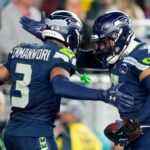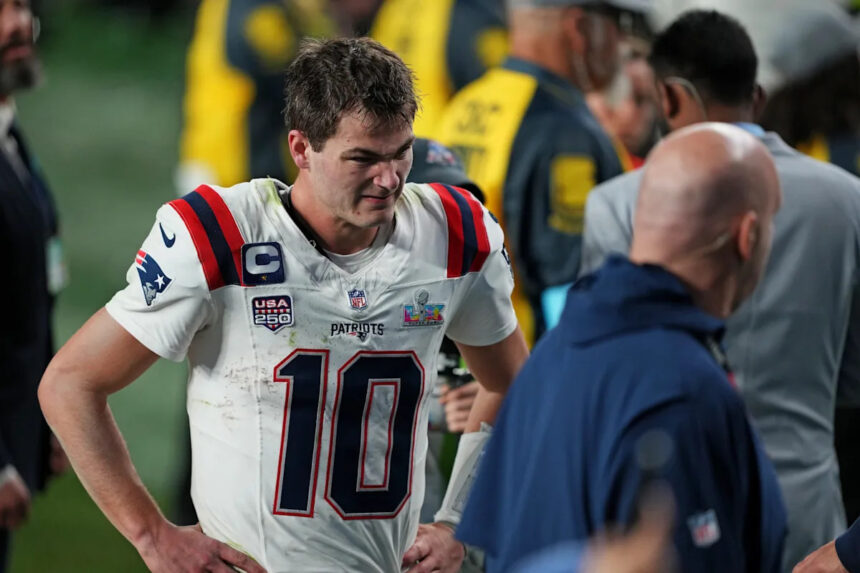
We Struggled: Seahawks’ ‘Dark Side’ Defense Smothers Patriots in Super Bowl 60 Masterclass
In the cavernous, quiet aftermath of Super Bowl 60, the silence was more telling than any celebration. Two figures, Stefon Diggs and Kayshon Boutte, sat side-by-side in the New England Patriots locker room, the weight of a championship dream extinguished hanging in the air between them. Across the stadium, a symphony of celebration played for the Seattle Seahawks, whose legendary “Dark Side” defense didn’t just win a game—they authored a defensive manifesto, a 60-minute treatise on suffocation that culminated in a 29-13 victory that felt far more lopsided than the score suggests. This wasn’t a defeat; it was a systematic shutdown.
A Shadow Over the Biggest Stage
The narrative heading into Super Bowl 60 centered on the Patriots’ resurgent offense and its veteran stars. That narrative was erased by the first quarter. Seattle’s “Dark Side” unit, a moniker earned through years of intimidating, physical play, executed a game plan of terrifying efficiency. For three quarters, they rendered the Patriots’ attack inert, a ghost of its regular-season self. New England’s offense was a non-factor, failing to score a single point and, more stunningly, never crossing the Seahawks’ 40-yard line. The Patriots’ first 45 minutes produced a stat line of nightmares: punts, turnovers, and utter offensive anonymity.
“We struggled. Some plays we probably want back. We didn’t play our best. We lost. Got to take it on the chin,” Diggs said postgame, his words echoing in the subdued locker room. “They played a better game. That was a good (expletive) team we played.” His assessment was an understatement. This was a defensive clinic.
Deconstructing the Darkness: How Seattle Dominated
The Seahawks’ victory was built on a defensive philosophy that has become their hallmark: speed, discipline, and relentless pressure. Diggs, who was held to a mere four catches for 42 yards, pinpointed the problem. “They have a hell of a defense. One of the top defenses in the league,” he said. “They are fast in the back end, they have fast backers and they got a good interior.” This three-tiered speed created a perfect storm for New England’s offense.
Let’s break down the key elements of Seattle’s defensive domination:
- Secondary Lockdown: Seattle’s famed “No-Fly Zone” 2.0 lived up to its name. Using a mix of press coverage and disguised zone looks, they disrupted timing routes from the snap. Patriots receivers faced immediate contact and found no clean air downfield, eliminating the explosive plays that were their lifeblood all season.
- Front-Seven Ferocity: The Patriots’ offensive line, lauded all week, was overwhelmed. Seattle’s defensive front, led by its powerful interior, generated pressure with just four rushers. This allowed their fast backers to flow freely, shutting down screen passes and outside runs, and spying on New England’s mobile quarterback.
- Situational Supremacy: On third down, the “Dark Side” was impenetrable. The Patriots converted a dismal 2 of their first 12 attempts. In the red zone—once they finally reached it in the fourth quarter—Seattle’s defense tightened further, forcing field goals and denying the emotional lift of a touchdown.
The 13 points and 253 yards New England accumulated are grossly misleading; the vast majority came in a futile fourth quarter with the game’s outcome long sealed. The Patriots’ offense was not just beaten; it was solved and silenced.
Expert Analysis: The Blueprint for Modern Defense
What Seattle displayed was more than a great performance; it was the modern blueprint for winning a championship with defense in a league skewed toward offense. In an era of high-flying passing attacks, the Seahawks proved that elite, versatile defense remains the ultimate trump card. Their ability to adapt in real-time—shifting from Cover 3 to complex two-high safety looks without losing aggression—confused a veteran Patriots quarterback and offensive coordinator all night.
The “Dark Side” succeeds because it is built not on one superstar, but on a constellation of them, each with elite speed and football IQ. They don’t just react; they dictate. By taking away the Patriots’ primary weapons early, they forced New England into uncomfortable, unfamiliar play-calling. The Patriots’ run game was abandoned, their play-action game was nullified, and they were pushed into obvious passing situations where Seattle’s pass rushers could pin their ears back.
This victory solidifies the Seahawks’ defensive legacy, drawing direct lines to their historic “Legion of Boom” teams. It proves that in football, while offensive schemes may trend and evolve, the core principles of great defense—tackling, speed, and intimidation—are timeless.
The Aftermath and What Comes Next
For the New England Patriots, the offseason begins with a sobering reality. As Diggs stated, they must “take it on the chin.” The questions will be loud and persistent: Is the offensive model sufficient against the league’s very best defenses? Do they need to retool the line or find another dynamic weapon to combat defensive schemes like Seattle’s?
For the Seattle Seahawks, the future is illuminated by the glow of the Lombardi Trophy. The “Dark Side” defense, with most of its core in its prime, has established itself as the standard. The challenge now is sustaining this level of excellence in a league that will spend every waking moment trying to decode them. Can they remain the hunters, or will they become the hunted?
Prediction: This victory will trigger a league-wide shift in team-building philosophy. General Managers will prioritize defensive speed at all three levels, seeking to replicate Seattle’s formula. The arms race for the next five years may well be on the defensive side of the ball, as franchises look to build the unit that can turn out the lights on the biggest stage, just as the Seahawks did in Super Bowl 60.
Conclusion: A Legacy Forged in Shadows
Super Bowl 60 will be remembered not for a dramatic comeback or an offensive explosion, but for a defensive unit so dominant it controlled every facet of the game. The image of Diggs and Boutte sitting in quiet contemplation is the lasting portrait of this championship game—a testament to the psychological and physical toll exacted by the Seahawks’ “Dark Side.” They didn’t just defeat the Patriots; they imposed their will, exposed weaknesses, and provided a masterclass in defensive football. In a game played under the brightest lights, Seattle proved that darkness can be the most powerful force of all. The message to the league is clear: to reach the mountaintop, you must first find a way through the shadow.
Source: Based on news from Yahoo Sports.