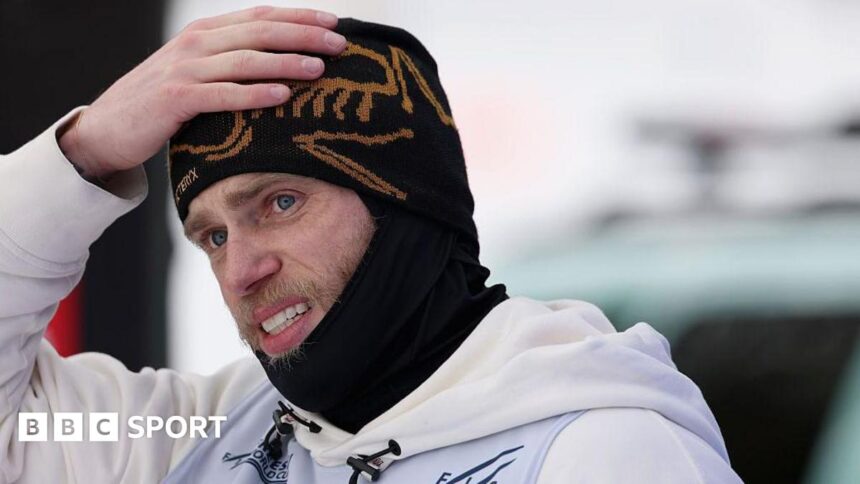
Olympic Skier Gus Kenworthy Faces Death Threats After Vocal Anti-ICE Stance
The high-stakes world of elite sports collided with the incendiary arena of political discourse this week, as Team GB freestyle skier Gus Kenworthy revealed he has received death threats following a social media post criticizing U.S. Immigration and Customs Enforcement (ICE). The Olympic silver medalist, known for his pioneering athleticism and LGBTQ+ advocacy, finds himself at the center of a firestorm just days before competing on the world’s biggest stage, highlighting the perilous tightrope public figures walk when engaging in activism.
From Halfpipe to Headlines: The Incident Unpacked
Gus Kenworthy’s journey is one of dual identity. Born in Chelmsford, England, he grew up and honed his craft in the United States, representing Team USA at the 2014 Sochi Games where he won a historic silver medal in slopestyle. In 2019, he switched allegiance to Team GB, a move that underscored his complex national ties. With five X Games medals to his name, Kenworthy has built a reputation as much for his outspokenness as for his aerial prowess.
The controversy ignited when Kenworthy shared a graphic to his Instagram feed. The image featured the acronym “ICE” preceded by a bold, expletive modifier. Posted a week before his scheduled competition at the Winter Olympics, the statement was unambiguous. While the post garnered significant support from fans and fellow athletes, it also unleashed a torrent of vitriol. In a subsequent follow-up, Kenworthy addressed the backlash directly, stating that while there had been “encouraging” support, the response had also included death threats and severe harassment.
This incident is not an isolated moment of activism for Kenworthy. He has long used his platform to advocate for LGBTQ+ rights, refugee causes, and social justice, positioning himself as an athlete unwilling to “stick to sports.” This latest post, however, targeted a specifically polarizing U.S. government agency, guaranteeing a explosive reaction from across the political spectrum.
The Analysis: Sport, Politics, and the Modern Athlete’s Platform
The fusion of sports and politics is a centuries-old phenomenon, but the advent of social media has fundamentally altered its dynamics. Athletes no longer need to rely on traditional media to broadcast their views; they have direct, unmediated access to a global audience. This power is a double-edged sword.
Expert analysis suggests Kenworthy’s experience is a stark case study in the new rules of engagement. “The athlete-activist today operates in a 24/7 news cycle fueled by algorithmically amplified outrage,” notes Dr. Lena Shaw, a sociologist specializing in sports media. “A post made from an Olympic village can instantly mobilize both fervent support and coordinated, vicious backlash from anywhere in the world. The death threats represent the extreme end of a spectrum designed to intimidate and silence.”
Kenworthy’s status as a dual-national athlete adds another layer. By criticizing a U.S. agency while representing Great Britain, he inadvertently touches on sensitive nerves around nationality, loyalty, and the right to critique. His actions prompt critical questions:
- Where is the line between an athlete’s personal voice and their role as a representative?
- How do sports governing bodies navigate an era where athlete activism is increasingly common?
- What duty of care do teams and federations have to protect athletes from online harassment that spills into real-world threats?
The International Olympic Committee’s (IOC) Rule 50, which aims to keep the podium and field of play neutral, is already under intense scrutiny. While Kenworthy’s post was made away from competition, the timing ensures his political stance is now an inextricable part of his Olympic narrative.
Predictions: The Ripple Effect for Kenworthy and Beyond
The immediate concern is for Gus Kenworthy’s safety and mental state as he prepares to compete. The psychological burden of facing death threats is immense, potentially impacting performance at a career-defining moment. The response from Team GB and Olympic security will be closely watched; they must now ensure his physical protection in addition to athletic support.
Looking beyond these Games, this episode will likely have several consequences:
- Increased Scrutiny on Online Abuse: This case adds to the growing pressure on social media platforms to enforce policies against targeted harassment, especially of high-profile individuals. Sports leagues and Olympic committees may demand more robust partnerships with these companies to shield their athletes.
- A Chilling Effect or a Rallying Cry? The threats could deter some athletes from speaking out, fearing similar backlash. Conversely, it may galvanize others, particularly within Kenworthy’s extensive LGBTQ+ and ally network, to be more vocal in solidarity, framing such harassment as proof of the urgency of their advocacy.
- Sponsorship Calculus: Brands aligned with Kenworthy’s values may double down on their support, leveraging his courage for marketing purposes. Others may grow wary. His endorsement portfolio will become a key indicator of how corporate America navigates this blend of sports, politics, and controversy.
- Legacy Shift: While Kenworthy’s X Games medals and Olympic silver cemented his athletic legacy, this moment may equally define his public persona. He is transitioning from athlete to athlete-activist, a path tread by figures like Muhammad Ali and Megan Rapinoe, where social impact rivals sporting achievement.
Conclusion: More Than a Hashtag
Gus Kenworthy’s graphic Instagram post was more than a fleeting social media controversy. It was a deliberate act of political expression that has triggered a dangerous and telling response. The death threats he received are the horrific extreme of a polarized online culture that seeks to punish dissent, particularly from those in the public eye.
As Kenworthy drops into the Olympic slopestyle course, he carries a weight far beyond the pressure to medal. He embodies the modern dilemma of the celebrity athlete: possessing a platform with the power to effect change, but at a potentially grave personal cost. His experience serves as a sobering reminder that the race for social justice is run on a track fraught with peril. Whether this incident silences voices or inspires a new generation of athletes to speak truth to power remains to be seen. One thing is certain: in the 21st century, the podium is political, the athlete is an advocate, and the game extends far beyond the final score.
Source: Based on news from BBC Sport.