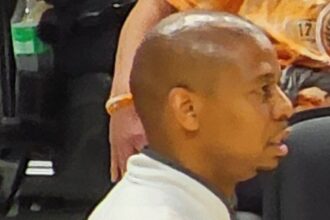
Adam Gase Returns to NFL, Joins Jim Harbaugh’s Chargers as Pass Game Coordinator
In a move that has sent shockwaves through the NFL’s coaching carousel, the Los Angeles Chargers are reportedly bringing a polarizing figure back into the league’s spotlight. Multiple reports confirm that former Miami Dolphins and New York Jets head coach Adam Gase is set to join Jim Harbaugh’s staff as the team’s new pass game coordinator. This marks Gase’s first NFL role since his unceremonious exit from the Jets following the 2020 season. The pairing of the offensive-minded Gase with the CEO-style Harbaugh creates one of the most fascinating and scrutinized coaching experiments of the 2024 offseason.
A Phoenix Attempting to Rise from the Ashes
Adam Gase’s journey back to an NFL sideline is a narrative of redemption, or at the very least, a compelling second act. His head coaching record—a combined 32-48 with no playoff victories—is a stark data point that defines his tenure for many fans. His final season with the Jets, a dismal 2-14 campaign, seemed to cement a reputation that might have been unrecoverable. For the past three seasons, Gase has been out of the league, a hiatus that allowed the dust to settle on a legacy that began with so much promise.
To understand the Chargers’ gamble, one must look past the head coaching record. Gase’s reputation was forged in the fire of high-powered offenses as a coordinator. His work with Peyton Manning in Denver from 2013-2014, where the Broncos set offensive records, made him a coveted head coaching candidate. A successful stint as the Chicago Bears’ offensive coordinator in 2015, where he helped Jay Cutler to a career-low interception season, sealed the deal. The Chargers are not hiring the failed CEO of the Jets; they are hiring the schematic specialist who once orchestrated one of history’s most potent attacks.
Key Points on Gase’s Career Arc:
- Rapid Ascent: Celebrated as an offensive innovator with Denver and Chicago, leading to head coach interviews.
- Miami Tenure: A mixed 23-25 record with one playoff appearance (2016) that highlighted offensive inconsistency.
- New York Collapse: A disastrous 9-23 stint marked by stagnant offense and public friction, leading to his firing.
- Strategic Hiatus: Three years away from the NFL, a period for self-scouting and scheme evolution.
The Harbaugh Calculus: Why This Move Makes Sense for LA
At first glance, the union of Jim Harbaugh and Adam Gase seems incongruous. Harbaugh, the culture-building, ground-and-pound advocate, partnering with Gase, the perceived pass-happy, quarterback-whisperer. Yet, when deconstructed, the logic from the Chargers’ perspective becomes clearer. This is not a hire made in a vacuum; it is a deliberate piece of a larger offensive puzzle.
First, Harbaugh has already installed his philosophical bedrock by hiring Greg Roman earlier this offseason to run the offense, a move signaling a commitment to a physical run game. However, with a generational talent like Justin Herbert at quarterback, a pure, old-school approach would be negligent. The Gase hire is the critical counterbalance. His specific role as pass game coordinator is telling. He is being tasked with a focused mission: to design and optimize the vertical, explosive element of the offense that maximizes Herbert’s arm talent within Harbaugh’s overall system.
Furthermore, Harbaugh has a history of rehabilitating coaches’ careers, valuing specialized expertise over recent headlines. He operates with a CEO mindset, delegating authority to strong coordinators. By bringing in Gase, and previously hiring another former Dolphins coach in Mike McDaniel (now with Miami), Harbaugh demonstrates he is more interested in a coach’s specific schematic acumen than his overall win-loss ledger as a top boss. For Gase, this is a perfect re-entry point—all of the creative influence on the passing game with none of the overarching organizational responsibilities that overwhelmed him in New York and Miami.
Justin Herbert: The Ultimate Litmus Test
The success or failure of this experiment will be measured almost exclusively through the performance of Justin Herbert. Gase’s legacy as a “quarterback guru” is paradoxical. He earned praise for his work with Peyton Manning, but Manning was a finished product. His tenures with Ryan Tannehill in Miami and Sam Darnold in New York did little to spur significant development, with many critics arguing his complex system stunted their growth.
Now, Gase inherits his most physically gifted pupil yet. Herbert possesses the arm strength, intelligence, and toughness to execute any scheme. The central question becomes: Can Adam Gase adapt his concepts to fit Herbert’s strengths and Harbaugh’s philosophy, or will he attempt to force a square peg into a round hole? The Chargers’ hope is that a humbled Gase, after three years of reflection, has evolved. His role is to be a collaborator, not a czar. He must build a play-action and drop-back passing attack that seamlessly complements a potent running game, something he has not consistently done as a head coach.
Prediction for the Chargers’ Offense: Expect a more balanced, but still aggressive, attack. Harbaugh’s 49ers and Michigan teams were never shy about taking deep shots; they just earned them with the run. With Gase in the booth, look for Herbert to operate more under center with sophisticated play-action concepts designed to create one-on-one matchups for receivers like Keenan Allen and Josh Palmer. The risk is disjointed play-calling; the reward is a truly multidimensional offense that can beat teams in any situation.
Verdict: A High-Risk, High-Reward Gamble
The Chargers’ hiring of Adam Gase is a quintessential high-risk, high-reward maneuver. On one hand, they have acquired a coach with a proven, elite track record of designing pass offenses at the coordinator level and paired him with a quarterback capable of executing it at the highest level. If Gase has truly refined his approach, this could unlock a new, devastatingly efficient dimension for Justin Herbert and propel the Chargers into the AFC’s upper echelon.
On the other hand, the potential for friction and philosophical clash is real. Can Gase, who has been the top voice in his room for nearly a decade, thrive in a subordinate, specialized role? Will his concepts mesh with the physical identity Harbaugh and Roman are certain to instill? The specter of his recent failures will loom over every third-down incompletion and red zone stall, especially in a market as demanding as Los Angeles.
Ultimately, this move underscores Jim Harbaugh’s confidence in his own leadership and vision. He is betting that he can provide the structure and culture that was missing in Gase’s previous stops, thereby unleashing the brilliant offensive mind that once existed. For Adam Gase, this is likely his final, best chance to reshape his NFL narrative. For the Chargers and Justin Herbert, it is a bold stroke that could either solve their offensive puzzle or become a confusing, contradictory footnote in a promising era. The pressure is on, and all eyes will be on the practice fields of Costa Mesa to see if this unlikely partnership can forge a championship-caliber attack.
Source: Based on news from Deadspin.
Image: CC licensed via www.history.navy.mil