From Miami to LA: Chargers Bet Big on Ex-Dolphins Coaches Gase and McDaniel
In an NFL offseason defined by coaching carousels and philosophical overhauls, the Los Angeles Chargers have made a move that has the entire league buzzing. While the Miami Dolphins famously raided the Green Bay Packers’ front office this winter, the Chargers have executed a different, bolder strategy: building an offensive brain trust with former Dolphins head coaches. The hiring of Adam Gase as an offensive assistant to oversee the passing game, following the earlier acquisition of offensive coordinator Mike McDaniel, creates a fascinating and high-stakes reunion in Los Angeles. Under the watchful eye of new head coach Jim Harbaugh, this duo is now tasked with unlocking the generational talent of quarterback Justin Herbert. It’s a gamble that blends redemption, innovation, and immense pressure.
A Tale of Two Dolphins Tenures
To understand the potential of this partnership, one must first examine the distinct paths Gase and McDaniel took in Miami. Their tenures, while both ending without playoff victories, represent contrasting coaching archetypes.
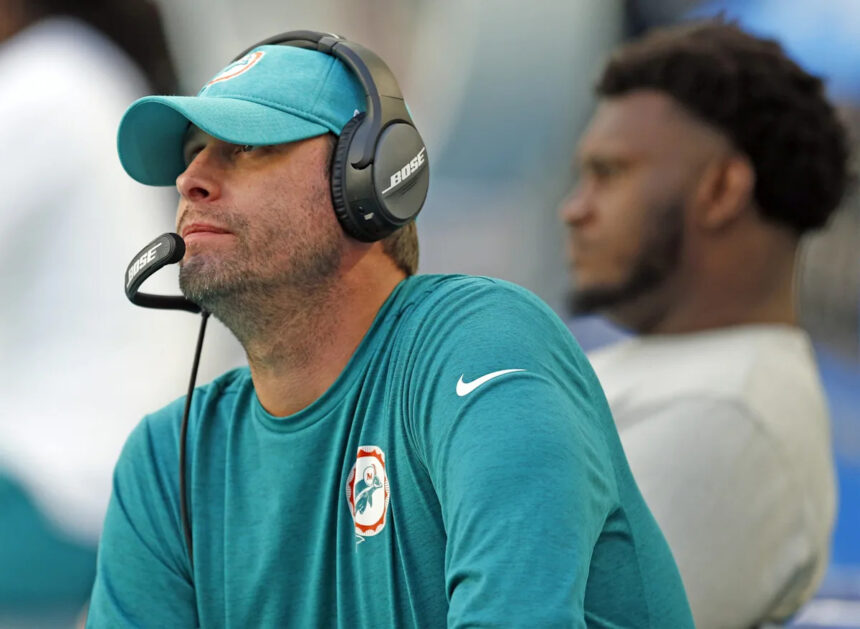
Adam Gase arrived in 2016 as a celebrated offensive wunderkind, fresh from coordinating the Denver Broncos’ Super Bowl-winning offense. His three seasons were a rollercoaster, marked by a surprising 10-6 playoff run in his first year followed by inconsistency. His final record of 23-25 reflected an offense that often struggled to find its identity, despite moments of brilliance. After a subsequent and challenging stint with the New York Jets, Gase has been out of the league for five years—a period of reflection and study that he brings to LA.
Mike McDaniel, by contrast, represented the modern, scheme-driven offensive mind. Hired in 2022, his four years produced a 35-33 record and two playoff appearances. His system, a wide-zone, motion-heavy attack, was analytically progressive and fun to watch. However, it ultimately faltered against elite competition in the postseason, and his inability to fix a perpetually struggling offensive line led to his dismissal. His reputation is that of a brilliant tactician seeking a second chance to prove his system can win when it matters most.
The contrast is stark: Gase, the once-heralded QB guru seeking redemption, and McDaniel, the schematic innovator looking for validation. Together, they form a compelling laboratory for Jim Harbaugh.
The Harbaugh Factor: A New Blueprint in Los Angeles
This experiment would not be possible without the architect, Jim Harbaugh. The Chargers’ new head coach is a proven program-builder with a clear, physical vision for football. Harbaugh’s offenses, from Stanford to the San Francisco 49ers to Michigan, have been built on a foundation of power running, tight end usage, and play-action passing. He is not hiring Gase and McDaniel to import their previous systems wholesale. Instead, he is curating a staff with diverse experiences to serve his overarching philosophy.
Harbaugh’s role here is critical. He provides the structural discipline and cultural identity that both coaches arguably lacked as head men. In this hierarchy, Gase and McDaniel are specialists, not CEOs. This allows them to focus on their core competencies: dissecting coverages, designing route concepts, and most importantly, connecting with Justin Herbert. Harbaugh’s history suggests he will empower his assistants while ensuring every idea filters through his proven blueprint for success.
Key Responsibilities in the New Chargers Offense:
- Mike McDaniel (OC): Expected to be the primary game-planner and play-caller, integrating his creative motion and formation concepts into Harbaugh’s run-first system.
- Adam Gase (Passing Game Assistant): Will focus on opponent-specific pass game plans, third-down strategies, and working directly with Herbert on defensive recognition and progression reads.
- Jim Harbaugh (HC): Sets the overall physical identity, manages the game, and has final say on all schematic and personnel decisions.
Justin Herbert: The Ultimate X-Factor
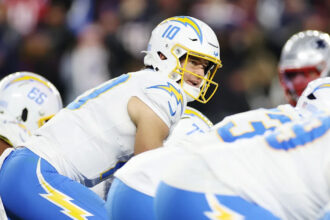
At the center of this grand coaching experiment is a quarterback who can make any scheme look good: Justin Herbert. The Chargers’ franchise star has put up prolific numbers despite constant coaching turnover and systemic instability. Now, for the first time, he will have a stable, headstrong head coach in Harbaugh paired with two offensive minds dedicated to refining the nuances of the passing game.
This structure is tailor-made to address Herbert’s rare talent. Harbaugh will provide the consistent, supportive environment and the punishing run game to keep the offense on schedule. McDaniel’s schematic wrinkles will create easier throws and open windows. Gase’s detailed focus on the pass game and coverages can help Herbert make faster, more decisive post-snap decisions. The potential synergy is immense. If this trio can coalesce, Herbert could transition from a stat-sheet filler to a consistent MVP candidate, finally translating his otherworldly arm talent into deep postseason success.
Predictions and Potential Pitfalls
The Chargers’ coaching cocktail is one of the most intriguing storylines of the 2024 season. The potential for a top-five offense is very real, but the path is fraught with challenges.
Why This Could Be a Masterstroke: The blend of Harbaugh’s toughness, McDaniel’s creativity, and Gase’s detailed passing focus could create a truly multifaceted and unpredictable offense. Herbert has never had this level of dedicated, high-profile support. The “prove-it” energy from both ex-Dolphins coaches could fuel incredible preparation and innovation.
Potential Risks to Watch:
- Too Many Cooks: Can three strong-minded offensive voices find harmony? Clear delineation of duties will be essential.
- Philosophical Clash: Will McDaniel’s wide-zone schemes seamlessly integrate with Harbaugh’s preference for gap and power runs?
- The Gase Unknown: After five years away, is Gase’s understanding of modern NFL defenses still sharp? His impact is the biggest variable.
Our prediction: The Chargers’ offense will experience early growing pains as the staff finds its rhythm. However, by mid-season, Herbert will be operating the most balanced and dangerous attack of his career. The team will boast a dominant run game that sets up devastating play-action, with Herbert making more explosive plays downfield. Statistically, expect Herbert to challenge for the league lead in passing touchdowns while significantly reducing turnovers.
Conclusion: A High-Risk, High-Reward Reunion
The Los Angeles Chargers have not played it safe. In assembling a staff featuring two former head coaches from the same franchise, Jim Harbaugh has made a deliberate and provocative statement. He is not interested in yes-men; he is curating a council of experienced, motivated minds with something to prove. The reunion of Adam Gase and Mike McDaniel in Los Angeles is more than a quirky footnote—it is a calculated gamble on the power of redemption and specialized expertise.
For Gase and McDaniel, it is a chance to rewrite their NFL narratives, freed from the ultimate responsibility of the top job. For Harbaugh, it is an opportunity to synthesize diverse ideas into a championship formula. And for Justin Herbert, it is the most promising infrastructure yet built to harness his extraordinary abilities. The pressure is immense, the scrutiny will be relentless, but if this experiment works, the Chargers may have just engineered the most formidable offense in the league. The journey from Miami disappointment to Los Angeles triumph begins now.
Source: Based on news from Yahoo Sports.