IOC Bans Ukrainian Skeleton Racer’s ‘Helmet of Remembrance’ in Controversial Olympic Ruling
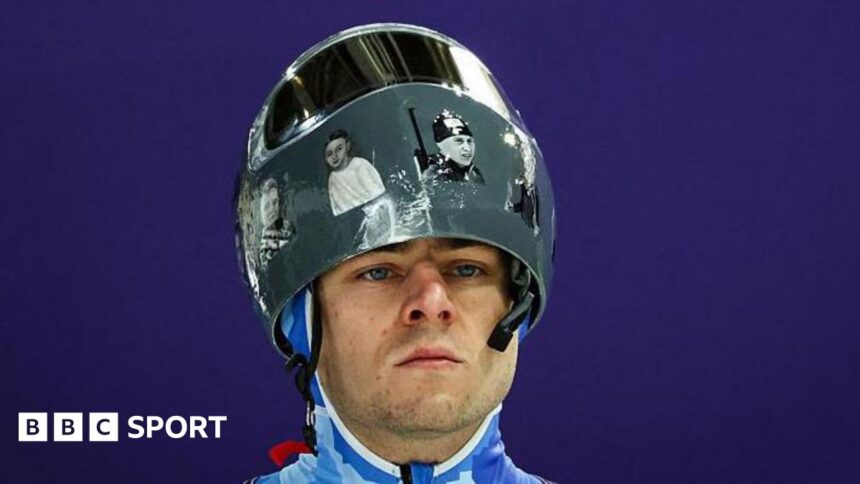
The stark, silent speed of skeleton racing was pierced by a powerful, silent statement this week. Ukrainian athlete Vladyslav Heraskevych, a vocal critic of the Russian invasion of his homeland, arrived at the Winter Olympics with more than his sled. He carried a helmet adorned with the faces of Ukrainians killed in the conflict—a “helmet of remembrance” meant to ensure the world does not look away. Now, the International Olympic Committee (IOC) has banned him from wearing it in competition, igniting a fierce debate about the boundaries between sport, politics, and basic humanity on the world’s biggest athletic stage.
A Canvas of Grief: The Story Behind the Banned Helmet
For Vladyslav Heraskevych, the helmet is not a generic protest symbol. It is a personal memorial. The 26-year-old skeleton racer, who gained global attention at the Beijing 2022 Games by holding up a “No War in Ukraine” sign after his run, designed this latest tribute with profound intimacy. The faces gazing out from the helmet’s surface are those of athletes and civilians whose lives were cut short by the war.
In an interview with Reuters, Heraskevych shared the heartbreaking connections. The helmet features teenage weightlifter Alina Peregudova, boxer Pavlo Ishchenko, and ice hockey player Oleksiy Loginov. Some were his friends. “Many of them were athletes,” Heraskevych stated, underscoring how the war has ravaged the very community the Olympics aims to celebrate. The helmet transformed his high-speed descent from a mere athletic pursuit into a vessel of collective memory, a rolling tribute to stolen potential. His use of the helmet during a training session in Cortina was a deliberate act of witness, one that has now been curtailed by the IOC’s ruling.
The IOC’s Tightrope: Rule 50 and the “Neutrality” Dilemma
The IOC’s decision rests on a longstanding, contentious pillar of the Olympic framework: Rule 50 of the Olympic Charter. This rule states that “no kind of demonstration or political, religious or racial propaganda is permitted in any Olympic sites, venues or other areas.” The Committee argues this neutrality is essential to protect the athletes and keep the focus on sport, unity, and friendly competition.
However, critics argue the application of Rule 50 is often inconsistent and fails to account for contexts where “political” speech is a matter of survival and moral witness. The IOC did offer a compromise, permitting Heraskevych to wear a black armband in remembrance. To many, this concession feels inadequate. An armband is a generic symbol; the helmet, with its specific portraits, gave names, stories, and humanity to the staggering statistics of war.
Expert analysis suggests this case highlights a fundamental flaw in the IOC’s position. “The IOC clings to a notion of political neutrality that is increasingly untenable in a complex world,” says Dr. Anya Petrova, a sports sociologist specializing in Eastern Europe. “By banning a memorial to dead athletes at a sports festival, they are not avoiding politics; they are making a political choice to silence a narrative of loss stemming from a widely condemned invasion. It frames the victim’s act of remembrance as the disruption, rather than the war itself.”
Broken Hearts and the Athlete’s Burden
The human cost of this decision lands squarely on the athlete. “It breaks my heart,” Heraskevych said of the ban. His statement cuts to the core of the issue: for him, this is not propaganda; it is an act of love and duty. Athletes from conflict zones carry the weight of their nations onto the field of play, a burden their peers from peaceful countries cannot fathom.
Heraskevych’s case is part of a broader pattern where Ukrainian athletes protest have been carefully navigated by the IOC. The allowance of the black armband follows a precedent of permitting subtle, somber gestures while disallowing more vivid, visual statements. This creates a hierarchy of grief—some expressions are deemed acceptable, while others are too potent.
- The Personal is Deemed Political: Heraskevych’s tribute to friends is classified as a “demonstration,” forcing him to compartmentalize his mourning.
- The Compromise’s Shortfall: A black armband universalizes a specifically Ukrainian tragedy, diluting its power and particularity.
- The Athlete’s Platform: The ruling reaffirms that an athlete’s platform is granted, not guaranteed, and can be rescinded when their message challenges the Olympic facade of untroubled unity.
Predictions: The Growing Pressure on Olympic “Neutrality”
This incident is not an isolated one, and it signals growing pressure that will likely force the IOC to re-evaluate its stance in the coming years. The ban on the helmet of remembrance will become a case study in the evolving debate over athlete expression.
First, we can expect increased advocacy from athlete groups and National Olympic Committees for a clearer, more compassionate revision of Rule 50. The distinction between “protest” and “remembrance” or “human rights advocacy” will be a key battleground. Second, athletes will likely become more creative in finding ways to convey messages within or against the rules, testing the IOC’s resolve and consistency. Finally, this controversy feeds into the larger question of the IOC’s relationship with aggressor states, potentially impacting future hosting decisions and participation guidelines.
The IOC rules on protests are facing a stress test that the era of social media and globalized conflicts makes inevitable. The old model of separating sport from the world’s turmoil is crumbling. The future will belong to a framework that can distinguish between hateful propaganda and a plea for justice, between divisive rhetoric and a solemn act of memorializing the dead.
Conclusion: When Silence Speaks Louder Than a Helmet
The International Olympic Committee, in its quest to maintain a neutral arena, has made a loudly symbolic decision. By banning Vladyslav Heraskevych’s helmet, they have not erased its message; they have amplified the conversation around it. The world now discusses the faces on that helmet, the war that killed them, and the rules that would render them invisible on sport’s grandest stage.
Heraskevych will race, and he will wear the permitted black armband. But the empty space on his helmet will speak volumes. It will symbolize the gap between the Olympic ideal of peace and the complicated reality of a world where athletes are citizens, survivors, and mourners. The true legacy of this “helmet of remembrance” may not be its brief appearance on the ice, but the enduring question it forces us to ask: In the face of undeniable tragedy, what does neutrality truly mean, and at what cost does it come? The race for the soul of the Olympics continues, and its most powerful statements are sometimes found not in victory, but in the courage to remember.
Source: Based on news from BBC Sport.