Olympic Glory Tarnished: Biathlete’s Public Apology Sparks Debate on Scandal vs. Sport
The biathlon, a grueling test of precision and endurance where athletes cross-country ski and shoot rifles, is often called a sport of lonely honesty. The target doesn’t lie. In a shocking moment of raw, human contradiction, Norwegian biathlete Sturla Holm Laegreid stood on an Olympic podium, a bronze medal around his neck, and exposed a personal failure that shattered that ideal. His tearful television confession of infidelity, which cost him his relationship, has ignited a firestorm, threatening to overshadow not only his own achievement but the poignant triumph of his teammate. This is a story where Olympic medals gleam beside tarnished trust, and the line between private failing and public spectacle has been irrevocably blurred.
The Podium of Contrasting Emotions: Triumph, Grief, and Scandal
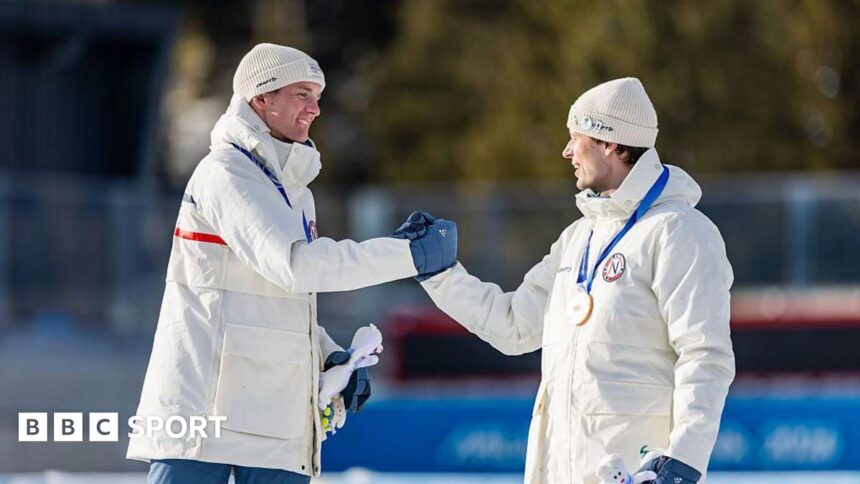
The scene in Cortina was one of powerful, conflicting narratives. Johan-Olav Botn, seizing his moment of destiny, crossed the line first in the men’s 20km event. His immediate, visceral shout was not of personal victory, but a tribute to late team-mate Sivert Guttorm Bakken, who died tragically in December. Botn’s gold medal was a story of perseverance, memory, and sporting excellence—a narrative the tight-knit biathlon world expected to dominate headlines.
Beside him stood Sturla Holm Laegreid, an Olympic relay champion from Beijing 2022, now an individual medalist. Yet, his face betrayed not joy, but anguish. In a live interview, his composure cracked. “It’s been the worst week of my life,” he confessed, revealing his girlfriend had ended their relationship due to his cheating. In an instant, the focus pivoted from Botn’s dedicatory win and Bakken’s memory to a public apology for private betrayal. The podium, a symbol of peak achievement, became a stage for a personal reckoning, leaving the sporting world to grapple with the uncomfortable juxtaposition.
Expert Analysis: The Weight of the Jersey and the “Norwegian Model”
To understand the magnitude of this scandal, one must understand Norwegian biathlon. The team is not just successful; it is an institution built on discipline, teamwork, and a unique cultural ethos known as the “Norwegian model,” which emphasizes collective responsibility and humility.
- Team Ethos vs. Individual Action: Laegreid’s actions are seen by many as a breach of this sacred team contract. “When you wear the Norwegian suit, you represent more than yourself,” says former Olympic biathlete and analyst Frode Andresen. “The distraction he created—on the eve of and during the Olympics—is viewed internally as a letdown. It diverted energy and focus from the team’s collective mission.”
- The Media Tightrope: Norwegian sports journalists often practice a degree of restraint regarding athletes’ private lives. Laegreid’s decision to confess on live TV forced the story into the open, changing its trajectory entirely. “He controlled the narrative by disclosing it himself, but in doing so, he magnified it a thousand-fold,” notes sports sociologist Dr. Lena Holm. “It transformed a private relationship issue into the central storyline of his Olympic moment.”
- The Ex-Girlfriend’s Silent Rebuttal: The most powerful analysis comes from the statement of Laegreid’s ex-girlfriend, who chose to remain unnamed. Her simple, devastating verdict—that the situation is “hard to forgive“—underscores the real human cost. It serves as a reminder that the public apology, while significant, is just one step in a much longer, private journey of amends.
Fallout and Future: What’s Next for Laegreid and the Team?
The immediate consequences are both reputational and competitive. While Laegreid’s place on the team is not in immediate jeopardy—his performance proves his elite status—the trust of his teammates and the federation’s support cannot be assumed.
Predictions for the path ahead include:
- A Leadership Void: Laegreid, once seen as a future pillar of the team, will likely find any informal leadership role suspended. Regaining respect will require a long period of quiet focus and demonstrable change.
- Increased Scrutiny: Every future interview and public appearance will be framed by this incident. His performance under this sustained psychological pressure will be his ultimate test.
- Team Dynamics: The Norwegian squad is professional, but the unspoken tension may affect relay chemistry, a critical component in biathlon. How management handles reintegration will be crucial.
- Sponsorship and Commercial Impact: In Norway, where an athlete’s character is closely tied to their marketability, Laegreid may face quiet commercial repercussions, with brands wary of association until genuine redemption is perceived by the public.
Conclusion: The Unforgiving Target of Public Judgment
The story of Sturla Holm Laegreid is a modern Olympic parable. It contrasts the shining, hard-edged truth of the shooting range with the messy, painful truths of human relationships. His tearful confession provided a dramatic, raw human moment rarely seen in the polished world of elite sport, but it also inadvertently stole focus from a teammate’s golden tribute to a lost friend. The apology, while public, is just the beginning. The true measure of this chapter will not be in press statements or podium tears, but in the quiet, consistent actions Laegreid takes to rebuild trust with his former partner, his team, and himself. In biathlon, you aim, you fire, and you immediately see if you’ve hit the target or missed. In life, the results take much longer to reveal themselves, and the target of forgiveness, as his ex-girlfriend made clear, is the hardest one of all to hit. The world will be watching his next shot.
Source: Based on news from BBC Sport.