Tottenham’s Wilson Odobert Faces Lengthy Absence After Devastating ACL Rupture
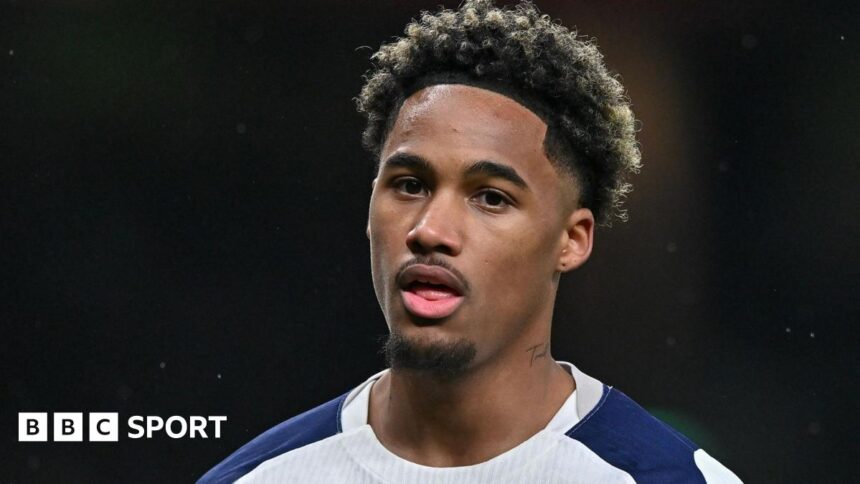
In a moment that silenced the Tottenham Hotspur Stadium, a promising season for young winger Wilson Odobert has been brutally interrupted. The club confirmed on Thursday that the 21-year-old Frenchman suffered a ruptured anterior cruciate ligament (ACL) in his left knee during their midweek defeat to Newcastle United, an injury that will require surgery and a protracted rehabilitation. This devastating blow not only sidelines a key attacking asset but also casts a long shadow over a club already navigating a period of profound transition and instability.
A Cruel Twist in a Breakout Campaign
Odobert’s injury, sustained in a seemingly innocuous first-half incident against Newcastle, represents a cruel twist in what had been a quietly impressive debut Premier League campaign. Having made 24 Premier League appearances since his arrival, the former Burnley prospect had begun to carve out a significant role, showcasing the blistering pace, direct dribbling, and raw potential that prompted Spurs’ investment. His integration into the first-team picture was a rare bright spark in a season of inconsistency, making this long-term setback all the more difficult to digest for fans and staff alike.
The official club statement was typically austere, yet it outlined a challenging road ahead: “Wilson will see a specialist next week before undergoing surgery, and will then commence his rehabilitation with our medical staff.” The timeline for an ACL recovery is notoriously stringent, typically spanning nine to twelve months, which effectively rules Odobert out for the remainder of this season and casts significant doubt over his availability for the start of the next campaign.
An Injury Crisis Compounded by Managerial Chaos
Odobert’s rupture is not an isolated incident; it is the latest and perhaps most severe chapter in Tottenham’s ongoing injury saga. The treatment room at Hotspur Way has become uncomfortably crowded, with several first-team players sidelined by significant muscular and ligament issues throughout the season. This physical fragility has undermined any attempt at building rhythm or consistency, leaving the squad looking perpetually patched together.
This injury crisis now collides head-on with a sudden managerial vacuum. The confirmation of Odobert’s diagnosis came just a day after the club sacked Thomas Frank, throwing the football operation into a state of profound uncertainty. A new manager will now inherit a squad not only lacking direction but also missing a pivotal young talent for the foreseeable future. This dual challenge—addressing immediate tactical needs while planning a long-term future without a player like Odobert—complicates an already daunting appointment process.
- Key Loss: Odobert’s pace and 1v1 ability offered a unique tactical outlet.
- Squad Depth Tested: Increased reliance on other wide players like Brennan Johnson and Dejan Kulusevski, risking burnout.
- Transfer Implications: A planned summer rebuild must now account for a long-term absentee, potentially altering recruitment priorities.
Expert Analysis: The Physical and Psychological Toll
From a medical and sporting perspective, Odobert’s injury is a multifaceted setback. The ACL rehabilitation process is as much a mental battle as a physical one. For a player whose game is built on explosive acceleration, sharp changes of direction, and confidence in his body, the journey back to peak condition is arduous. The fear of re-injury, known as the “mental hurdle,” can sometimes linger long after medical clearance is given, potentially affecting a player’s instinctive style.
Furthermore, this injury halts Odobert’s crucial development phase. At 21, he was in a period of accelerated learning, adapting to the Premier League’s demands and refining his end product. A year on the sidelines, even with dedicated gym and technical work, cannot replicate the value of competitive minutes. The club’s medical and sports science departments will be under scrutiny, as a cluster of serious soft-tissue injuries inevitably raises questions about training loads, preventative protocols, and overall player management during a turbulent season.
The timing could hardly be worse for the player or the institution. For Odobert, it disrupts a vital career progression. For Tottenham, it removes a dynamic, homegrown option as they seek to impress a new manager and build a cohesive identity. The ripple effects will be felt across the entire football operation.
Predictions and Pathways Forward for Spurs
The immediate future for Tottenham is clouded, but several likely outcomes and challenges come into focus. Firstly, the club’s search for a new manager now carries an additional caveat: candidates must be assessed on their ability to manage a squad through an injury crisis and develop a style that does not immediately rely on Odobert’s specific skillset.
In the short term, the remaining players in the wide attacking positions must shoulder a heavier burden. This could accelerate the development of other young talents or force a more pragmatic tactical shift from the incoming boss. The January transfer window, now passed, offers no respite, meaning internal solutions are the only option for this season’s run-in.
Looking ahead to the summer, the club’s recruitment strategy faces a subtle but important recalibration. While a winger may have already been on the shopping list, the need for immediate, reliable impact in that position has intensified. The board must decide whether to invest in a temporary replacement or hold firm, trusting in Odobert’s eventual return. This ACL rupture, therefore, has direct financial and strategic implications for the upcoming transfer window.
A Test of Resilience for Player and Club
Wilson Odobert’s ACL injury is a stark reminder of the fragile nature of professional sport. In a single, unfortunate moment, narratives shift, plans unravel, and careers are put on hold. For Tottenham Hotspur, this is more than just another name on the injury report; it is a significant setback that exacerbates existing structural and sporting problems.
The club’s response to this adversity will be telling. The quality of support offered to Odobert during his rehabilitation, the shrewdness of their managerial appointment, and the agility of their planning in the transfer market will all be under the microscope. For Odobert, the path is one of patience, discipline, and unwavering determination. For Spurs, it is a moment that demands clarity, resilience, and a unified vision to steer the club through stormy seas. The hope for all will be that this cruel interruption is merely a chapter, not the defining story, of a young player’s promising career and a club’s ambitious project.
Source: Based on news from BBC Sport.