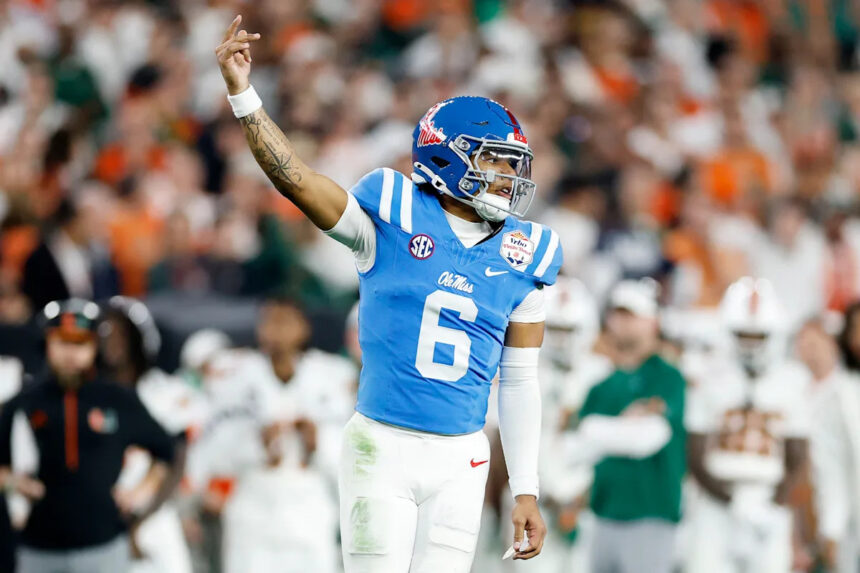
Trinidad Chambliss and the NCAA’s Looming Eligibility Crisis: A System on the Brink
The world of sports is captivated by Olympic glory, league fines, and viewership records. Yet, beneath these headlines, a slow-burning crisis within the NCAA threatens the very foundation of collegiate athletics. It’s a crisis embodied by athletes like Trinidad Chambliss, whose name has become a rallying cry for reform. While fans tune in to see Chloe Kim’s silver medal runs and the U.S. men’s hockey team dominate, the administrative machinery governing thousands of student-athletes is grinding to a halt, mired in a byzantine process that is failing the very people it purports to protect.
The Chambliss Case: A Symptom of a Broken Machine
Trinidad Chambliss, a talented basketball player, represents a growing class of student-athletes caught in the NCAA’s eligibility purgatory. His specific case, involving complex transfer rules and academic credential reviews, is not an anomaly but a symptom. The NCAA’s Eligibility Center, tasked with vetting the academic and amateur status of hundreds of thousands of athletes, is overwhelmed. The result? Talented players like Chambliss miss games, sometimes entire seasons, waiting for a bureaucratic green light that may never come in time.
This isn’t just about transfers. It encompasses:
- Name, Image, and Likeness (NIL) compliance reviews, where the line between permissible endorsement and improper inducement is blurry.
- Academic waivers and course credit approvals, especially for international students and those from non-traditional educational backgrounds.
- Multi-time transfers navigating the ever-changing landscape of waiver requirements.
Each case requires manual review by an understaffed organization operating under a patchwork of outdated bylaws. The human cost is immense: lost development, missed scholarships, and the mental anguish of athletic limbo.
Parallels in the Pro Ranks: Accountability vs. Ambiguity
While the NCAA struggles with internal governance, professional leagues are taking decisive, if controversial, action to protect the integrity of their competitions. The recent fines levied against the Utah Jazz and Indiana Pacers for overt tanking behavior signal a clear, if imperfect, line. The NBA identified specific actions—holding out healthy players—that “prioritize draft position over winning” and penalized them.
Contrast this with the NCAA’s approach. What constitutes a valid “reason” for a player’s absence or eligibility delay? The ambiguity is staggering. Furthermore, MLB’s crackdown on pitch-stealing by confining base coaches to their boxes shows a proactive stance on competitive fairness. These professional actions, while in different contexts, highlight a key deficiency in the NCAA: a lack of clear, enforceable, and efficiently administered rules. The pro leagues are acting (some would say overreaching) to police their games; the NCAA is often paralyzed, reacting slowly to the crises of its own creation.
The Stakes: More Than Just Missed Games
The eligibility crisis erodes trust in the entire collegiate model. As Olympics viewership soars, demonstrating a massive appetite for pure athletic competition, the NCAA’s product is undermined by off-court drama that has nothing to do with sport. For every Jessie Diggins battling bruised ribs to win a bronze medal, there’s a college athlete sidelined by paperwork.
The financial and reputational risks are compounding:
- Recruiting instability: High school athletes and transfer portal entrants cannot be certain they will be cleared to play.
- Institutional liability: Universities invest in athletes who may never suit up, damaging team performance and revenue.
- Legal vulnerability: Every delayed or denied eligibility decision is a potential lawsuit in the post-Alston landscape, where the NCAA’s authority is diminishing.
This bureaucratic morass occurs while the commercial engine of college sports, particularly football and basketball, is more profitable than ever. The disconnect between the industry’s wealth and its operational incompetence is glaring.
The Path Forward: Predictions for an Imminent Reckoning
The status quo is unsustainable. The Trinidad Chambliss saga is a precursor to a wave of challenges that will force systemic change. Here are the likely developments:
Prediction 1: The Rise of Third-Party Arbitration. The NCAA will be forced to outsource initial eligibility reviews and appeals to a neutral, independent body. This model, similar to arbitration in professional sports, would streamline decisions based on clearer guidelines, reducing conflict of interest and institutional bias.
Prediction 2: Legislative Simplification. The current rulebook, thousands of pages long, will be gutted. Expect a new governance model built on a few core principles—academic progress, no criminal misconduct, and contractual fulfillment of NIL deals—rather than micromanagement of athlete behavior and movement.
Prediction 3: The “Eligibility Guarantee” as a Recruiting Tool. Forward-thinking conferences or collectives may begin offering legal and administrative support to top recruits, guaranteeing a swift and aggressive defense of their eligibility. This will become a key differentiator in the NIL and transfer portal era.
Prediction 4: A Catastrophic Break. If reform is too slow, we may see a top conference or coalition of schools break away and establish its own governing entity with a modernized, efficient eligibility process, rendering the NCAA obsolete.
Conclusion: A Crisis of Legitimacy
The story of Trinidad Chambliss is more than a sports administrative delay. It is a parable for an organization that has lost control of its core function. While the sports world marvels at teenage Olympic champions and leagues fine teams for tanking, the NCAA is failing its most basic duty: providing a clear and fair path to competition for student-athletes.
The eligibility crisis is, at its heart, a crisis of legitimacy. Every day an athlete waits in limbo is a day the NCAA’s reason for existence grows weaker. The solution requires not just more staff or better software, but a philosophical shift from punitive control to enabling participation. Until that happens, the headlines will keep coming, and the next Trinidad Chambliss will be waiting, uniform in hand, for a system to catch up to the game it’s supposed to serve.
For more on the stories shaping the sports world, from the Olympics to the biggest league controversies, Yahoo Sports AM is our daily newsletter that keeps you up to date on all things sports. Sign up here to get it every weekday morning.
Source: Based on news from Yahoo Sports.