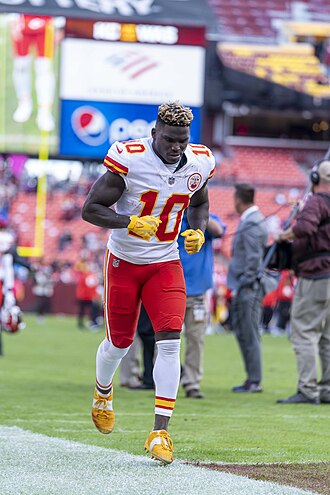
Why Did the Miami Dolphins Release Tyreek Hill? Unpacking a Stunning NFL Move
The seismic waves are still rippling through the NFL landscape. In a move that defies conventional roster-building wisdom, the Miami Dolphins have cut ties with All-Pro wide receiver Tyreek Hill. This isn’t the quiet release of a fading veteran; this is the franchise jettisoning arguably the most explosive offensive weapon in football, a player still in his prime. The immediate question is a simple, stunned “Why?” The subsequent questions—about the Dolphins’ fragile financial architecture, Hill’s incendiary future, and the shifting balance of power in the AFC—are far more complex. This decision is a watershed moment, and its ramifications will define both parties for years to come.
The Financial Reckoning: A Salary Cap Tsunami Hits Miami
To understand the “why now,” you must first look at the ledger. The Dolphins, under General Manager Chris Grier, have been aggressive in pursuing a “win-now” strategy, backloading massive contracts to assemble a star-studded roster. Tyreek Hill’s $120 million extension in 2022 was the crown jewel of that approach. However, the bill has now come due, and the structure of that deal created a looming fiscal cliff.
Hill’s cap hits were set to balloon from a manageable $12.8 million in 2023 to a staggering $31.3 million in 2025 and beyond. With quarterback Tua Tagovailoa’s mega-extension kicking in, and massive deals for players like Jalen Ramsey and Jaylen Waddle also on the books, Miami was facing a severe salary cap crunch. Releasing Hill now, as a post-June 1st designation, allows the Dolphins to spread the dead money hit—a painful but necessary financial amputation. It’s a stark admission that the all-in strategy has its limits, and the front office is choosing long-term roster flexibility over short-term superstar dazzle.
- Cap Space Reclamation: The move freezes tens of millions in immediate cap space for 2025 and 2026, allowing Miami to address gaping holes on both lines and in the secondary.
- Tua’s Payday: Tagovailoa’s new contract, averaging over $50 million per year, fundamentally changed the roster calculus. It is nearly impossible to allocate top-of-market money to both a quarterback and a receiver in the modern cap.
- Strategic Reset: This signals a pivot from a “collect stars” model to a more balanced, sustainable build, likely centered on a more run-oriented and defensively sound identity under head coach Mike McDaniel.
Beyond the Numbers: The Unspoken Football Calculus
While finances forced the move, football reasons likely cemented it. Tyreek Hill is a transcendent talent, but his unique skill set requires a specific ecosystem to maximize. That ecosystem is incredibly expensive and one-dimensional. The Dolphins’ offense, while explosive, became predictable. The league noted their reliance on Hill’s unmatched speed on crossers and deep shots, and defensive coordinators began deploying more two-high safety shells, daring Miami to run—which they often struggled to do consistently.
Furthermore, Hill’s presence, alongside Jaylen Waddle, created a positional value imbalance. Investing such a high percentage of your cap in one position group—even an elite one—inevitably weakens others. The Dolphins’ offensive line and run defense have been persistent issues, areas that directly cost them in physical playoff battles. By moving on from Hill, the Dolphins aren’t just saving money; they are redistributing assets. The goal is to build a more complete, resilient, and physically tough team that can win in January, not just put up video game numbers in October.
There’s also the unspoken element of player longevity and risk. Hill’s game is built on a foundation of otherworldly speed. While he has shown no signs of slowing, he turns 31 next year. The history of speed receivers aging deep into their 30s is not encouraging. The Dolphins may have decided the peak value for a trade or release was now, before any potential decline, rather than waiting for the inevitable and getting nothing in return.
What’s Next for Tyreek Hill? The Cheetah is Loose
For Tyreek Hill, this release is not an ending but a liberation. He immediately becomes the most coveted free agent in recent NFL memory—a true game-breaker available without the cost of trade capital. His market will be frenzied, but his destination will be dictated by a clear hierarchy of needs: a contending team with a strong-armed quarterback and enough cap space to meet his assuredly high price tag.
Several franchises will be lining up. The New York Jets, with Aaron Rodgers and a desperate win-now mandate, make obvious sense. The Kansas City Chiefs, a storybook reunion with Patrick Mahomes, would send shockwaves through the league, though their cap situation is tight. Don’t sleep on a team like the Detroit Lions, who have the cap space, the aggressive general manager in Brad Holmes, and the offensive ingenuity to deploy him perfectly. The Carolina Panthers, seeking to revitalize Bryce Young, could see Hill as a franchise-altering talent. Wherever he lands, that offense instantly becomes must-watch television and a weekly threat to score 30 points.
Hill’s legacy is also at play. He has been vocal about his desire to be considered the greatest receiver of all time. To cement that argument, he needs more rings. His next decision will be calculated not just for dollars, but for the best opportunity to add to his championship tally. The pressure is now on him to prove he can be the central catalyst for a title run, not just a spectacular piece of one.
The Dolphins’ Daunting Path Forward
Back in Miami, the path is fraught with risk. The immediate football fallout is severe. Tua Tagovailoa loses his security blanket and the player who unequivocally made him a better quarterback. Defenses will now shift their attention entirely to Jaylen Waddle, who will face constant double teams. The entire offensive scheme, built on creating space for Hill’s speed, must be reinvented.
The onus falls squarely on Head Coach Mike McDaniel. Hailed as an offensive genius, he must now prove his system is quarterback and receiver-agnostic—that it can produce a top-10 offense without the most dangerous weapon in football. This will be the ultimate test of his coaching acumen. The freed-up capital must be used to fortify the trenches. If the Dolphins use this flexibility to sign a premier offensive lineman and a disruptive defensive end, the move can be rationalized. If they whiff, and the offense plummets, this decision will haunt the franchise for a decade.
Furthermore, the message to the locker room is mixed. The team spoke all season about being a brotherhood and chasing a title together. Releasing your best player for financial reasons undermines that narrative. How the leadership core—Tua, Waddle, Terron Armstead—steers the team through this emotional and professional pivot will be critical to avoiding a collapse in morale.
Conclusion: A Calculated Gamble with Franchise-Defining Stakes
The release of Tyreek Hill is not a simple transaction; it is a philosophical declaration. The Miami Dolphins have chosen the hard, unglamorous road of cap responsibility and balanced roster construction over the exhilarating, yet ultimately limiting, path of superstar dependency. It is a bet on Mike McDaniel’s scheme, on Tua Tagovailoa’s continued development without his top target, and on the front office’s ability to wisely reinvest monumental savings.
For Tyreek Hill, the future has never been brighter. He is free to choose his contender, to chase legacy, and to continue his Hall of Fame trajectory on his own terms. The “Cheetah” remains the league’s most explosive offensive force, and his next chapter will be written under a blinding spotlight.
In the end, this move will be judged by rings. If Hill wins a championship elsewhere while the Dolphins stagnate, Miami’s decision will be remembered as a catastrophic misstep. If the Dolphins, fortified by their new financial health, build a deeper, more complete team that makes a sustained Super Bowl run, they will be vindicated as visionary. The gamble is set. The stakes are monumental. The NFL just witnessed its most fascinating pivot point of the decade.
Source: Based on news from ESPN.
Image: CC licensed via commons.wikimedia.org