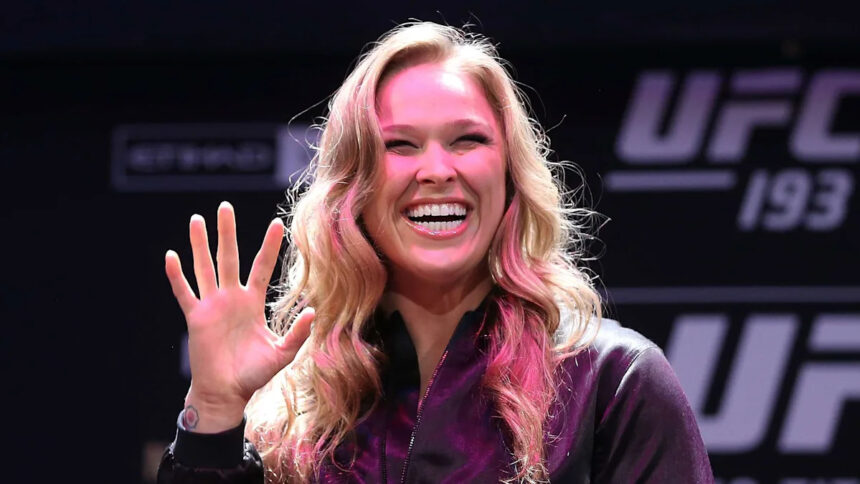
Ronda Rousey vs. Gina Carano: Winners and Losers of a Shocking MMA Curveball
In the meticulously managed world of modern mixed martial arts, true seismic shocks are a rarity. The playbook is known, the promoters are familiar, and the paths to superfights are often paved years in advance. Then, Tuesday happened. The announcement that Ronda Rousey and Gina Carano—two legendary pioneers whose paths never crossed in their primes—will finally clash in a professional MMA fight on May 16th didn’t just break the mold; it vaporized it. This isn’t a UFC event, nor is it the long-rumored boxing match. It’s a 145-pound blockbuster headlining MMA’s debut on Netflix, promoted by Jake Paul’s Most Valuable Promotions. The ramifications of this move stretch far beyond the cage, signaling a potential power shift in the sport itself. Let’s dissect the biggest winners and losers from this groundbreaking announcement.
Winner: The Fighter Economy & Alternative Power Brokers
For years, the UFC’s market dominance has framed the financial and career trajectory for nearly every elite mixed martial artist. The recent $7.7 billion Paramount deal brought marginal improvements, but the fundamental fighter pay structure remains a point of intense contention. The entry of a deep-pocketed, globally accessible platform like Netflix, partnering with the disruptive force of MVP, creates something fighters have desperately needed: leverage.
Rousey and Carano, both massive stars whose fame transcends the sport, have secured a deal unimaginable under the standard UFC champion model. This event proves a viable, lucrative alternative exists for the right talent. It sends a clear message to every disgruntated champion and rising contender: there is another lane. The timing is pivotal. As fighter advocacy grows louder, the emergence of a legitimate, well-funded competitor for major events could force a long-overdue market correction in how athletes are compensated.
Loser: The Sanctity of “Sporting Merit”
Let’s be unequivocal: this is not a fight born from divisional rankings or a grinding win streak. Ronda Rousey (12-2) hasn’t competed in MMA since her devastating back-to-back knockout losses in 2016-17. Gina Carano (7-1), the face of women’s MMA in the Strikeforce era, hasn’t fought since 2009, having built a successful Hollywood career. The narrative is pure spectacle—a “what if” fantasy match made real fifteen years after its logical expiration date.
For purists who cherish the sport as a meritocracy, this is a bitter pill. It prioritizes name value and nostalgia over competitive integrity. The fight exists in a bizarre vacuum, with no bearing on any current division. While the draw is undeniable, it reinforces a trend where legacy and celebrity can bypass the entire competitive ecosystem, a reality that can demoralize active fighters toiling in obscurity.
Winner: Netflix & The Mainstream Audience
Netflix’s foray into live sports has been a masterclass in event programming. From Tyson-Paul to Canelo-Crawford, they’ve targeted massive, cross-cultural moments. The Rousey vs. Carano fight is their shrewdest combat sports move yet. Here’s why:
- Built-in Nostalgia: It taps directly into the foundational era of women’s MMA, pulling in lapsed fans from the late 2000s/early 2010s.
- Cinematic Storyline: Carano, the trailblazing star who left for movies, versus Rousey, the Olympic judoka who took the blueprint and became a global superstar. It’s a perfect, easy-to-sell narrative.
- Barrier to Entry: Zero. For Netflix’s 270+ million global subscribers, the fight is just a click away—no PPV fee, no specialized sports subscription. This accessibility could attract the largest audience for a women’s MMA fight in history.
This event isn’t just another boxing card; it’s Netflix planting its flag in MMA, proving its model can work for the sport’s unique, hardcore fanbase while capturing the casual viewer.
Loser: The UFC’s Invincibility Aura
The UFC has long operated as the undisputed pinnacle and near-sole destination for MMA. This fight directly challenges that notion. Two of the promotion’s most iconic female stars—both of whom left under complex circumstances—are now headlining a rival show on the world’s biggest streaming platform. The UFC cannot dismiss this as a mere “trinket” or “side show.”
It demonstrates that competition for top-tier talent is now real. While the UFC’s roster depth is unmatched, the ability to lose control of the narrative around its own legends is a new vulnerability. When fans can see a dream match the UFC couldn’t or wouldn’t make, on a platform more accessible than ESPN+, it chips away at the promotion’s perceived omnipotence.
Winner: The “What If?” Fantasy
For over a decade, this fight lived solely in forum posts and barstool debates. Gina Carano was the charismatic powerhouse who made women’s MMA palatable to a mainstream audience. Ronda Rousey was the relentless finisher who proved women could headline and sell out arenas. Their styles—Carano’s powerful strikes vs. Rousey’s world-class judo and armbars—created a perfect stylistic clash on paper.
By making it happen now, we finally get an answer, however asterisked by time. It validates the historical importance of both athletes and provides a unique, generational bridge moment. It’s a living history lesson for new fans and a thrilling callback for the old guard.
Prediction & The Legacy of the Fight
Analyzing this fight through a traditional lens is folly. Age, ring rust, and evolved training methods make it wildly unpredictable. However, the key factor likely remains Ronda Rousey’s judo. Even a diminished version of her clinch and throw game is a weapon Carano never faced at this level. Carano’s path to victory relies on keeping distance and exploiting Rousey’s known striking deficiencies, but after 17 years away, executing that game plan under the lights is a monumental ask.
Prediction: Rousey finds a way to close the distance, gets the fight to the mat, and hunts for an armbar. The outcome, however, is almost secondary to the event’s broader impact.
Conclusion: A Seismic Shift, For Better or Worse
The announcement of Rousey vs. Carano on Netflix is more than a fight; it’s a watershed moment for MMA. It proves the sport’s biggest stars can operate outside the traditional infrastructure and succeed spectacularly. It provides a jolt of mainstream attention the sport hasn’t seen in years. And it offers a tantalizing glimpse of a future with more options for fighters and fans alike.
Yet, this future comes with caveats. The celebration of spectacle over sport, the potential devaluation of current rankings, and the further blurring of lines between competition and entertainment are real concerns. The true winner on May 16th may not be the athlete whose hand is raised, but the new paradigm of fight promotion itself. One thing is certain: in 2026, the MMA world no longer revolves around a single orbit. A new player has entered the arena, and the landscape will never be the same.
Source: Based on news from Yahoo Sports.