Vinicius Jr. and the Unending Match: How Football’s Brightest Star Became Racism’s Persistent Target
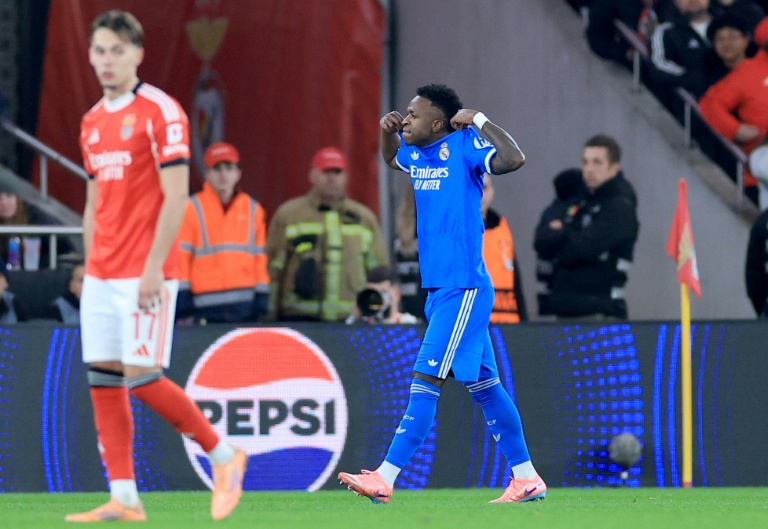
On a Champions League night in Lisbon, a moment of sublime skill was instantly overshadowed by a familiar, ugly specter. Vinicius Junior, with the effortless grace that defines his game, danced past a defender and curled a stunning goal into the net for Real Madrid. Yet, the post-match headlines were not about his brilliance, but about an alleged slur. The match was halted for ten minutes after Vini Jr. reported that Benfica’s Gianluca Prestianni had called him a “monkey.” The young Argentine denied the accusation, but the incident was a stark, depressing replay of a script that has haunted Vinicius since his arrival in Europe. Beyond the flashpoints lies a more profound and troubling narrative: how did one of the world’s most electrifying footballers become the repeated, and seemingly accepted, target of racist abuse?
A Pattern of Hatred: From Promise to Persecution
Vinicius Junior arrived at the Santiago Bernabéu in 2018 as a prodigy, a symbol of joyful, attacking football. His journey, however, quickly morphed from a sporting challenge into a societal one. The racist abuse targeting Vinicius began insidiously—muttered insults from the stands, online vitriol—before escalating into brazen, public displays intended to dehumanize and destabilize.
The incidents within Spain alone form a damning catalogue:
- Atletico Madrid fans chanting racist slogans on a bridge before a derby.
- A fan hanging an effigy of the player from a bridge near Real Madrid’s training ground.
- Repeated monkey chants and gestures from sections of supporters at stadiums across La Liga, including against Valencia, Real Valladolid, and Barcelona.
Each episode followed a corrosive pattern: the abuse occurs, a media storm erupts, authorities issue statements, and minimal punitive action follows. This cycle has effectively made Vinicius not just a player, but a lightning rod for Spain’s deep-seated racial tensions. He is forced to play two games simultaneously: one against 11 opponents on the pitch, and another against an ideology in the stands.
Beyond the Pitch: The Systemic Failure to Protect
The relentless targeting of Vinicius exposes not just individual bigotry, but institutional failing. Expert analysis points to a trifecta of negligence that allows this abuse to persist.
First, the disciplinary mechanisms in football are notoriously weak and slow. Fines that are pocket change for clubs and closed-door stadium bans that punish genuine fans more than the perpetrators have proven utterly ineffective as deterrents. The message sent is that racism is a cost of doing business, not an existential threat to the sport.
Second, there is a dangerous tendency to deflect and blame-shift. Critics, including some pundits and even rival managers, have at times suggested Vinicius “provokes” abuse with his celebratory dancing or his on-field demeanor. This victim-blaming rhetoric is a pernicious way of excusing the inexcusable, shifting the onus of responsibility from the abuser to the abused. It frames racism as a reaction to behavior, rather than a pre-existing prejudice.
Third, and perhaps most crucially, is the lack of real-time accountability in stadiums. Despite protocols, the process of identifying, ejecting, and banning individuals is clunky. The UEFA and FIFA anti-racism protocols exist on paper, but their consistent and forceful application remains inconsistent. The ten-minute pause in Lisbon, while disruptive, represents a step—but it must be followed by unequivocal identification and lifetime bans to have meaning.
The Vini Jr. Effect: Reluctant Activist and Catalyst for Change?
In the face of this, Vinicius has undergone a transformation. From a teenager trying to ignore the noise, he has grown into a powerful, if reluctant, advocate. His public statements have become more forceful, his tears after one incident moving a global audience. He has stated, “I will not stop dancing,” positioning his joy as an act of defiance. This personal stance has amplified the issue to a level football authorities cannot ignore.
His prominence has catalyzed a broader movement:
- It has forced La Liga to seek greater judicial power to sanction clubs and individuals.
- It has sparked solidarity from fellow players across the world, black and white.
- It has made the fight against racism in football a front-page issue, not a sidebar.
Vinicius is now the face of this battle in a way no other player has been since the era of Samuel Eto’o. The pressure emanating from his case is slowly bending the arc of the institution, but the pace remains glacial.
What Comes Next? Predictions for a Crossroads Moment
The football world is at a critical juncture. The treatment of Vinicius Junior will set a precedent for a generation. Here are the potential paths forward:
The Optimistic Prediction: The accumulation of high-profile incidents, culminating in the Champions League pause, becomes the tipping point. Football’s governing bodies, fearing reputational and commercial damage, enact a “Vinicius Rule”: mandatory, severe sporting sanctions like automatic forfeits for clubs whose fans engage in racist abuse, and lengthy global bans for players found guilty. Technology for rapid fan identification becomes standard. Spain initiates a nationwide educational campaign linked to football.
The Pessimistic Prediction: The cycle continues. Statements are made, small fines are issued, and the abuse adapts but does not cease. Vinicius, worn down, may eventually seek a league with a perceived tougher stance. The moment for transformative change passes, and the sport accepts a background level of racism as an intractable problem, damaging its moral authority forever.
The Most Likely Scenario: A messy middle ground. Incremental changes will occur—stronger protocols, better in-stadium monitoring, and higher fines. Star players like Vinicius will continue to use their platforms to shame inaction. However, eradicating the deep-rooted societal prejudice that manifests in stadiums will take decades. The battle will be fought stadium by stadium, incident by incident, with Vinicius’s legacy being that he made it infinitely harder for the world to look away.
Conclusion: The Unwanted Legacy of a Genius
Vinicius Junior’s legacy was supposed to be one of dazzling dribbles, decisive goals, and trophies. Instead, a significant part of it is being written in the language of resistance against hatred. His footballing genius has been met not just with admiration, but with a vicious backlash that reveals the rotten underbelly of the sport he graces. The alleged incident against Benfica is not an anomaly; it is a symptom of a disease that football has consistently failed to cure.
The ultimate test is no longer about Vinicius’s resilience—he has proven that in abundance. The test is for the institutions of football, for Spain’s sporting culture, and for fans worldwide. Will they allow one of this generation’s most thrilling talents to also be its most tormented? Protecting Vinicius Junior is not about protecting one man; it is about defending the very soul of the beautiful game. The final whistle on this abuse is long, long overdue.
Source: Based on news from Yahoo Sports.