Balague Reveals Tense Aftermath of Latest Vinicius Jr. Racism Allegation in Benfica
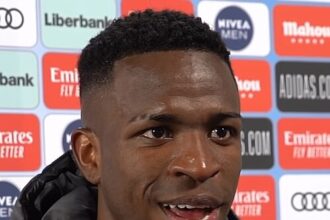
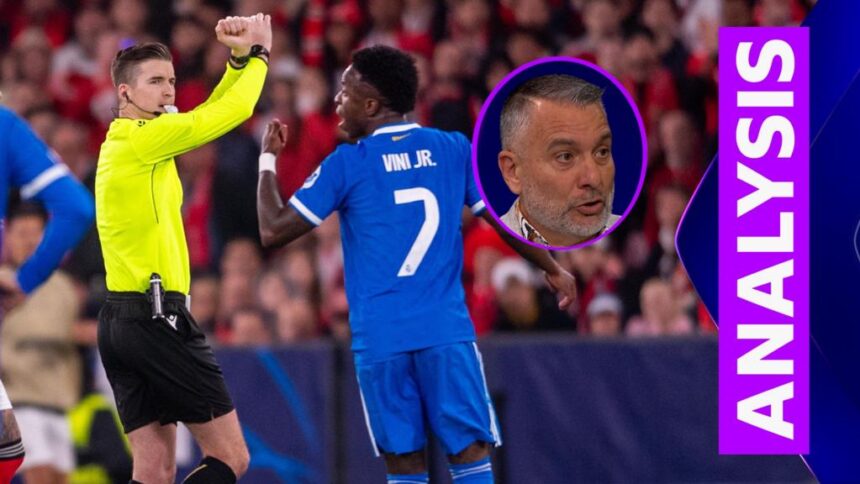
The beautiful game was once again marred by an ugly specter. In the 87th minute of Real Madrid’s Champions League victory at Benfica’s Estadio da Luz, a moment of alleged racist abuse directed at Vinicius Jr. by Benfica substitute Gianluca Prestianni cast a long, familiar shadow. While the incident itself was captured on camera—showing the young Argentine winger appearing to utter words that sparked immediate fury from Vinicius—the crucial, unseen drama unfolded in the tunnel and dressing rooms after the final whistle. Speaking from Lisbon, renowned pundit and journalist Guillem Balague provided an exclusive, behind-the-scenes account of the explosive aftermath, revealing a story of confrontation, diplomacy, and a wearying cycle that shows no sign of breaking.
A Flashpoint in Lisbon and the Immediate Fallout
As the match entered its dying moments, the focus shifted from a routine Madrid win to a sideline altercation. Vinicius, preparing to take a throw-in, suddenly turned and confronted Prestianni, who was warming up. Spanish lip-readers quickly suggested a racial slur was the catalyst. The Brazilian’s reaction was one of instant, visceral anger, requiring intervention from teammates and officials.
According to Balague, the tension did not dissipate with the final whistle. It intensified. “The Real Madrid dressing room was a cauldron of emotion,” Balague explained. “For Vinicius, this is not an isolated event; it’s a cumulative trauma. Each allegation chips away at him. The players, led by senior figures, were incensed and demanded the club take the strongest possible action.” Meanwhile, in the Benfica camp, a process of damage control began. Club officials, aware of the severe implications, immediately sought to speak with Prestianni to ascertain his version of events.
Balague’s Tunnel Vision: Confrontation and Mediation
The most revealing part of Balague’s account details the intermediary space of the tunnel—a zone where raw emotion often clashes with protocol. “There were direct, and very heated, exchanges between members of both clubs’ staff,” Balague revealed. “Real Madrid’s delegation made it unequivocally clear they would pursue this to the highest levels of UEFA. This was not going to be swept under the rug with a simple post-match handshake.”
Key figures emerged as mediators. Balague highlighted the role of Carlo Ancelotti and his Benfica counterpart, Roger Schmidt, in attempting to lower the temperature. Furthermore, senior players from both sides interacted in an attempt to separate the personal from the procedural. The critical sequence, however, involved Prestianni himself. “The young player was ushered into a room with club officials and, I understand, presented with the video evidence,” Balague stated. “He was said to be visibly shocked by the escalation and vehemently denied using racist language. His argument, conveyed to intermediaries, was that it was a misunderstanding, a crude insult but not a racial one.”
This denial set the stage for the official responses. Benfica, in their statement, supported their player’s denial, while committing to cooperate with any investigation. Real Madrid’s statement was characteristically firm, pledging to report the incident and reaffirming their “zero-tolerance” stance. Balague notes the chasm between these positions was bridged, temporarily, by one action: Prestianni’s apology to Vinicius. “It was a crucial, de-escalating step,” Balague said. “Whether it was an apology for the misunderstanding or for the insult itself, it provided a narrow path away from immediate, further confrontation.”
The Wearying Cycle: 20 Cases and a Psychological Toll
Balague was emphatic that this incident cannot be viewed in isolation. He contextualized it within the staggering statistic of over 20 separate alleged racist abuses directed at Vinicius Jr. since he joined Real Madrid. “This is the core of the issue,” Balague stressed. “The football world reacts to each event as a discrete crisis. For Vini, it is a continuous, grinding campaign. The psychological impact is profound. He has become a symbol, both for the fight against racism and, perversely, a lightning rod for the worst elements in the sport.”
Balague’s analysis pointed to several damaging consequences of this cycle:
- Desensitization of the Public: Each new allegation risks being met with a weary sigh, becoming normalized.
- Burden on the Victim: Vinicius is forced into the role of perpetual accuser, defender, and activist, distracting from his football.
- Ineffectual Sanctions: Fines and partial stadium closures have proven to be weak deterrents, fostering a sense of impunity.
- Club vs. Club Dynamics: It turns necessary solidarity into adversarial proceedings, as seen in the Lisbon tunnel.
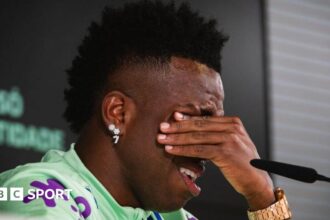
Balague revealed that within Real Madrid, there is a growing concern for Vinicius’s mental well-being, with increased support from the club’s psychological staff. “They are trying to arm him with resilience, but the question is being asked: why must the victim constantly build resilience, rather than the sport eliminating the poison?”
Predictions and the Path Forward: Beyond Statements and Apologies
Looking ahead, Balague was pessimistic about swift, systemic change but identified key developments to watch. He predicts UEFA will open a disciplinary investigation, but the outcome hinges on evidence beyond the video. “It becomes a ‘word against word’ scenario, which often results in a fine for ‘unsporting conduct’ rather than a robust racism sanction. This is the legal loophole that perpetuates the problem.”
However, he sees a potential turning point in player solidarity. “The reaction from Vinicius’s teammates—past and present—was instantaneous and powerful. This unified front from within the dressing room is more powerful than any press release.” Balague also predicts that Vinicius, though weary, will become even more vocal, using his platform to push for automated stadium bans for identified offenders and points deductions as the only meaningful deterrent.
“The ultimate prediction,” Balague concluded, “is that without these drastic measures, we will be having this exact same conversation after Madrid’s next away game at a hostile venue. The script is written. The actors change, but the protagonist in this tragedy is always Vinicius.”
Conclusion: A Test for Football’s Conscience
The aftermath detailed by Guillem Balague is a microcosm of football’s failing battle against racism. It showcases the frantic behind-the-scenes diplomacy, the clash between institutional protection and righteous anger, and the immense personal toll on the player involved. The apology in Lisbon may have cooled tensions for one night, but it does nothing to address the malignant, recurring theme. This incident is not about Gianluca Prestianni alone; it is about a sport that has yet to find the courage to implement punishments that truly fit the crime. Until it does, the cycle will continue, the tunnel will host these tense confrontations, and talents like Vinicius Jr. will be forced to fight a battle that should have been won generations ago. The game’s integrity depends on which side wins this exhausting war of attrition.
Source: Based on news from BBC Sport.