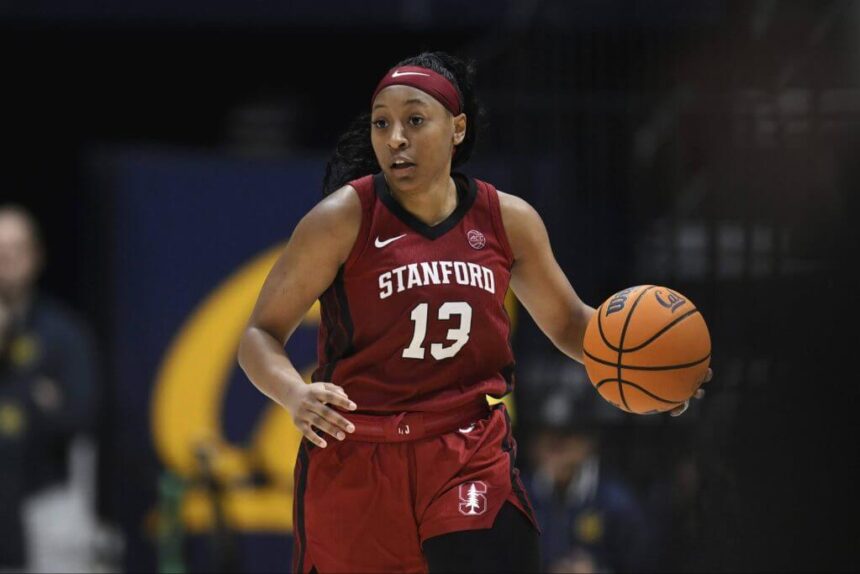
Women’s Basketball Bubble Watch: Is Stanford’s Tournament Hopes in Peril Again?
The final stretch of the women’s college basketball regular season isn’t just about conference titles and top seeds. In the shadows of the top-10 clashes, a frantic, high-stakes drama unfolds on the bubble. With the Selection Show just 25 days away, every possession, every rebound, and every late-game rally carries the weight of a season’s ambition. For a handful of teams, the next three weeks are a single-elimination tournament that starts now. And in a stunning twist of déjà vu, one of the sport’s blue-blood programs—the Stanford Cardinal—finds itself peering over the edge, threatening to turn last year’s shocking absence from the Big Dance into a troubling trend.
The Cardinal Conundrum: A Program at a Crossroads
Stanford missing the NCAA Tournament in 2023 was seismic, ending a streak that dated back to 1988. The assumption was that it was a one-year blip, a recalibration for a program synonymous with excellence. Yet, as February wanes, the Cardinal’s resume is alarmingly soft. Lacking a signature win in non-conference play and sporting a middling record in a down Pac-12, Stanford is squarely on the bubble. Their remaining schedule is a brutal gauntlet, offering both opportunity and extreme peril. The committee values who you beat and where you beat them, and Stanford’s portfolio is currently heavy on “good losses” and light on quadrant-one victories. Another stumble could see them relying on winning the Pac-12 Tournament to avoid a second consecutive, and historically jarring, at-large bid snub.
Bubble Breakdown: Who’s In, Who’s Out, and Who’s Sweating
While Stanford’s situation captures headlines, the bubble is a volatile ecosystem with fortunes changing nightly. Here’s a snapshot of key teams fighting for their postseason lives.
Iowa State Cyclones: Rising from the Ashes
The Cyclones embody the “bubble watch” narrative. Their season turned on the health of one player: Addy Brown. After Brown’s injury in early January, Iowa State spiraled on a five-game losing streak, exposing a lack of offensive depth. The burden fell too heavily on stars Audi Crooks and Jada Williams. Now, with Brown’s imminent return, the Cyclones’ trajectory looks radically different. They are currently projected as the top bubble team, in line to avoid the First Four. Their remaining schedule is manageable, and a healthy Brown provides the scoring and playmaking that makes them a dangerous, tournament-worthy team. They control their destiny.
- Key Factor: Addy Brown’s return transforms their offensive ceiling.
- Resume Booster: Strong NET/SOS metrics keep them afloat despite the skid.
- Final Four Games: Must capitalize on winnable contests against Arizona State, TCU, Oklahoma State, and Kansas State.
Colorado Buffaloes: The Great Escape
On Tuesday night, Colorado’s season was hanging by a thread. Trailing a struggling Arizona team late, a loss would have likely popped their bubble. Instead, a late-game rally secured a must-win victory. This clutch performance underscores the Buffs’ recent form: winners of seven of their last eight. The crown jewel of that run? An 80-79 upset of TCU on February 8th—a win that grows more impressive by the day after TCU toppled Baylor to take first in the Big 12. Colorado has played its way from the outside looking in to a team with solid footing, proving that on the bubble, a single week can change everything.
- Key Factor: Peaking at the right time with critical conference wins.
- Resume Booster: The TCU upset is now a premier, top-tier victory.
- Outlook: Should be “in” if they avoid bad losses down the stretch.
Expert Analysis: What the Selection Committee is Watching
The committee’s evaluation extends beyond win-loss records. For bubble teams, specific criteria become magnified.
1. The “Great Win” vs. “Bad Loss” Calculus: A single quadrant-one win can offset multiple mediocre victories, but a quadrant-three or four loss is a resume stain that’s hard to erase. Colorado’s win over TCU is a perfect example of a resume-defining triumph. Conversely, Stanford must ensure they don’t add a “bad loss” to their sheet.
2. Health and Momentum: Iowa State’s tale is a case study. Committees note key injuries and a team’s performance with a full roster. A team finishing strong, like Colorado, often gets the nod over a squad with better early-season numbers that is fading late.
3. Conference Tournament Implications: For true bubble teams, their conference tournament is often a play-in game. A win or two can lock up a bid; an early exit to a lower-seeded opponent can be the final nail in the coffin. Every game in March is an audition.
Predictions: Who Secures a Spot on Selection Sunday?
Based on current trajectories, schedule strength, and overall resume, here’s how the bubble picture is likely to develop.
Iowa State (Projected: IN): With Brown back, they have the talent to win three of their last four. That should be enough to secure a bid, potentially as a 10 or 11 seed.
Colorado (Projected: IN): Their late-season surge and quality win give them a buffer. Barring a collapse, they should hear their name called.
Stanford (Projected: BUBBLE BURST): The path is simply too difficult. Without a major upset in their final games or a deep Pac-12 Tournament run, the Cardinal’s resume will fall short compared to other bubble teams with stronger wins. The committee’s emphasis on quality victories will leave Stanford on the wrong side of the cut line for a second consecutive year, signaling a profound shift for the program.
Conclusion: The Agony and Ecstasy of the Bubble
The women’s basketball bubble watch is a relentless pressure cooker where seasons are defined in the final minutes of February. For Iowa State, it’s a story of resilience and returning health. For Colorado, it’s a testament to seizing momentum at the perfect time. And for Stanford, it’s a stark warning that pedigree alone doesn’t make the bracket. As the NCAA Tournament field crystallizes, these final games are more than just contests; they are lifelines. The margin between “in” and “out” has never been thinner, proving that in college basketball, the most compelling drama often happens long before the nets are cut down.
Source: Based on news from Yahoo Sports.