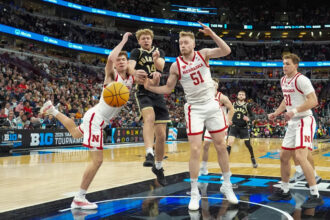
Jason Collins, NBA’s First Openly Gay Player, Dies at 47: A Legacy of Courage and Change
The basketball world is mourning a profound loss. Jason Collins, the pioneering NBA center who became the first active openly gay player in any of North America’s four major professional sports leagues, has died at the age of 47. His family confirmed on Tuesday that Collins passed away after a courageous battle with brain cancer. For the past decade, Collins served not just as a former player, but as a global ambassador for the sport, using his platform to champion equality, authenticity, and mental health awareness. His death marks the end of a chapter, but the beginning of an immortal legacy.
The Historic Announcement That Changed Sports Forever
In April 2013, Jason Collins did something no active male athlete in a major U.S. league had ever done: he came out as gay. In a first-person essay published in Sports Illustrated, Collins wrote with raw honesty, “I’m a 34-year-old NBA center. I’m black. And I’m gay.” The announcement sent shockwaves through the sports world, but more importantly, it shattered a decades-old barrier of silence and fear. Collins was a journeyman player—a 7-foot defensive specialist who had logged 13 seasons with teams like the New Jersey Nets, Memphis Grizzlies, and Boston Celtics. He was never a superstar, but his courage made him legendary.
The timing was deliberate. Collins had just finished a season with the Washington Wizards and was a free agent. He knew the risk: some executives might blacklist him; some fans might jeer. But he also knew the reward. “I want to do the right thing,” he wrote. “I want to be a role model.” Within weeks, President Barack Obama called him personally to offer support. The NBA community rallied. Kobe Bryant tweeted, “Proud of @jasoncollins34. Don’t suffocate your true self.” The league itself issued a statement praising his “tremendous courage.”
Collins’ coming out was not a publicity stunt. It was a calculated, deeply personal act of bravery. He later signed a 10-day contract with the Brooklyn Nets in February 2014, becoming the first openly gay athlete to play in an NBA game. That moment—when he stepped onto the court at Barclays Center to a standing ovation—was not just a personal victory. It was a seismic shift in professional sports culture. Collins didn’t just make history; he normalized it.
From Court to Cause: Collins’ Decade as a Global Ambassador
After retiring from the NBA in 2014, Collins could have faded into private life. Instead, he doubled down on his mission. Over the past ten years, he became a global ambassador for the NBA, traveling to more than 30 countries to speak about inclusion, mental health, and the power of living authentically. He worked with the league’s “Basketball Without Borders” program, mentoring young athletes in Africa, Europe, and Asia. He also partnered with organizations like the Human Rights Campaign and the Trevor Project, using his voice to advocate for LGBTQ+ youth facing bullying and isolation.
Collins’ advocacy was not performative. He understood the weight of his visibility. In a 2019 interview, he said, “Every time I walk into a room, I represent millions of kids who are told they can’t be themselves. That’s not a burden. That’s a privilege.” He was a regular speaker at corporate diversity events, college campuses, and even the White House. His message was simple but radical: “You can be both a tough competitor and your true self.”
His impact extended beyond rhetoric. Collins helped the NBA implement stronger anti-discrimination policies and LGBTQ+ inclusion training for all 30 teams. He was a vocal supporter of the league’s “Pride Night” initiatives, which now feature prominently in the NBA calendar. In 2021, he received the NBA’s Lifetime Achievement Award for his contributions to social justice. Yet, those who knew him best say he never sought the spotlight. “Jason was the most humble giant I’ve ever met,” said former teammate and current ESPN analyst Jalen Rose. “He didn’t want to be famous for being gay. He wanted to be famous for being a good person.”
Expert Analysis: The Ripple Effect of One Man’s Courage
To understand the full scope of Jason Collins’ legacy, we must look at the landscape he changed. Before 2013, the idea of an openly gay male athlete in the NBA was considered a career killer. Coaches whispered about “chemistry issues.” GMs worried about locker room dynamics. Fans used slurs without consequence. Collins didn’t just break that silence; he proved it was a paper tiger.
In the years since his announcement, the NBA has become the most inclusive major sports league in the world. Billie Jean King, the tennis icon and LGBTQ+ activist, once said, “Jason Collins opened the door. Now, the door is wide open.” The league now has multiple openly gay referees, coaches, and front-office executives. Players like Kevin Durant and LeBron James have publicly supported LGBTQ+ rights. The WNBA, which has long been a leader in inclusion, saw a direct correlation: after Collins came out, more male athletes in other sports—from soccer to football—felt emboldened to share their truths.
But the data tells an even more powerful story. A 2023 study by the Pew Research Center found that 63% of Americans now support same-sex marriage, up from 48% in 2013. While correlation is not causation, sports historians argue that Collins’ visibility played a critical role. “Sports are a mirror of society,” says Dr. Sarah K. Fields, a professor of sports culture at the University of Denver. “When a respected athlete like Jason Collins says, ‘I’m gay and I’m still a competitor,’ it forces millions of people to re-evaluate their biases. He humanized the issue.”
Collins’ death from brain cancer also brings attention to the disparities in healthcare access faced by Black men. According to the American Brain Tumor Association, Black patients are less likely to receive timely diagnoses and treatment for brain cancer. Collins, who had access to top-tier medical care, used his platform in recent months to advocate for better funding for cancer research in underserved communities. “He was fighting even when he was losing,” said his brother, Jarron Collins, a former NBA player and current assistant coach. “He wanted his life to mean something beyond basketball.”
Predictions: How Collins’ Legacy Will Shape the Next Decade
Jason Collins is gone, but his influence is only beginning to compound. Here are three predictions for how his legacy will evolve:
- More NBA players will come out publicly. The stigma is nearly gone. In the next five years, expect at least one active male NBA star to come out during his playing career. Collins’ courage removed the fear of isolation. The league’s culture is now ready to embrace a player who is openly gay, not as a novelty, but as a teammate.
- The Jason Collins Foundation will become a major force. His family has already announced plans to expand his nonprofit work, focusing on mental health resources for LGBTQ+ youth and brain cancer research. Expect major corporate partnerships and an annual “Collins Cup” charity basketball game featuring NBA legends.
- NBA inclusion policies will become the global standard. The league is already the gold standard. But Collins’ death will accelerate a push for mandatory LGBTQ+ training in every international league affiliated with the NBA. Look for the NBA to partner with FIBA to create a global “Inclusion Charter” named after Collins.
Perhaps the most enduring prediction is cultural. In 20 years, when a young athlete steps onto an NBA court and feels free to be themselves, they will owe a debt to a 7-foot center from Los Angeles who was brave enough to say, “I’m gay.” That is the true measure of a legacy.
A Strong Conclusion: The Final Shot
Jason Collins’ life was not defined by his statistics—6.7 points per game, 5.6 rebounds, a career in the shadows of superstars. It was defined by a single, courageous act that resonated far beyond the hardwood. He was a pioneer who understood that the most important game is not played on a court, but in the human heart. He faced down a disease that took his life too soon, but he never lost the battle that mattered most: the fight for authenticity.
As we say goodbye to Jason Collins, we must remember his own words from that historic 2013 essay: “I’m a 34-year-old NBA center. I’m black. And I’m gay. I didn’t set out to be the first. I just set out to be me.” Today, millions of people—athletes, fans, children, and elders—are free to be themselves because he was brave enough to be himself first. The NBA has lost a player. The world has lost a champion. But the light he lit will never go out. Rest in power, Jason Collins. You changed the game forever.
Source: Based on news from ESPN.
Image: CC licensed via www.af.mil